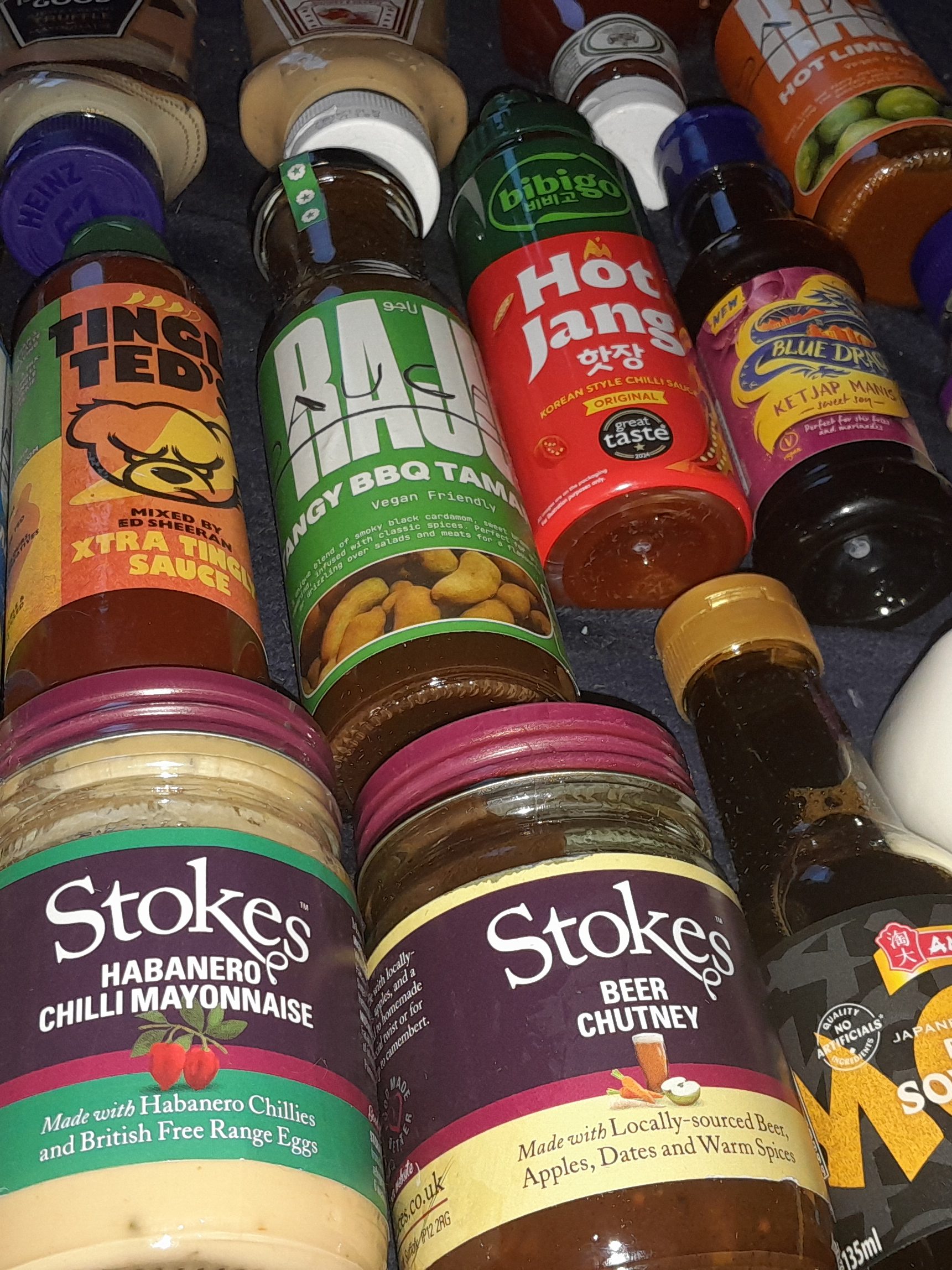
A selection of Stokes sauces and Bisto turkey gravy, perfect for enhancing a variety of meals.A vibrant assortment of sauces and condiments, including Heinz and Raju products, perfect for enhancing everyday meals.A vibrant assortment of sauces and condiments. Showcasing brands like Stokes, Raju, and Bibigo, perfect for adding flavor to home-cooked meals.
Inside were jars and bottles from brands like Stokes, Heinz, Raju, Bibigo, and Blue Dragon. Plus a surprise jar of Bisto turkey gravy that made the box feel extra special all in date.
The mix included everything from everyday staples to bold world flavours:
Stokes Coronation Sauce sweet, spicy, and perfect for wraps or cold chicken.
Stokes Habanero Chilli Mayo smooth heat with a hint of smoke.
Stokes Beer Chutney rich and earthy, ideal with cheese or pork.
Tingly Ted’s Extra Tingly Sauce fiery and fun.
Tangy BBQ Tamarind, Sweet Chilli Mango, and Hot Jang Chilli global favourites for stir-fries or marinades.
Heinz Garlic & Caramelised Onion Mayo, Smoky Baconnaise, and Tomato Ketchup these are popular comfort classics.
Old El Paso Soured Cream used for cooling down those spicy dishes!
It’s a brilliant example of what Too Good To Go can offer. Premium groceries saved from waste, giving home cooks like me the chance to stock the pantry sustainably and affordably.
Solaris Kitchen Tip: Enjoying sauces with diabetes
Solaris Kitchen Tip: Enjoying sauces with diabetes
As someone with type 2 diabetes, I use these in moderation. A spoon or two for flavour goes a long way. Pair sweeter sauces with lean proteins or fibre-rich vegetables to help balance blood sugar levels. Cooking from home with variety like this makes healthy eating much easier and tastier too.
Final Thoughts:
For £20.97, this box easily contained over £54 worth of sauces. an incredible saving and another reason to love Too Good To Go. Every jar adds a little inspiration to the kitchen, turning budget meals into flavour-packed dishes.
Would I buy it again?
Absolutely.
Next up: the Drinks Box 36 cans of Diet Cola arriving soon!
Cost per serving: £0.87 Cooking time: 10–15 minutes Appliances: Air fryer or oven Dietary: Diabetic-friendly, low waste, simple ingredients
A Comfort Breakfast with Ancient Roots
Breakfast doesn’t need to be complicated or expensive.
This warm fruit and custard bowl costs less than £1 per serving. It takes just minutes to make, and blends ancient orchard ingredients with a little modern creativity.
It’s sweet, creamy, and comforting, yet naturally light . A perfect start for cold mornings or when you want warmth without heavy sugar.
Ingredients (Serves 1)
6 blueberries
8 raspberries
1 small apple, chopped (skin on for fibre)
100ml light or low-sugar custard
Method
Prepare the fruit: Add the chopped apple, blueberries, and raspberries to a small silver foil tray. You can lightly spray with low-fat cooking oil if you want extra shine, but it’s not essential.
Cook the fruit. Place the tray in the air fryer at 180°C (or oven at 190°C) for 5 minutes. until the berries start to soften and release their juice.
Add the custard: Pour the custard over the warm fruit. Return the tray to the air fryer for another 8 minutes. until the custard thickens and bubbles lightly at the edges.
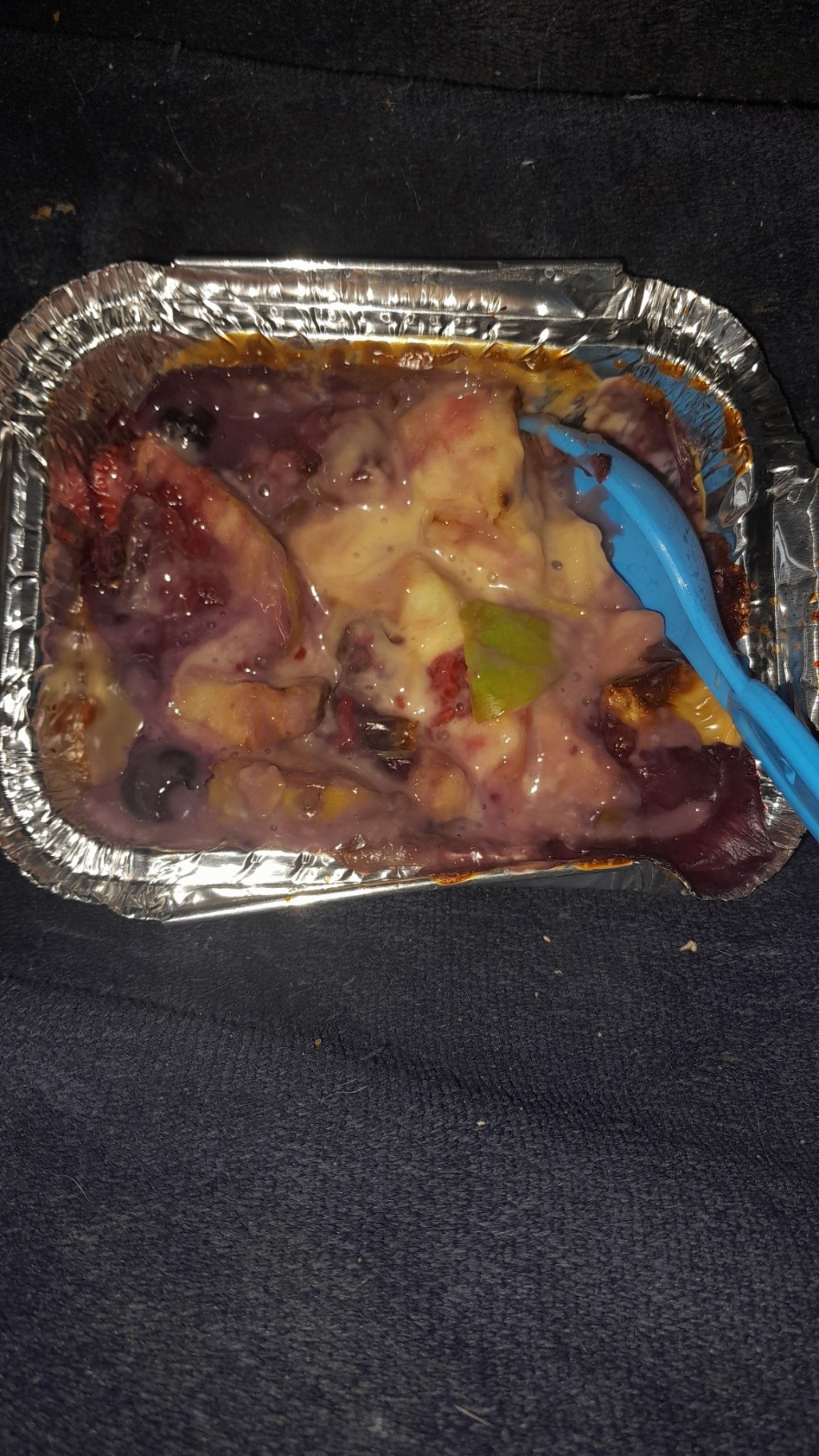
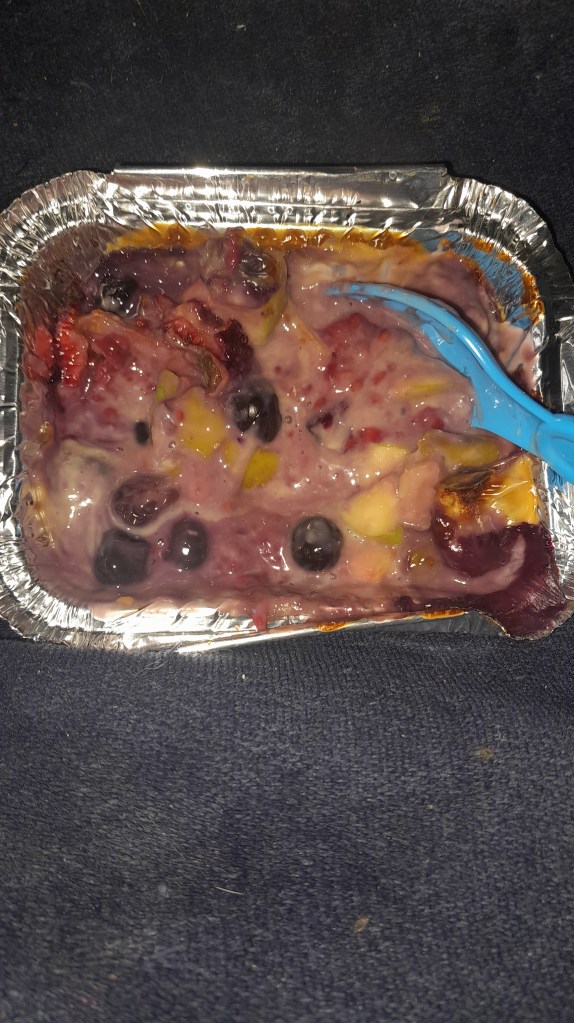
Stir and serve. Once cooked, gently mix the fruit and custard together. The berries will swirl through the cream, creating a rich marbled colour. Serve warm straight from the tray or pour into a small bowl.
Taste & Texture
The heat caramelises the fruit slightly, giving it a deep jammy sweetness that balances the creamy custard.
The apple stays firm, adding texture, while the berries burst with colour. Purple, red, and gold — like something from an autumn feast.
️
History Note.. Apples Through the Ages
Apples have grown in Britain since the Neolithic era, though early types were wild crab apples tart and small.
The Romans later introduced sweeter varieties, and by the Anglo-Saxon period, orchard apples were common across Mercia and Wessex.
Stewed apples and berries were eaten with grains, honey, or curds. Simple meals that warmed the body before work in the fields.
This modern take, baked with custard, keeps that same comfort alive 1,500 years later.
💷 Under £1 Breakdown (approx.):
1 apple – 25p
6 blueberries – 15p
8 raspberries – 20p
100ml light custard – 27p
Total: £0.87 per portion
💡 Storage Tip:
Cool leftovers and refrigerate for up to 24 hours. Eat cold or reheat gently.
Health Benefits of Warm Fruit & Custard
This simple £1 breakfast looks indulgent., But it’s full of natural goodness and balance ideal for steady energy and gentle digestion.
Apple – Fibre & Heart Health High in soluble fibre (pectin) which helps stabilise blood sugar and support digestion. Has antioxidants that reduce cholesterol and inflammation.
The natural sweetness means you don’t need extra sugar.
Blueberries – Brain & Blood Sugar SupportRich in anthocyanins, the deep-blue plant compounds that improve blood flow and memory.
Shown in studies to help balance blood glucose levels especially helpful for type 2 diabetes.
Low-calorie but nutrient-dense: vitamin C, K, and manganese.
Raspberries – Fibre & Gut
Health One of the highest-fibre fruits keeps you full and aids digestion. Has natural anti-inflammatory compounds and vitamin C.
Their low glycaemic index makes them a smart fruit choice for diabetics.
Light Custard – Protein & Comfort.
Provides a small amount of protein and calcium for bone strength.When made with low-fat milk and reduced sugar, it adds creaminess without spiking blood sugar.The warmth helps soothe digestion, especially in colder weather.In balance:
Natural fruit sugars are moderated by the fibre and protein from the custard.
Quick, filling, and kind to the stomach ideal for slow mornings or a light recovery meal.
Every ingredient is budget-friendly and rooted in traditional British produce.
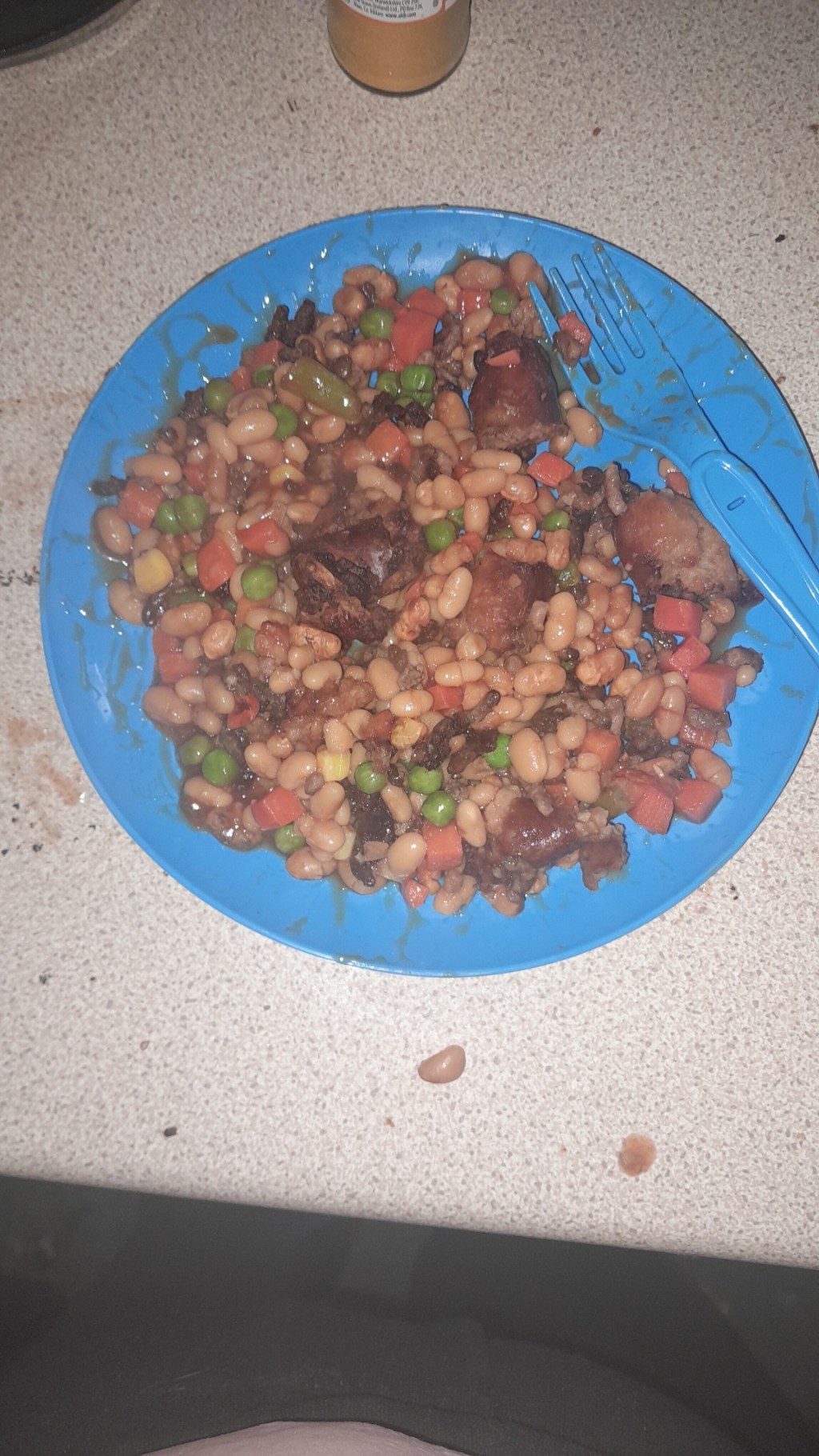
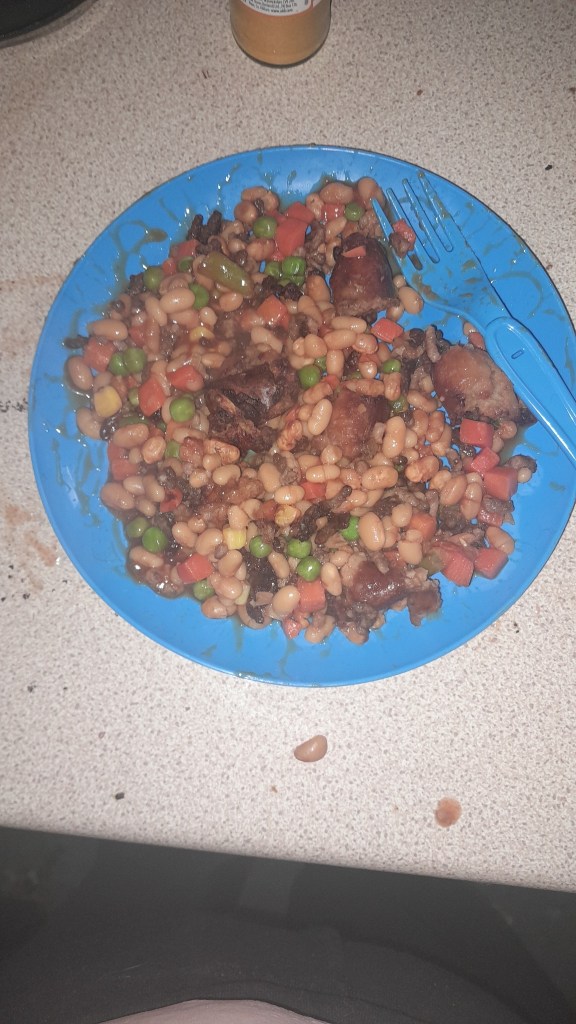
Hearty Samhain Hearth Bowl featuring sausages, minced beef, beans, and mixed vegetables, embodying comfort and simplicity.
By E. L. Hewitt – Solaris Kitchen
As the nights draw in and the air turns crisp, there’s something comforting about a meal that feels both ancient and homely. This Samhain Hearth Bowl brings together the warmth of sausages, the heartiness of mince, and the earthiness of beans and garden veg — all cooked in simple foil trays.
It’s an easy, budget-friendly feast inspired by old harvest suppers, where everything came together around the fire.
Ingredients
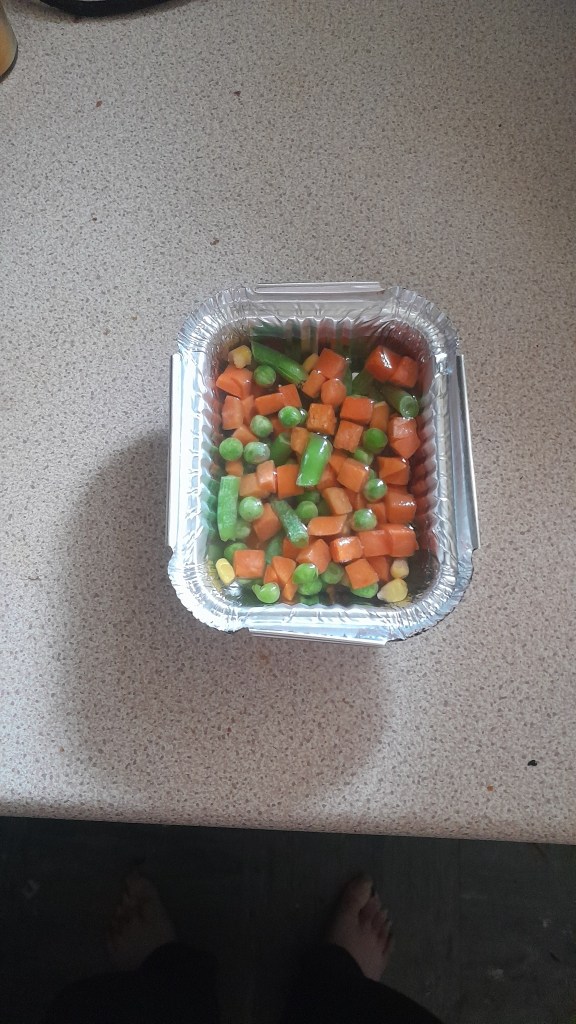
A foil tray filled with mixed frozen vegetables including peas, carrots, green beans, and corn, ready for a hearty Samhain meal.Prepare sausages in a foil tray for a comforting Samhain Hearth Bowl meal.
(Serves 2 — ready in 30 minutes)
2 sausages (any kind you prefer)
100 g minced beef
150 g frozen mixed vegetables (peas, carrots, green beans, corn)
½ tin baked beans (about 200 g)
Optional: sprinkle of cheese or herbs to serve
Cost Breakdown
Ingredient Amount Cost Sausages 100 g £0.50 Mince beef 100 g £0.80 Mixed veg 150 g £0.30 Baked beans ½ tin £0.25 Seasoning / oil £0.05
Total cost: £1.90 Cost per serving: ~£0.95
Simple, filling, and under £1 per plate true Solaris Kitchen cooking.
Method
Preheat the air fryer to 200 °C.
Place sausages in one foil tray and mixed veg in another. Cook for 10 minutes.
Drain the veg if needed, then add baked beans to the same tray.
Add mince to the sausages’ tray and cook both for another 10 minutes.
Once everything is cooked through, mix the mince, sausage, beans, and veg together.
Split into two trays and return to the air fryer for a final 5 minutes to blend flavours and soften any remaining crunch.
Serve warm, and if you like, top with cheese or herbs. It’s perfect for an evening by candlelight or just when you need something hearty that reminds you of home.
Nutritional Info (per serving, approx.)Nutrient Amount
Calories 380 kcal Protein 26 g Carbs 30 g Fibre 7 g Fat 18 g Saturated fat 7 g Salt 1.4 g
Balanced, protein-rich, and slow-burning energy ideal for diabetic-friendly, everyday eating.
Serving Suggestion
Best enjoyed with crusty bread or a small baked potato. If celebrating Samhain, add a little apple cider or herbal tea on the side a quiet nod to the season of change.
Dietary Notes
This recipe is diabetic-friendly and gluten-free when made with no-added-sugar baked beans and gluten-free sausages.
Notes from Solaris Kitchen
This dish is part of my “Ancient Hearth Meals” recipes that honour simplicity, sustainability, and warmth. If you enjoy this, you might also like:
Taranis’s journey south, inspired by Stone Age foraging along the Severn Valley in ancient Worcestershire.
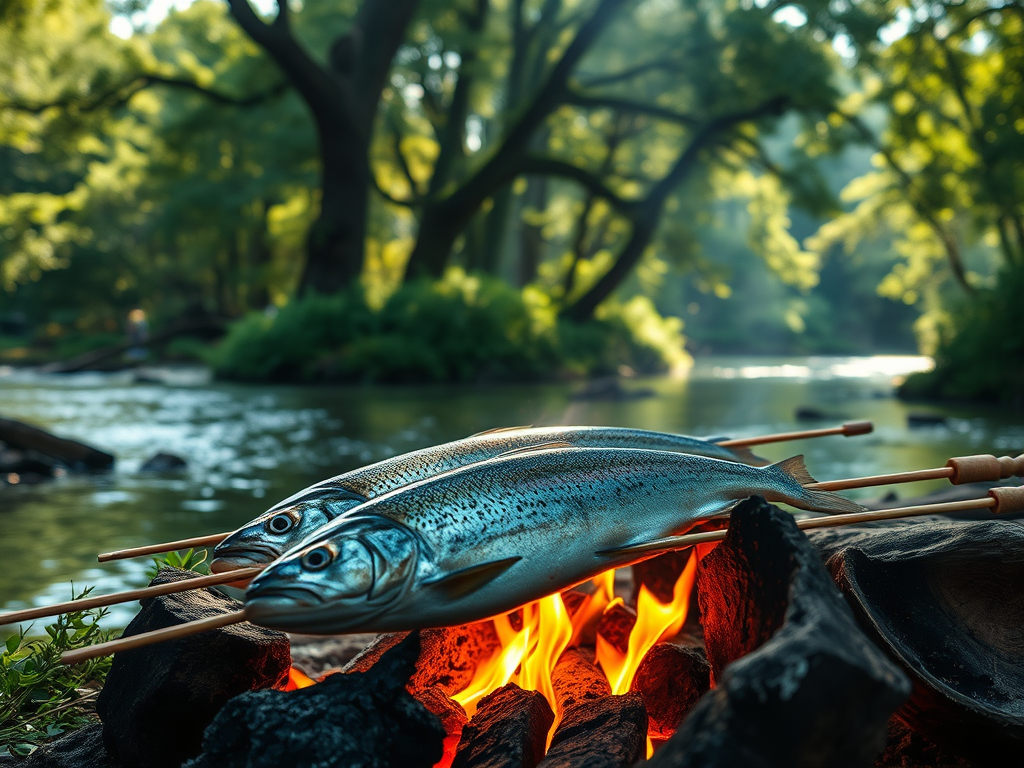
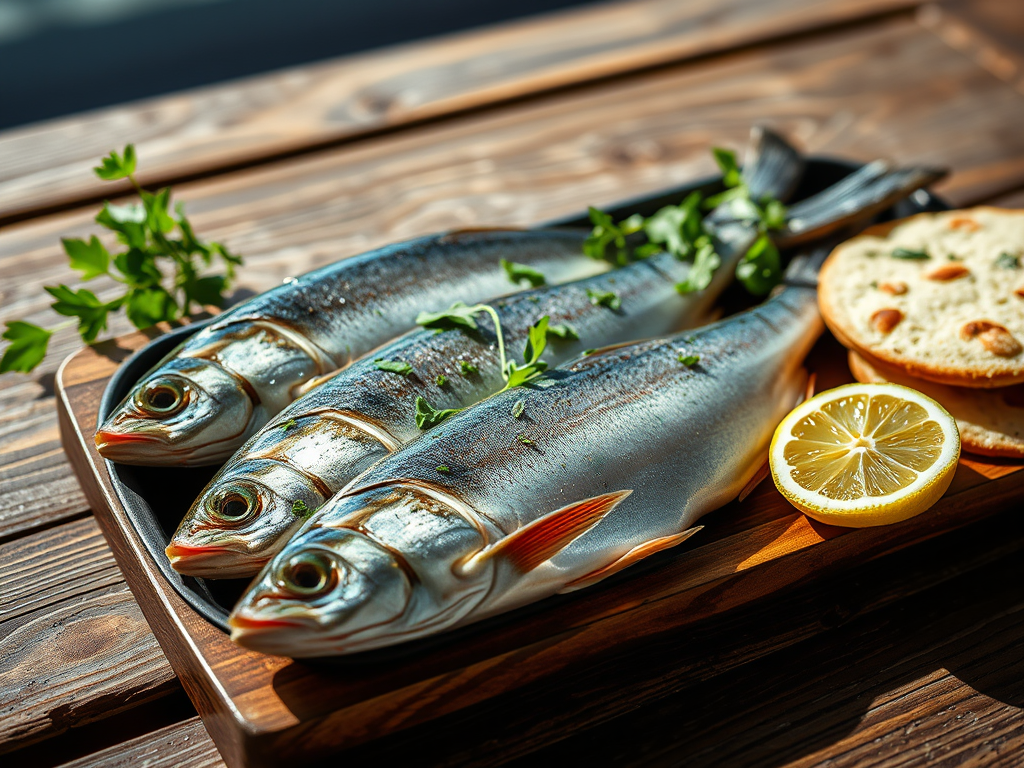
As Taranis wandered deeper into exile, he crossed the ancient paths of what we now call Worcestershire a land shaped by rivers, caves, and sacred woodlands. The Severn Valley offered not only shelter, but food: fish from clean waters, herbs from wild meadows, and woodlands dense with fuel.
This meal marks a turning point when hunger gave way to skill, and the boy began to understand the land, not fear it.
Whole small fish (e.g. trout, sardines, or mackerel) 2 £2.00–£3.00 Lemon or vinegar (optional) 1 tbsp £0.10 Salt ¼ tsp £0.05 Fresh herbs (wild garlic, rosemary, thyme) 1 tbsp £0.20 Oil or animal fat 1 tsp £0.05 Flatbread or root mash (optional side) — £0.20–£0.50
Estimated Total Cost: £2.60–£4.00 (Serves 2 — ~£1.50–£2.00 per portion)
Stone Age version:
Catch fish from stream or river. Clean and season with gathered herbs and a dash of salt.
Wrap in leaves (dock, burdock) or skewer whole and cook over embers, turning slowly.
Serve with roasted roots or foraged greens.
Modern method:
Preheat grill or pan. Clean fish, season inside and out with herbs, salt, and lemon/vinegar.
Lightly brush with oil or animal fat.
Grill for 4–5 mins per side or until crisp and flaky.
Optional lemon/vinegar: Aids digestion and preservation
🔄 Ingredient Substitutions Fish → firm tofu (vegan) or mushrooms (grilled)
Wild herbs → store-bought thyme, parsley, dill
Side: roasted parsnips or potatoes for a modern twist
📖 Suggested Story Pairing Best paired with: “The Hollow Howl” or “The Crossing” (a future post of Taranis crossing into new lands) moments when survival becomes instinct, and fear becomes focus.
This is the meal of transformation not feasting, but claiming life back one bite at a time. The boy who was cast out now learns to live.
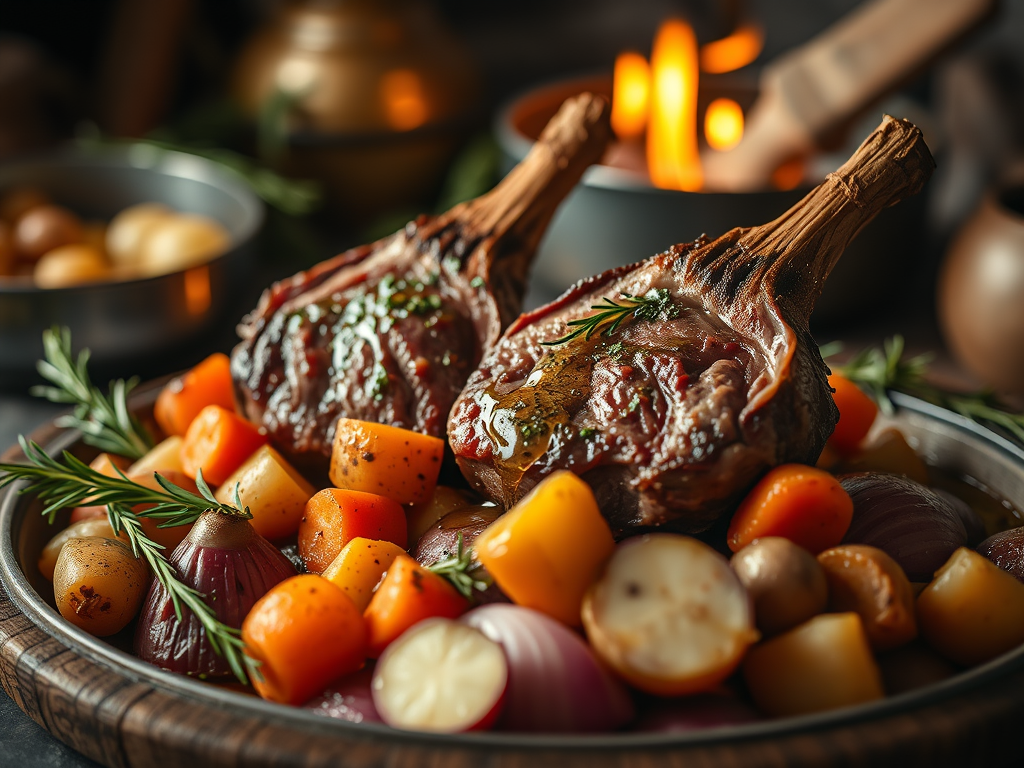
A hearty feast featuring slow-roasted lamb neck slices with a medley of root vegetables, inspired by Bronze Age Britain.
A hearty feast of lamb and roots inspired by Bronze Age Britain. Slow-roasted for warmth, strength, and balance.
📜 Cost: approx. £9.00 – serves 2 generously 🌱 Dietary Notes: Contains meat; gluten-free; diabetic-friendly (low glycemic impact with honey optional) 🍴 Setting: Ideal for House Terra or the Hearthrest kitchens of Emberhelm
Ingredients:
2 lamb neck slices (bone-in or boneless)
2 large carrots, chopped
1 large parsnip or swede, cubed
1 red onion, quartered
2–3 small potatoes, halved
1 tbsp honey (optional for diabetics, or substitute with erythritol/monk fruit)
2 tbsp oil (rapeseed or olive)
2 sprigs fresh rosemary or thyme
½ tsp coarse sea salt
Black pepper to taste
Optional: splash of stock or water for braising
Method:
Prepare the fire (or oven): Preheat oven to 180°C (fan) / 200°C / gas mark 6. If cooking over a firepit, get embers glowing steadily.
Sear the lamb: In a cast-iron pan or heavy skillet, sear neck slices on high heat with a splash of oil until browned on both sides (~2–3 mins each).
Assemble the roots: In a roasting tray, toss chopped vegetables with oil, herbs, salt, and a drizzle of honey (or sweetener). Spread in a single layer.
Add lamb & roast: Nestle the lamb among the vegetables. Add a splash of water or stock to keep it moist. Cover loosely with foil.
Roast in the hearth (or oven): Roast covered for 1 hour. Remove foil, baste with pan juices, then roast uncovered for another 20–30 mins until browned and tender.
Serve with: Crusty barley flatbread, pickled roots, or a handful of wild greens.
Historical Insight: In Bronze Age Britain, neck cuts were favoured for slow roasting near the fire – tough, flavourful, and nourishing. Root vegetables like parsnip, swede, and onion were common near settlements, roasted in clay ovens or embers. Honey added rare sweetness and symbolised prosperity.
Health Notes:
Rich in protein and iron
Root veg provide fibre, vitamin C, and potassium
Slow cooking softens connective tissue, making it easier to digest
Possible Substitutes:
Lamb: beef shin, pork neck, or plant-based roast (e.g., seitan)
Veg: beetroot, celeriac, or turnips
Honey: maple syrup or date molasses for vegan option
✅ Diabetic-Friendly: Yes, especially if honey is reduced or replaced with low-glycemic sweetener ✅ Gluten-Free: Yes, provided stock & honey are checked
Freezer safe
If you recreate this recipe, tag #StormborneLore so I can see your version.
Cover art for ‘The Shadows of an Empire’ by StormborneLore, featuring vibrant abstract patterns.
The Feast of Ashes
The wind carried the scent of smoke from the volcanic island. curling around the cliffs where Taranis trained his Black Shields. Even here, amid ash and stone. There was a need for sustenance not just for the body, but for the soul.
In a small, concealed cave, Lore the chronicler and mystic had set a fire. From his satchel, he pulled fragrant herbs, roasted nuts, and grains known to those who traveled far and survived hardships.
Tonight, they would eat something more than survival rations a meal to remind them of home, strength, and resilience.
Lore’s Fire-Roasted Chicken with Autumn Vegetables (Diabetic-Friendly, Gluten-Free)
Ingredients (serves 4):
4 skin-on chicken thighs
1 tbsp olive oil
2 tsp smoked paprika
1 tsp garlic powder
Salt and pepper to taste
2 cups diced butternut squash
1 red bell pepper, sliced
1 zucchini, sliced
1 small red onion, quartered
Fresh rosemary or thyme sprigs
Instructions:
Preheat your oven to 200°C / 400°F.
Rub chicken thighs with olive oil, paprika, garlic powder, salt, and pepper.
Toss vegetables with a drizzle of olive oil, salt, pepper, and herbs.
Place chicken on a baking tray and surround with vegetables.
Roast for 35–40 minutes, until chicken reaches an internal temperature of 75°C / 165°F and vegetables are tender.
Serve hot, letting the aromas of rosemary and smoke linger like whispers of legend.
Lore handed Taranis a bowl, and for a moment, the fire’s warmth softened the storm within him.
The Black Shields ate in silence. Each bite a small act of defiance nourishing bodies. That would soon fight, and reminding themselves that even in exile, life is reclaimed.
“Food,” Lore said softly, “is also a shield, a weapon against despair. Remember this taste, for one day, it will be a memory of freedom.”
Taranis nodded, letting the smoke and flavors mingle with the burning promise in his veins. The storm waited outside, but tonight, they were fed stronger, sharper, ready
A colorful wooden sign expressing gratitude for reading, encouraging likes and subscriptions.
Taranis stood on the ridge, his cloak torn by the storm, his hair streaked with soot. Below, the valley rippled with new life: tents being stitched, stones lifted, timber lashed. The war was over but the next battle had begun.
“We build not just for defence,” Lore said, tracing runes into the soil, “but for memory.”
The three surviving brothers had gathered their remnants warriors, widows, strays, and seers. They chose high ground, surrounded by forest and stone.
Drax named it Emberhelm, for the fire that had not died. It would become the first Stormborne stronghold.
Taranis trained them in the mornings sword drills, spear throws, endurance across misty hills. Drax oversaw the walls, carving old sigils into oak gates. Lore built the central hearth and lit it from the embers of their victory fire.
That night, the people gathered.
Flames danced. A feast was laid. Meat sizzled on firestones. Barley bread warmed the hands of children.
At the centre of it all stood Taranis, not as an outcast or storm-child. But as High Warlord of the Stormborne.
PART II: The Founders’ Feast – A Bronze Age Meal
The First Meal of Emberhelm was a warm, smoky, filling. A tribute to survival.
Served after illness, childbirth, or exhaustion when the spirit needed warmth.
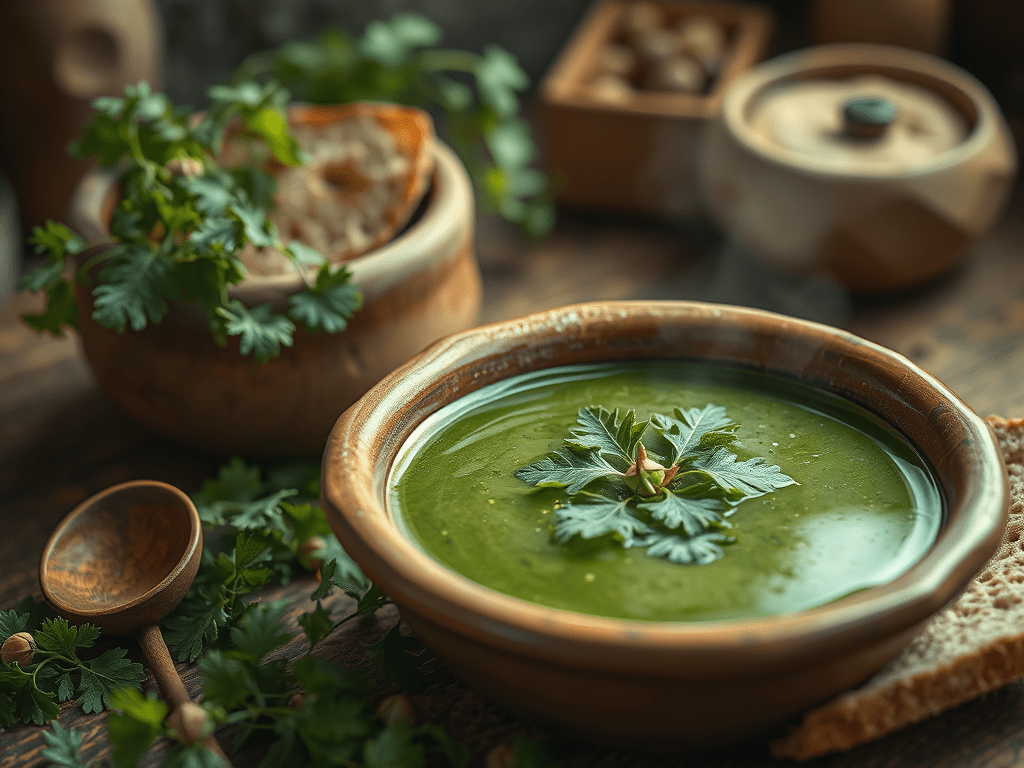
A nourishing bowl of nettle and hazelnut soup, symbolizing healing and warmth.
Nettles have been used since the Stone Age for medicine and food. High in iron and vitamins, they were one of the first wild greens to appear after winter. Hazelnuts, foraged in autumn and stored carefully, added fat and flavour. Together, they formed a healing brew simple, sacred, and powerful.
This soup was often made by elders or midwives and shared with the tribe’s wounded or recovering members. In StormborneLore, it’s the first meal given to a tribe member returning from exile.
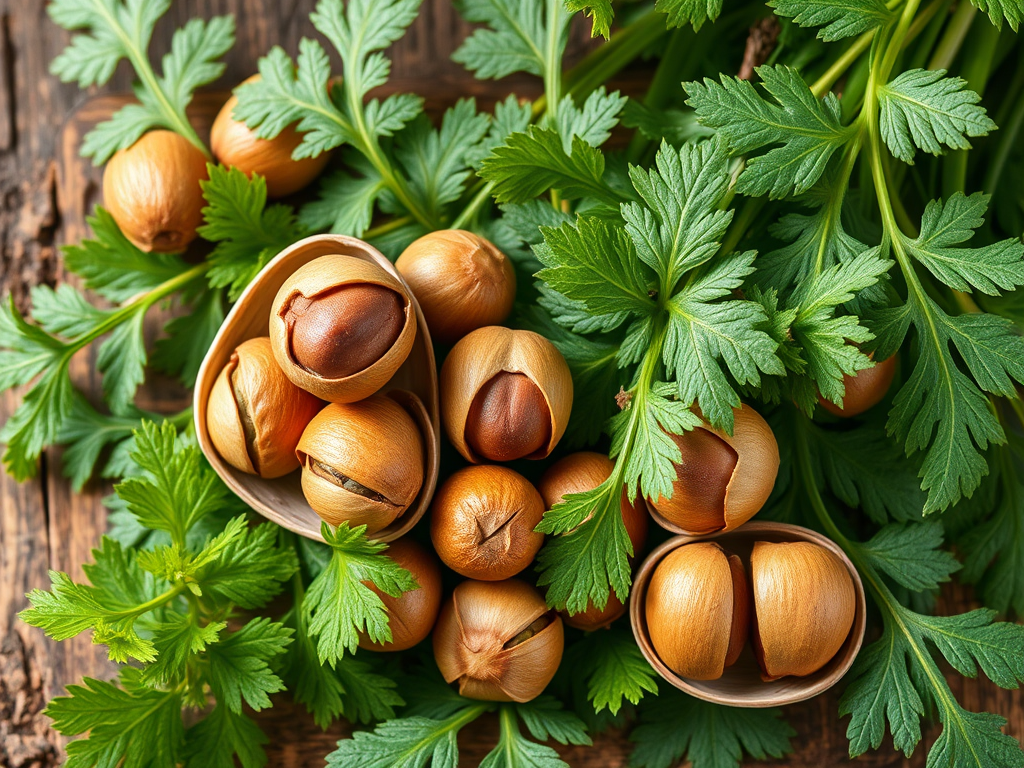
A close-up of crushed hazelnuts surrounded by fresh nettle leaves, essential ingredients for a traditional healing soup.
🧾 Ingredients (Modern Adaptation) Ingredient Qty Est. Cost (UK) Fresh nettle leaves (or spinach) 100g £0.00–£1.00 (free if foraged) Hazelnuts (crushed or ground) 50g £0.50–£1.00 Onion (or wild leek) ½ small £0.10 Water or light stock 500ml ~£0.10 Salt (optional) to taste <£0.05 Oil or fat (optional) 1 tsp £0.05
Estimated total cost: £0.80 – £2.30 (Serves 2 — approx. £0.40–£1.15 per bowl)
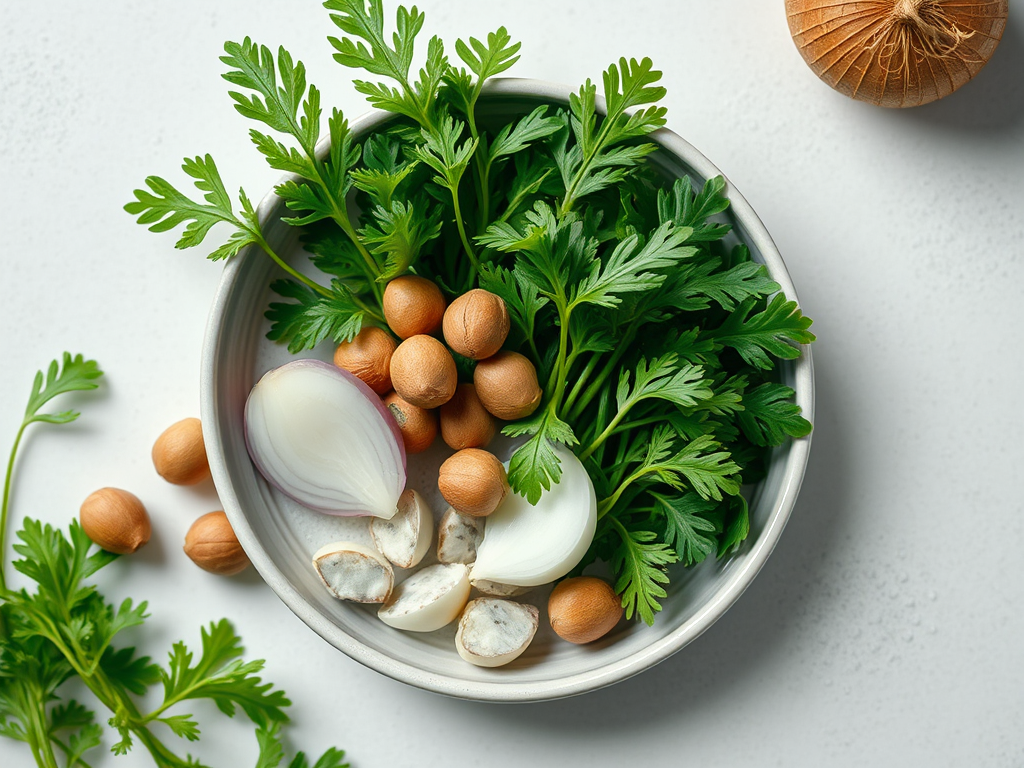
Fresh ingredients for a healing nettle soup, including hazelnuts, onion, and green herbs.
Boil water with foraged nettles, leeks, and crushed hazelnuts in a clay pot over fire.
Stir with a carved stick until it thickens.
Serve hot with flatbread or root mash.
Modern method:
Wash nettles (use gloves!) or spinach.
Sauté onion in oil until soft.
Add water/stock, nettles, and crushed hazelnuts.
Simmer 10–15 minutes. Blend for smoothness or serve rustic.
Season lightly. Optional: add oat milk or cream for richness.
📖 Suggested Story Pairing Serve with: “The Fire Within the Child” moments of recovery and resilience.
This is a soup of healing, strength, and memory. One bowl could mark the difference between fading and fighting. One fire-lit meal could carry the spirit through another night.



















 StormborneLore