Tag: pagan

  • Stormborne Family: Legacy of the Moon-Star Charm

    Stormborne Family: Legacy of the Moon-Star Charm

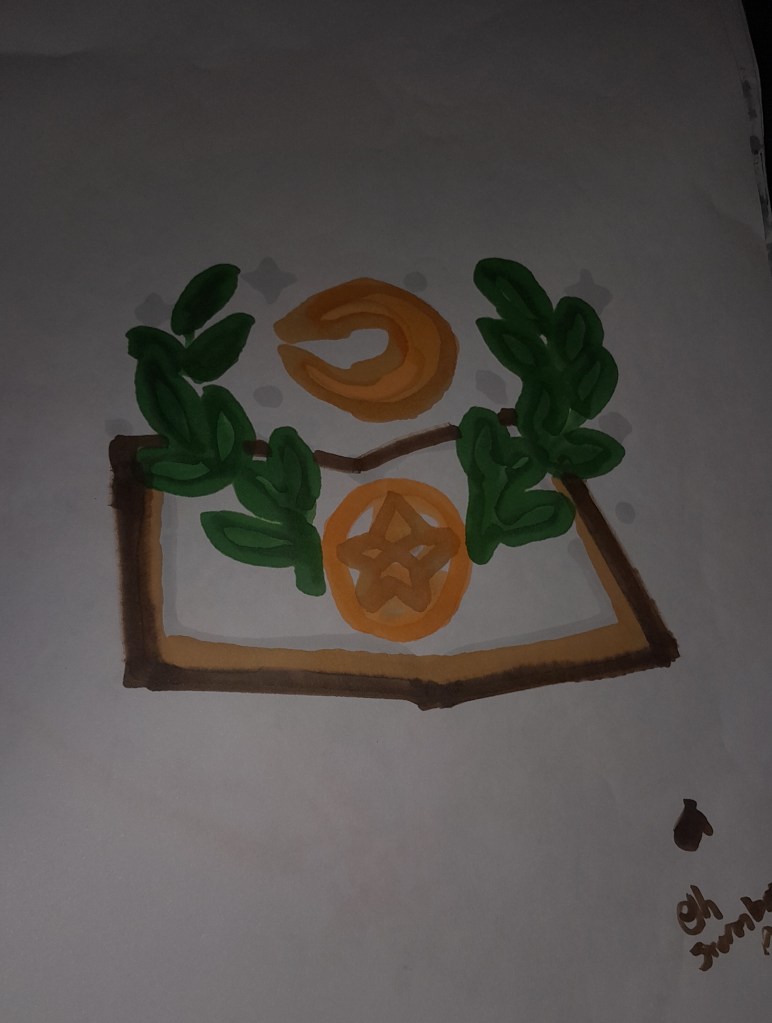
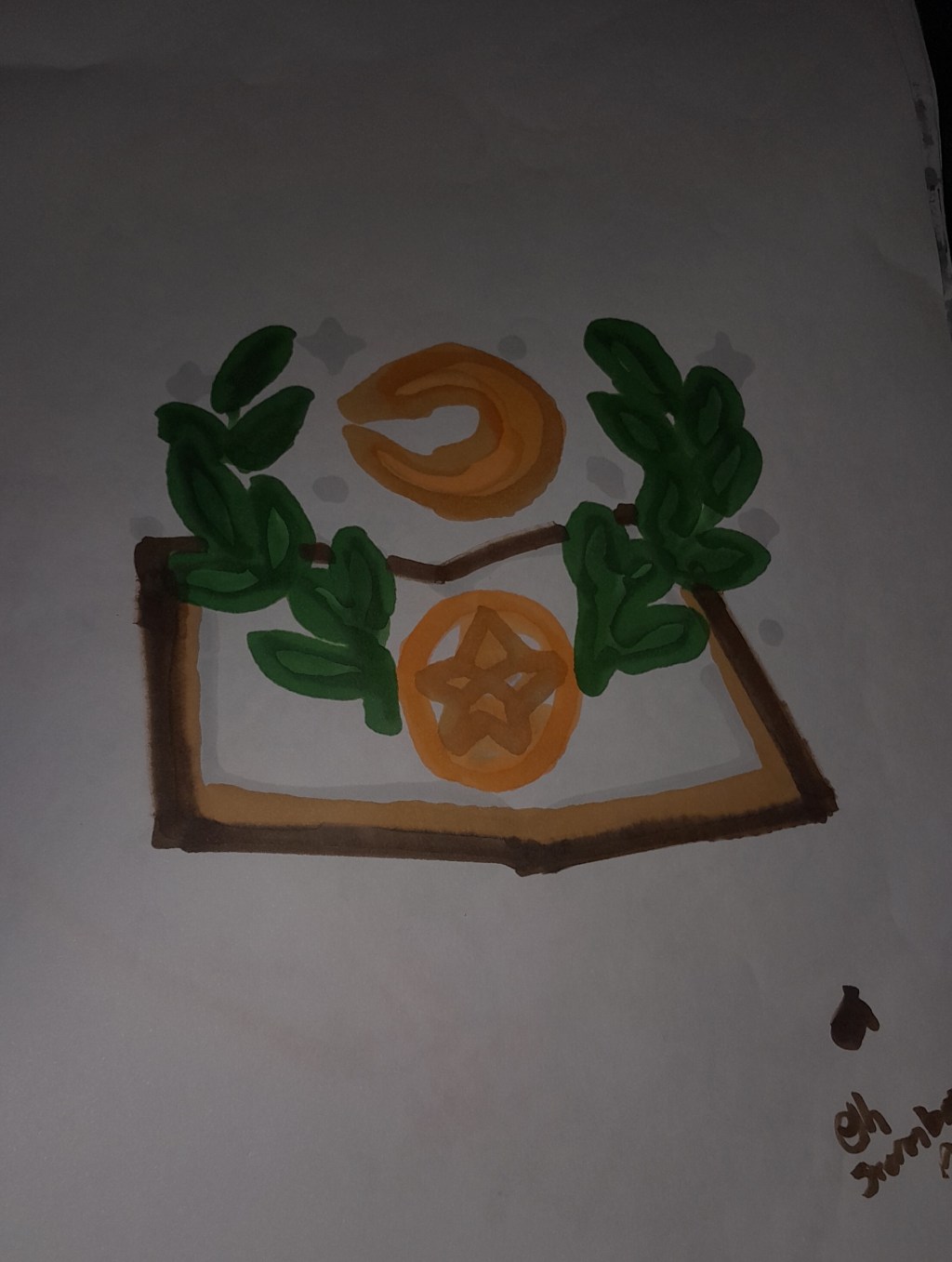
    Illustration of the Moon-Star Sigil, featuring a crescent moon, a star, and laurel leaves atop a wooden tablet, representing protection and lineage.
    Illustration of the Moon-Star Sigil, symbolizing protection and lineage for the Stormborne family.

    Item Type: Necklace, cufflinks, or cloak-pin


    Worn By: Every Stormborne sibling, child, or descendant
    Origin: The Ash Grove, c. 410 AD
    Maker: Leofric (then known as Lore)

    Long before kings wrote laws and priests wrote scripture, the Stormborne family carried only one form of protection the Moon-Star Sigil, a small charm worn close to the skin.

    Leofric, the scribe and warlock of the family, carved the first charm from rowan wood, binding it with iron dust and ash from the sacred grove. The design came to him in a dream.

    The crescent moon for memory and foresight.

    The star for protection and the five truths of the Old Ways.

    The laurel leaves for lineage and victory.

    The wooden tablet for the bond of blood and oath.

    It was said that no Stormborne wearing the sigil would fall unnoticed, unavenged, or forgotten.

    Thunorric wore his as a neckpiece, tied with leather from his first wolf pelt.
    Dægan later commissioned iron cufflinks bearing the same sigil when he served the kings of Mercia.
    Eadric’s children carried them as belt tokens, and Rægenwine hung his above the inn d the threshold.

    Every Stormborne generation crafted their own variations, but the meaning never changed:

    “Moon to guide us. Star to guard us. Leaves to bind us. Wood to ground us.
    Stormborne, alway.

    To read the Stormborne stories.

    Chronicles of Draven

    Ancient Magic and Myth of the Stormborne

    The Prophecies and Tales of Taranis Unfolded

    The Chronicles of Drax

    Join the Adventure in Tales of Rayne’s Universe

  • Celebrating Calan Gaeaf: A Nod to Welsh Heritage

    Celebrating Calan Gaeaf: A Nod to Welsh Heritage


    As I mentioned yesterday, much of what is now England. Was once Welsh land so as part of today’s celebrations,. I give a small nod to my Welsh roots and the history that shaped these lands.


    I’d like to wish everyone a Calan Gaeaf hapus, also known as a Happy First Day of Winter!


    To many Christians, it’s celebrated as All Saints’ Day. But whatever name you know it by,. Take a moment to enjoy the turning of the season and stay safe as winter begins.

  • Galan Gaeaf Celebrations: History and Superstitions

    Galan Gaeaf Celebrations: History and Superstitions

    Nos Galan Gaeaf Hapus

    During Roman Britain, people celebrated a festival very like Samhain it was called Galan Gaeaf.


    When the Romans invaded England, they began to see its celebrations blend with their own traditions:

    Feralia a Roman festival to honour the dead, sharing the same reverence for ancestors.

    Pomona a Roman celebration for the goddess of fruit and trees. which gave rise to the tradition of bobbing for apples.

    Galan Gaeaf is an Ysbrydnos a spirit night. when the veil between worlds thins and spirits walk the earth.
    The term first appears in literature as Kalan Gayaf. In the laws of Hywel Dda, and is related to Kalan Gwav.


    In Christian tradition, it became All Saints’ Day, but for those who still celebrate Calan Gaeaf. It remains the first day of winter a time of endings, beginnings, and remembrance.

    Let us not forget our past our warriors, our farmers, and the land itself that gives us life.

    Ancient Traditions

    As a harvest festival, farmers would leave a patch of uncut straw. Then race to see who can cut it fastest. The stalks were twisted into a mare, the Caseg Fedi.


    One man would try to sneak it out in his clothes. If successful, he was rewarded; if caught, he was mocked.

    Another tradition, Coelcerth, saw a great fire built. Each person placed a stone marked with their name into the flames. If any name-stone was missing by morning, it was said that person would die within the year.


    Imagine the chill of dawn as people searched the ashes for their stones!

    Then there was the terror of Y Hwch Ddu Gwta. The black sow without a tail and her companion, a headless woman who roamed the countryside. The only safe place on Galan Gaeaf night was by a roaring hearth indoors.

    Superstitions were everywhere:
    Touching or smelling ground ivy was said to make you see witches in your dreams.


    Boys would cut ten ivy leaves, discard one, and sleep with the rest beneath their pillows to glimpse the future.


    Girls grew a rose around a hoop, slipped through it three times. cut the bloom, and placed it under their pillow to dream of their future husband.

    It was also said that if a woman darkened her room on Hallowe’en night and looked into a mirror. Her future husband’s face would behind her.
    But if she saw a skull, it meant she would die before the year’s end.

    In Staffordshire, a local variation involved lighting a bonfire and throwing in white stones . If the stones burned away, it was said to foretell death within a year.

    Food and Feasting

    Food is central to the celebration. While I don’t make the traditional Stwmp Naw Rhyw. a dish of nine vegetables I make my own variation using mixed vegetables and meat.

    There’s little real difference between the Irish Gaelic Samhain and the Welsh Calan Gaeaf.


    Each marks the turn of the year the death of one cycle and the birth of another.


    Over time, every culture left its mark: the Anglo-Saxons with Blōdmonath (“blood month”). Later Christian festivals layered upon the old ones.

    The Borderlands of Cheslyn Hay

    I was born in a small village called Cheslyn Hay, in South Staffordshire. WHhich I think is about five miles from what the Norse called the Danelaw, the frontier lands.


    Before the Romans came, much of Staffordshire and indeed much of England was part of ancient Welsh territory.
    Though little is known of this period, imagination helps fill the gaps between the facts.

    The Danelaw was established after the Treaty of Wedmore (878 CE). Between King Alfred of Wessex and the Viking leader Guthrum.

    It divided England roughly from London northwards, trailing the Thames, through Bedfordshire, along Watling Street (A5), and up toward Chester.

    Watling Street the old Roman road that passes through Wall (near Lichfield). Gailey was often described as the de facto border between Mercia (to the west) and the Danelaw (to the east).

    Cheslyn Hay lies just west of Watling Street, near Cannock and Walsall. Placing it right on the edge of Mercian territory within sight of Danelaw lands.
    Because of that proximity, the area would have been influenced by both sides.


    Norse trade routes and settlers passed nearby, along Watling Street and the River Trent.


    Villages like Wyrley, Penkridge, and Landywood show both Old English and Celtic/Norse roots.

    It’s easy to imagine that my ancestors have traded or farmed alongside Norse settlers. after all, many Vikings were farmers too.


    Part of my family came from Compton and Tettenhall Wood. Where a local battle is still spoken of today; the other side from Walsall.


    Archaeological finds near Stafford and Lichfield suggest Viking artefacts and burial mounds, linking the landscape to that history.

    So while Cheslyn Hay wasn’t technically within the Danelaw. It stood upon the Mercian frontier what I like to call “the Border of the Ring” . where Saxon, Norse, and Brythonic traditions once met and mingled.

    My Celebration Tonight

    As I live in a flat, I’ll light a single candle instead of a bonfire. Cook a small feast vegetables and pork with a potato topping.


    For pudding, I’ll have blueberries, strawberries, and banana with an oat topping and warm custard.


    I’ll raise a glass to my ancestors and set a place at the table for any who wish to join.

    Thank you for reading.
    Nos Galan Gaeaf Hapus
  • Salt, Survival, and Roman Conquest in Britain

    Salt, Survival, and Roman Conquest in Britain

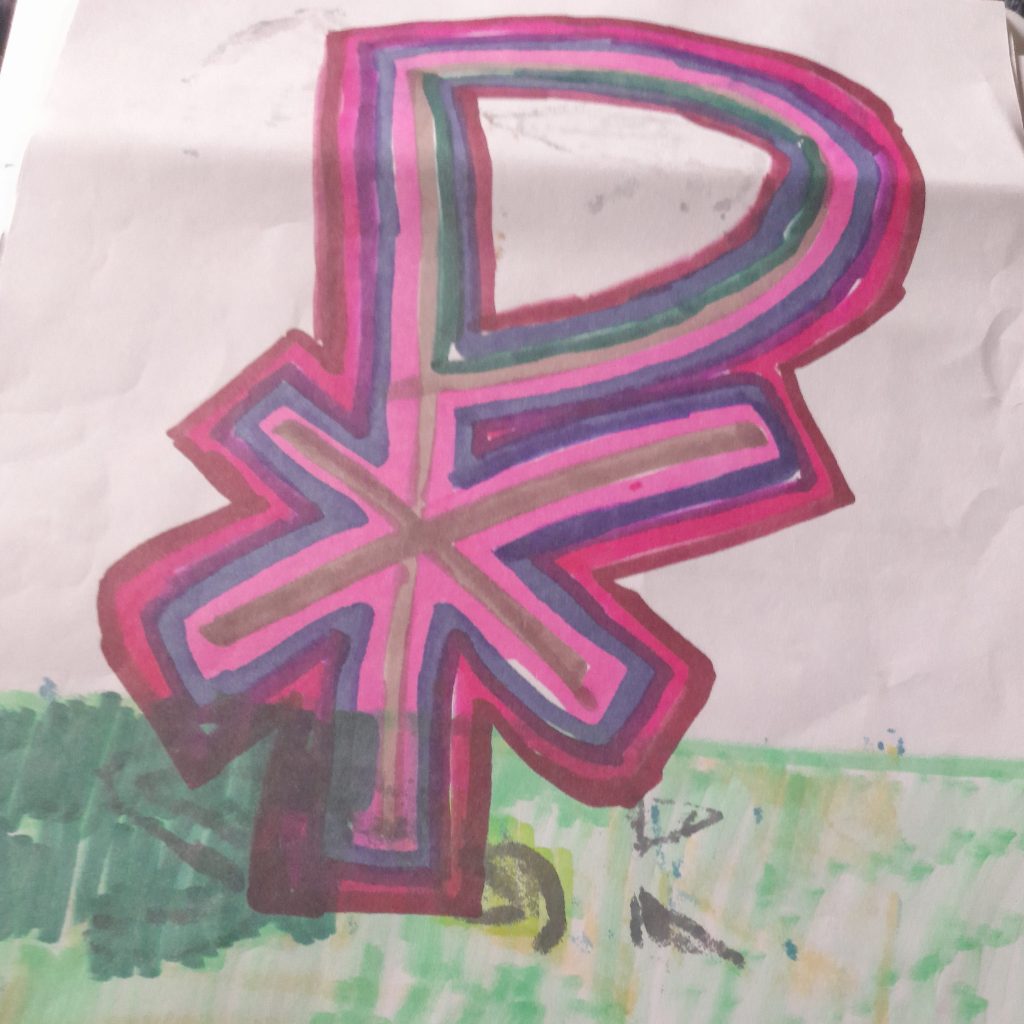
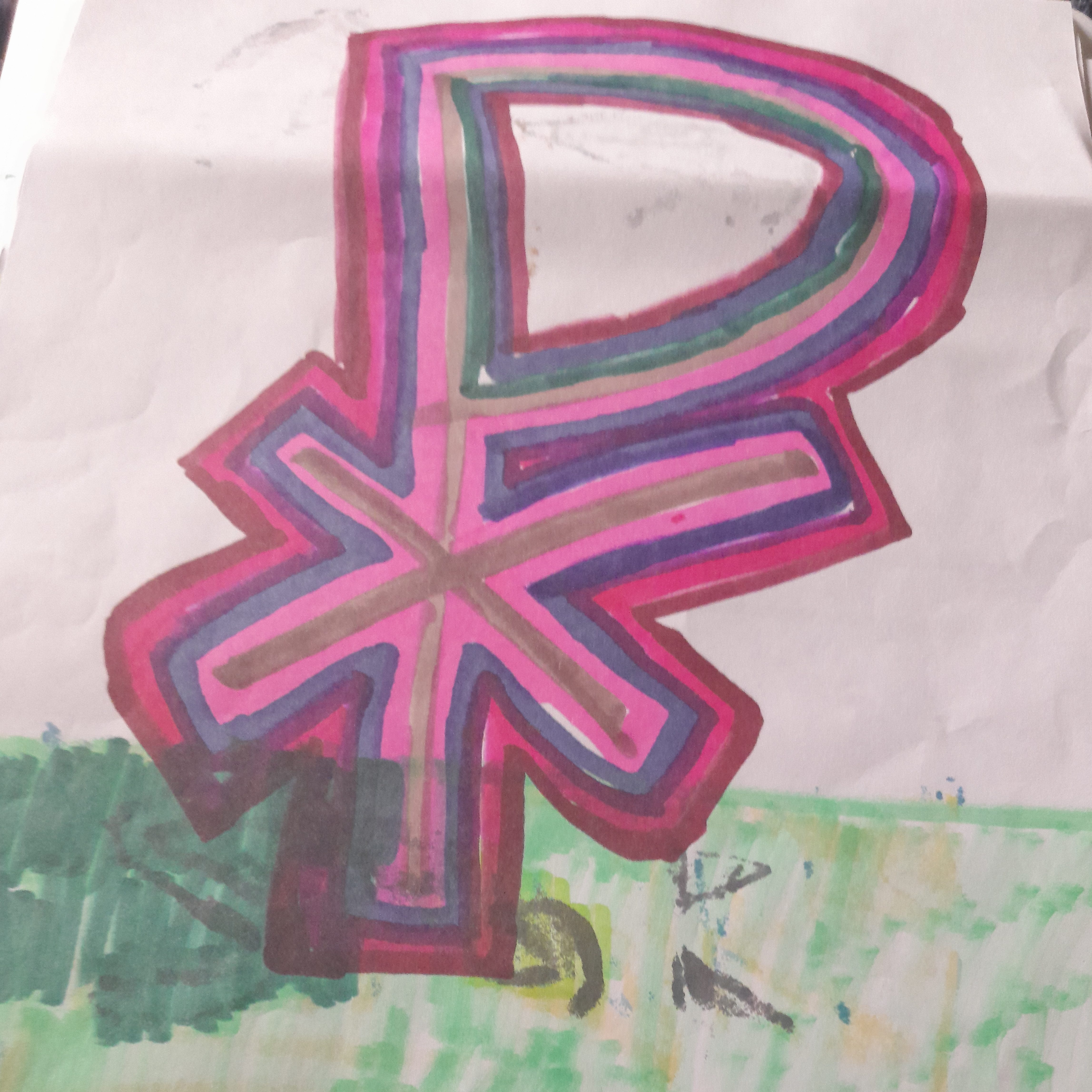
    A colorful hand-drawn illustration of a large symbol resembling a cross, outlined in vibrant colors including pink, purple, and green, set against a green background.

    When the Roman legions marched into Britain in AD 43 under Emperor Claudius, they did not find an empty land. They found a patchwork of proud tribes, each with its own rulers, gods, and customs.

    To the west of Watling Street lay the Cornovii, rooted in Shropshire and Staffordshire. To the south, around the salt-rich lands of Droitwich and Gloucestershire, stood the Dobunni. Both tribes would feel the weight of Rome’s advance.

    Salt and Survival

    Salt was life. It preserved food, healed wounds, and was as valuable as coin. The Romans renamed Droitwich Salinae and placed it under heavy control, taxing the salt trade and guarding it with military force.

    For the Celts, who had long drawn wealth from the brine springs, this was both a theft and an insult. To strike the salt routes was to strike at Rome itself.

    Resistance and Betrayal.

    Not all Britons resisted. Some tribal leaders saw the might of Rome and chose to make an alliance. They took Roman names, built villas, and dressed in the style of their conquerors.

    Others fought tooth and nail, their warriors painted, their gods called upon in the forests and on the hills. This clash between loyalty to tradition and the lure of Roman power split kin and tribe alike betrayal often hurt more than Roman swords.

    Gods of Two Worlds.

    The Romans rarely erased local gods. Instead, they blended them into their own pantheon.

    Taranis, Celtic god of thunder, was aligned with Jupiter, wielder of lightning.

    Sulis, worshipped at Bath, was merged with Minerva, goddess of wisdom.

    Even the war goddess Andraste found echoes in Roman Mars and Bellona.

    For many, this was a mask. Outwardly Roman, inwardly Celtic still. Temples rose with Latin names carved into stone, yet behind closed doors, the old rituals carried on offerings at sacred groves, whispered invocations at standing stones.

    Daily Life Under Rome.

    Markets bustled with pottery, wine, and oil imported from Gaul and Spain. Roman roads cut straight through the land, binding together forts, towns, and villas. Yet step off the road and you might still find Celtic roundhouses, farmers living as their ancestors had, and druids carrying wisdom that defied Rome’s order.

    Legacy.

    Celtic–Roman Britain was not either fully conquered or fully free. It was a place of merging, conflict, and uneasy coexistence. Rome imposed its order, but the spirit of the land the forests, the rivers, the stones still whispered the old names.

    For some, like the warriors of legend, this was a time of rebellion. For others, a time of survival. And for figures like Taranis Stormborne, also known as Storm caught between gods and men, Rome and Celt, it was the crucible that forged myths still told today.

    © 2025 Emma Hewitt. All rights reserved.This story and all characters within the StormborneLore world are the original creation of Emma Hewitt. No part of this publication may be reproduced, distributed, or transmitted in any form or by any means without the prior written permission of the author, except in the case of brief quotations used in reviews or scholarly works.