Tag: mythic fiction

  • After the Burning

    After the Burning

    Chronicles of Taranis / Thunorric Stormwulf
    © 2025 E. L. Hewitt / Stormborne Arts

    The burning of the church was a sunrise to everyone who saw it. But to Thunorric, it was the opportunity he needed.
    In the confusion, he slipped the chains placed on him by the Sheriff of Tamworth. Then rode straight toward the shire of his birth. He was fully aware that he would now be hunted by the king’s riders. The Church, and any thief who wanted coin badly enough.

    His only hope for shelter was Rægenwine’s inn though even family can not be trusted. He never thought he would rely again on the man who betrayed him to the Romans. Then the man also betrayed him to the sheriff.

    He halted his horse on a green hilltop. Morning light poured through the trees, bathing the grass in gold.

    “War,” he murmured to the black stallion he’d stolen from a lord near Tettenhall Wood. “It’s going to be a wonderful day.”

    He urged the horse into Cannock Woods and vanished beneath the canopy.

    The Hunter in the Trees

    “Where there’s war, riot, and discord,” he muttered, “I’ll be front flank for all to see.”

    He found a small nook between the trees and dismounted, letting the stallion graze. The soft tread of his boots calmed him. A thin stream whispered nearby.

    He picked up a thick branch and began carving it into a weapon sharpening one end. Crossing another and moved quietly through the autumn leaves. When he spotted a deer drinking at the stream, a few swift blows brought the animal down. Soon a fire crackled beneath a great oak, and he began preparing the meat.

    “Cooked venison for now,” he said to himself, “and dried meat for days.”

    As he ate, he watched the woods for soldiers.

    His mind drifted to his brothers Dægan, Leofric, Eadric, and Rægenwine and to the nobles of Mercia and Wessex. All of whom would now curse his name. Demon. Devil. Stormwulf. Escaped again.

    He pictured the sheriff: a man of fifty, muscular and loud, barking orders with more anger than sense. Thunorric chuckled at the thought.

    But when he thought of his thirteen sons, his smile faded.
    The oldest five were old enough to serve. He’d given them his blessing.
    But the younger ones… they would have questions. Questions his brothers might not answer.

    The ache in his chest was sharper than any blade.

    Yet he was a wanted man a demon to the Church, a criminal to the king. After years of taking from the rich to feed villages starved by unfair taxes. He had earned little but their fear.

    The Black Shields his hidden movement would continue without him. They always had.

    He breathed in the scent of sweet leaves, wet earth, fungi, and old wood. All of which was fresher than the damp stinking cell the monks had held him in.

    He slept for a few hours. When he woke, dusk pressed against the trees.

    The Crossroads

    He mounted the stallion, wrapped a cloth over his face, and rode toward the crossroads. Where he had robbed the king’s carriages many times before.

    He spotted one now four horses, armed guards, and a noble family inside.

    Perfect.

    Thunorric burst from the treeline like a wolf, blade ready.
    The drivers panicked. One tried to lift a horn, but Thunorric struck first.

    He stabbed the driver in the arm and seized the reins, forcing the horses to halt.

    “Out. Yow get,” he barked.

    A beautiful lady froze as he pressed his blade to her neck.

    “Everything you’ve got. Hurry, or she dies.”

    “You can’t do this!” the older man shouted. “Do you know who I am?!”

    “Aye,” Thunorric said calmly. “But I don’t care. Give me what I want and live or I take it off your corpse.”

    “It’s him,” whispered one of the sons. “The demon.”

    In minutes, Thunorric had their clothes, weapons, and coin. He tied one of their horses to his saddle.

    “I’ll be kind,” he said with a smirk. “I’m only taking one.”

    As he rode away, the noble roared:

    “The king and the sheriff will hear of this!”

    Thunorric laughed.

    “Tell ’em the devil said vilis.”

    He galloped toward Moel-Bryn, changed into the stolen clothes, burned his old rags, cooked fresh meat. Then travelled through wind and rain toward Worcester.

    The Boy on the Road

    Just outside the city, a young man leapt from the shadows tall, muscular, dark-skinned, no more than sixteen winters old.

    “No one else here,” Thunorric said. “Just the Wolf of Rome. Alaric. Good to see your face. Any news?”

    “Plenty.” The boy’s Yorkshire accent was thick. “Your reward’s huge now. You’re declared outlaw.”

    “So?” Thunorric shifted his stance. “You going to take me down?”

    “Oh hell no.” Alaric snorted. “You’re the demon now. Staffordshire demon, some say Mercia demon. Others say death won’t let you rest. And besides I owe you my life. Figured if I warned you, debt’s paid?”

    Thunorric nodded once. “Debt paid. Thank you.”

    “May the gods be on your side,” Alaric called as Thunorric rode on.

    He reached his old home, washed, rested briefly, then rode west toward the Welsh border. Enough coin in his pocket to reach Spain if needed.

    Meanwhile at court, the half-naked noble boy from the robbed carriage arrived with his family. Guards tried not to chuckle.

    “Well then,” the king said, approaching, “dare I ask what happened?”

    “The demon,” the lord spat. “He stole everything and killed our driver.”

    Tamworth’s great hall echoed with uproar long before sunrise. Smoke curled along the rafters. The sheriff knelt before King Coenwulf, mud on his boots, throat bandaged.

    “The creature escaped your custody,” the king growled. “You let him burn an abbey and now he humiliates one of my lords.”

    “My lord… the storm”

    “The storm does not shatter bell towers,” Coenwulf snapped. “Men do.”

    “What do they call him now?”

    “Stormwulf, sire. Some say the Staffordshire demon. The Mercia demon.”

    Whispers spread. Hard men crossed themselves.

    Coenwulf did not.

    “Then let him be hunted,” he said. “Anyone who shelters him dies beside him. Anyone who brings me his head receives land, silver, and title.”

    He nodded to the scribe.

    “Write.”

    The vellum unfurled.

    “Let it be known throughout Mercia and the borderlands that Thunorric, called Stormwulf. outlaw and murderer, stands beyond the law of crown and Church.
    Taken dead or alive.
    Reward: one purse of gold for his body, two for his head.”

    A scarred hunter stepped forward.

    “I’ll bring your demon in chains.”

    Coenwulf nodded once.

    The hunt began.

    The Inn at the Border

    Thunorric crossed the last ridge before the Welsh border as dusk bled into the trees. The air tasted of rain and smoke.

    He approached the inn wedged between two standing stones. His brother Rægenwine’s inn the same man who had betrayed him twice.


    But Thunorric couldn’t blame him. The man had believed he was protecting the children.

    He tied the horse beneath the oak and stepped inside.

    Every sound died instantly.
    Tankards stopped in mid-air. Dice froze. The bard’s string snapped.

    “I’m not here for trouble,” Thunorric said, walking to the bar.

    Rægenwine looked up colour draining from his face.

    Thunorric lifted his hood just enough for the firelight to catch his eyes.

    “Rægenwine,” he said softly. “You’re forgiven.”

    “I… I didn’t expect that,” Rægenwine whispered.

    “Aye, well.” Thunorric stepped closer. “Don’t mistake forgiveness for trust.”

    “You have every right to hate me,” Rægenwine murmured.

    “I don’t hate you,” Thunorric said. “You did what you thought was right. Rome tricked you. They tricked many. But betrayal has a weight and you’ve paid more of it than you know.”

    Rægenwine swallowed. “You came back. That must mean something.”

    “It means the roads are crawling with hunters,” Thunorric said. “King’s men. Church men. Thieves hungry for silver. And I needed shelter only for an hour.”

    “You’ll have it,” Rægenwine promised. “I’ll turn away anyone who asks.”

    Thunorric’s smile was thin and dangerous.

    “If I wanted you dead, brother… you wouldn’t hear the door open.”

    Rægenwine bowed his head. “I’m sorry. I was only trying to keep the children safe.”

    Thunorric exhaled. “Good. Now pour me a drink. The storm’s on my heels.”

    Rægenwine hurried, hands trembling.

    Thunorric turned to the Black Shields behind him.

    “Look after this inn,” he murmured. “And his family in my absence.”

    Just as the ale touched his hand, the door opened.

    Cold air.
    Wet leaves.
    Heavy, familiar footsteps.

    The Brothers Arrive

    Dægan and Leofric stepped inside.

    The inn froze again.

    Dægan tall, broad-shouldered, cloak the colour of storm-clouds, bearing the king’s mark.
    Leofric leaner, ink-stained hands, eyes like old winter, a scribe and warlock whose words carried as much weight as steel.

    Rægenwine bowed. “My lords… I didn’t know you were coming.”

    “You didn’t need to,” Dægan said calmly. “Where is he?”

    Leofric’s gaze drifted toward the back tables.

    “No need,” he murmured. “He’s here.”

    Dægan spotted him with the Black Shields.

    Thunorric didn’t turn.
    Didn’t flinch.
    Didn’t pause.

    “…and if you reach the ford by nightfall,” he said to the Shields, “light no fire. The hunters have dogs.”

    One Shield swallowed. “Wolf… your brothers”

    “I know,” Thunorric said. “I heard them the moment they stepped in.”

    He finally turned, smirking beneath his hood.

    “Well then,” he drawled, “if it ain’t the golden sons of Mercia.”

    Dægan stepped forward. “Brother, we need to talk.”

    Thunorric’s eyes gleamed.

    “About which part? The abbey burning? The king’s writ? Or the price on my head?”

    Leofric’s jaw tightened. “All of it. You’ve started a storm bigger than you realise.”

    Thunorric smiled slow and wolfish.

    “I didn’t start the darkest of storms,” he said.
    “I am the darkest of storms. Devourer of souls. Destruction at the end. Death and resurrection.”

    And the inn went silent the silence that comes before something breaks.

    ©2025 E. L. Hewitt / Stormborne Arts. All Rights Reserved.This work, including all characters, settings, lore, concepts, and text, is the original creation of E. L. Hewitt. No portion of this material may be reproduced, shared, reposted, copied, adapted, or distributed in any form. without prior written permission from the author.Unauthorized use, including AI reproduction of this text, is strictly prohibited.

    To read more on Taranis /Thunoric please see The Prophecies and Tales of Taranis Unfolded

  • The Storm’s Justice: A Mercenary’s Journey

    The Storm’s Justice: A Mercenary’s Journey

    When the legions withdrew, law went with them.


    Britain splintered into a hundred petty crowns, each clawing for the ruins of Rome.


    Forts became keeps, temples turned to halls. The roads grew haunted by men who had once marched in order and now wandered for coin.

    Among them rode one they called Stormwulf a hunter without master, born of lightning and exile.


    His eyes still carried the reflection of fires older than the Empire, and wherever he went, the rain followed.

    He took work others would not. Guarding merchants through the wild country, driving raiders from villages, hunting beasts the new priests called devils.


    He never stayed long; gold burned his hands, and gratitude never lasted past sunrise. Those who hired him learned quickly the storm served no king, only itself.

    When asked his name, he gave none.
    When pressed, he said, “Names are for men. I am only what the thunder leaves behind.”

    He rode the dead roads west, through forests where Roman stones still stood like broken teeth.


    Sometimes, in the glint of his sword, he saw the ghost of his own reflection . Not the god he had been, nor the man he pretended to be, but something caught between both.


    He wondered which would die first his memory of the divine, or the world’s memory of him.

    At night, when the fire sank to coals, he spoke softly to the empty dark.
    Not prayers he had no god left to pray to but old words, in a tongue the wind still understood.
    The forest listened. The rain replied.

    By dawn, the storm would be gone, and so would he.
    Only the hoofprints remained, filling slowly with water as the day began again, lawless and unbroken.

    The rain drove him south into the forests of Mercia, where no king’s banner reached.


    For seven days he followed the scent of smoke and wet earth. Until he found a clearing rimmed with ancient ash trees.
    There, beneath branches silvered by moonlight. Men and women waited deserters, thieves, freed slaves, and one witch whose eyes gleamed like stormlight on iron.

    They had heard the stories of Stormwulf the mercenary who rode alone, the one lightning never struck.
    They had lost homes and names, but not hunger.


    When he asked why they waited for him, the witch said. “Because the world has forgotten justice, and you remember what it sounds like.”

    That night, by firelight, he drew a blade across his palm and bled into the roots of the largest ash.
    The others followed, one by one, their blood mingling with his in the cold soil.


    They swore no oath to king or god, only to the storm itself. That they would strike against cruelty wherever it ruled, and share the spoils until the world ended or they did.

    The ash grove became their hall, their altar, their hiding place.
    They raided the tax caravans that bled the villages dry. He burned the grain stores of greedy thanes, and gave food to those who had nothing left but prayers.
    To some they were outlaws; to others, saints.

    Villagers said rain followed their path. That thunder rolled when they rode, and that the lightning spared any roof that had offered them bread.
    In taverns, men cursed them.
    At hearths, women whispered their names with hope.

    Thunorric though few dared call him that. As they sat by the fire one night and watched the sparks rise into the branches.


    For the first time in centuries, he thought the storm is more than destruction.
    In this grove of ash and blood and ruin, it be reborn as mercy.

    But storms are not made for peace.
    And in the darkness beyond the grove, men with silver promises already waited to break what they did not understand.

    It began with a rumour and ended with a corpse.

    A messenger came to the Ash Grove at dusk, bearing word of a bounty.


    A relic had been stolen from the Thane of Wednesbury. a silver cross, heirloom of his son, taken in a raid along the border road.


    The thief was said to be dangerous, armed, and protected by outlaws.
    The Thane’s men offered coin enough to feed the band for a season.

    Stormwulf listened in silence.
    Silver was always a warning, but hunger speaks louder than caution.
    Rægenwine urged him to take it a simple job, he said, quick and clean.
    Thunorric agreed, though the rain that night had an edge to it he did not like.

    He tracked the thief for two nights through tangled wood and flooded fields. The trail led north, where the road curved past a fallen Roman wall and into the low marsh.

    There he found the boy no older than fifteen. mud-streaked, clutching a silver cross so tightly the metal cut his palm.

    “Give it to me,” Thunorric said, sword drawn but voice calm. The boy shook his head. “It was my father’s. He’ll kill me if I go back.”

    Lightning cracked overhead.
    For a heartbeat, the world turned white, and the storm spoke only in instinct.
    When the light faded, the boy lay still, the cross gleaming in his open hand.

    By dawn the Thane’s riders came.
    They found the mercenary kneeling beside the body, soaked to the bone, blood running down his arm.
    The silver lay on the ground between them like a sentence.

    His companion the man who had brought the message was gone.
    So was the promised coin.

    The riders bound him in chains and dragged him through the mud toward Wednesbury.


    The villagers hid behind their doors as thunder followed the procession.


    Some swore the sky darkened as he passed. Others that the rain hissed like boiling water when it struck his skin.

    At the gates, the Thane himself waited, eyes hollow from grief and pride.
    He looked at the prisoner and said only, “The devil has many faces. Today it wears yours.”

    They threw Thunorric into the stockade beneath the old Roman wall.


    The guards whispered that the thunder outside matched the beating of his heart.


    None dared sleep that night.
    By morning, the storm had not moved.

    And in the east, where the sky bruised toward dawn, lightning traced the shape of chains across the clouds.

    The chains tasted of rust and rain.
    They had bound him with iron cold enough to sting the bone. Nailed the ends to the stone floor, and left him beneath the abbey where the damp never slept.


    Outside, thunder prowled the hills; inside, men whispered prayers to keep it from coming closer.

    At dawn they brought him to the hall.
    The abbot waited beneath a carving of the Crucifixion, the air thick with incense and candle smoke.
    Around the edges of the room, monks muttered as if their breath smother a storm.

    “You are to be tried by the Church,” said the abbot. “For murder and blasphemy. You will answer for the blood on your hands.”

    Thunorric laughed, a low crack of thunder in his throat.
    “You caught me, monk. When’s trial? Trial of my peers? Trial by ordeal? You going to make me eat blessed bread? Or make me hold hot iron? Because pray your prisons hold me.”


    He leaned ahead, the chains grating like thunderheads shifting.
    “I will see the fall of your Church like I saw the fall of Rome.”

    A shiver passed through the monks.
    The abbot’s face stayed stone, but his fingers trembled on the rosary.
    “Then pray you are wrong, creature,” he said. “For even storms must break against the rock of faith.”

    They dragged him back to the cell.
    Light seeped in through a single slit, thin and grey as mercy.
    He counted the hours by the sound of bells and the slow drip of water through the ceiling.

    That night a young monk came with bread and a bowl of water.
    He hesitated before sliding them through the bars.
    “You should not mock the abbot,” he said. “God listens.”

    Thunorric looked up, eyes catching what little light remained.
    “Then let Him listen,” he said softly. “Let Him hear what men do in His name.”

    The monk flinched but did not run. “You killed a child,” he whispered.

    “I killed a thief,” Thunorric answered. “A thief my master set before me. The sin is his, not mine.”

    “Sin can’t be passed like silver.”

    “Then tell your god that mortals have made it currency.”

    The monk said nothing more. He left the bread, untouched.

    Days bled together. The storm outside circled but did not strike.
    When the monks prayed, the sound reached him like waves breaking on distant rocks.


    He slept little, dreaming of the ash grove. Of blood sinking into the roots, of brothers who had once shared his fire.

    On the seventh night lightning struck the abbey’s bell tower.
    The sound tore through stone and sleep alike.


    Dust rained from the ceiling; iron shook against iron.


    In the flash that followed, he saw his own shadow stretch enormous across the wall wolf-shaped, man-shaped, god-shaped.

    When silence returned, he smiled.
    “The storm remembers,” he said.

    No one answered. Only the rain, steady and patient, tapping the bars like a drumbeat waiting to start.

    The rain did not stop when they chained him below the abbey.
    It hammered the roof as if trying to find a way in.


    Every drop that slipped through the cracks struck stone with the sound of distant drums.

    Thunorric lay on straw that smelled of salt and mould.


    The chains pulled at his wrists and ankles, ringing faintly whenever he breathed.


    They had been forged from iron scavenged out of a fallen star, the monks said.


    Iron from the sky to hold a thing born of the sky.

    The abbey above thrummed with activity bells, chanting, the scurry of fearful feet.
    They prayed louder each time thunder rolled, as though voices out-shout the storm.


    He listened to them and thought of armies he had seen crumble. Of kings who believed walls stand against weather.

    By the second night, he knew every sound of the place.
    The monk who snored near the stairs, the one who coughed through his prayers.


    The drip of rain that found its way through the ceiling and landed exactly on the scar across his collarbone.

    When the door finally opened, light spilled in thin and uncertain.
    A young monk stepped inside carrying a jug of water and a bowl of barley.
    His robe hung too big on him; his courage fit even worse.

    “You should eat,” the monk said.

    “I should be free,” Thunorric answered.

    The monk hesitated. “You blaspheme without fear.”

    “I fear nothing made by men,” Thunorric said.
    He lifted his chains and let them fall again, the sound echoing through the stone like thunder’s laugh.
    “What is your name?”

    “Eadwine.”

    “Then remember it, Eadwine. Names are the only thing that keep you whole when the world starts to drown.”

    The boy swallowed. “They say the iron that binds you fell from the heavens.”

    “It did,” Thunorric said. “Once I called such iron home.”

    Eadwine’s eyes widened, but curiosity outweighed fear. “Are you a demon?”

    “No. Just older than the words you use to name your demons.”

    For a moment neither spoke. The rain filled the silence.
    Eadwine set the bowl down, stepped back toward the door, and whispered,. “If you are not a demon, pray for forgiveness.”

    Thunorric smiled, slow and sharp. “I do not pray. I remember.”

    When the door closed, the cell grew dark again.
    He flexed his hands; the iron hummed softly, as though recognising him.
    Above, the bells began another hymn.
    He mouthed the words he still knew from older tongues,
    and somewhere far beyond the walls, thunder rolled an answer.

    Days slid past like rain over stone.
    The monks said nothing of trial or mercy, only came and went with bowls of barley and water. leaving prayers behind them like footprints in mud.
    Thunorric counted time by thunder.

    When none came, he marked it by the drips that fell from the ceiling. a rhythm that never stopped and never changed.

    Sometimes he thought the walls breathed.


    At night, when the chants above faded to murmurs, the stones seemed to whisper in languages long forgotten.
    They spoke in the hiss of water, in the slow groan of the beams.

    In the heartbeat of iron cooling after lightning. He almost hear his brothers’ names in the noise Dægan, Leofric, Eadric, Rægenwine. Spoken like fragments of an unfinished prayer.

    The young monk, Eadwine, came often.
    He brought bread now, softer than before, and a thin blanket that smelled of smoke.


    He said it was charity; Thunorric said it was guilt.


    They talked in low voices, wary of echoes.

    “Why do you listen to the storm?” Eadwine asked one evening.

    “Because it remembers,” Thunorric said. “Everything else forgets.”

    The monk glanced at the ceiling, where the rain whispered against the roof. “What does it remember of me?”

    “That you are small and afraid, but still you open the door. That is enough.”

    Eadwine left quickly after that, though he bowed before closing the latch.
    Thunorric watched his shadow vanish up the stairs and listened to the faint sound of bells above.


    The iron around his wrists felt warm. The links hummed, soft as bees in a summer field.

    That night lightning struck the bell tower.


    The sound rolled through the stones, shaking dust from the ceiling and waking every soul in the abbey.
    The bells screamed once, then went silent.

    In the darkness after, the whispering returned clearer now, closer.
    The walls no longer murmured in strange tongues. But in words he knew: old words of the storm, promises made under skies that no longer existed.


    He closed his eyes and breathed the damp air, feeling the thunder build somewhere beyond the hills.

    The storm was not done with him.
    It waited, patient as the sea, outside his cage of stone.

    “When will you let me out for air?” Thunorric asked.
    The words rolled through the cell like a low growl.

    Brother Eadwine stood on the other side of the bars, the torchlight painting his face in trembling gold.
    “The abbot says the storm has not passed,” he answered. “Until it does, you stay below.”

    Thunorric smiled without warmth. “Then I will die of your caution before I die of your judgment.”

    “You still think yourself beyond it,” the monk said.

    “I have outlived every law you worship,” Thunorric replied. “But the air here stinks of fear. Even gods choke on fear.”

    Eadwine looked away. He had grown thinner since the first day pale from fasting and from the whispers that haunted the abbey halls.


    Each night the brothers spoke of signs: candles that guttered without wind. Prayers lost mid-word, dreams of wolves pacing the cloister.

    The young monk reached through the bars with the key. “I can take you to the cloister walk. Only a moment. You’ll be bound.”

    Chains clinked; the iron groaned as if warning them both. Eadwine’s hands shook, but he fastened the cuffs and led the prisoner up the narrow stair.

    Outside, dawn pressed pale and heavy through the mist. The cloister garden was all wet grass and gravestones.
    Thunorric inhaled deeply, the scent of rain and ash thick in his lungs.

    “This is mercy?” he asked.

    “It is all we can give.”

    He laughed softly. “Then your god is a miser.”

    They stood in silence until the bells called the monks to Prime.
    From the far end of the yard came the sound of hooves pack horses bringing supplies from the village.


    Among the drivers was a man with a hood drawn low. Thunorric knew the gait, the way the man favoured one knee.

    “Rægenwine,” he said, voice quiet but certain.

    Eadwine turned. “You know him?”

    “I knew him before he learned the price of betrayal.”

    The hooded man looked up then, eyes meeting Thunorric’s across the wet garden.


    For a heartbeat neither moved. Then Rægenwine tipped his head as if in apology and went inside with the brothers to deliver his goods.

    Eadwine frowned. “A friend?”

    “Once.” Thunorric tugged lightly at the chain between his wrists. “Now a man who carries guilt heavier than this iron.”

    Rain began to fall again, slow and deliberate. The storm that had circled for days was gathering its breath.

    Eadwine guided him back below. “If you would pray”

    “I told you,” Thunorric said, descending into the dark. “I do not pray. I remember.”

    The door closed, the bolts dropped, and the world shrank to the smell of rust and damp stone.


    Thunorric looked up at the ceiling and added, his voice flat but not unkind.


    “Tell your abbot I will not convert. The Romans tried and failed. I will not give him satisfaction.”
    He glanced toward the untouched bowl on the floor. “And you, monk eat before the storm does.”

    The abbey smelled of rain and fear.For three nights thunder had stalked the hills without striking, and sleep had fled every cell.When the door to Thunorric’s chamber burst open, the storm followed in behind it like breath drawn through broken teeth.

    Two monks entered carrying rope and holy water . Their orders were to bind the prisoner for purification. The abbot had declared that only prayer and pain scourge the darkness from him.

    Neither expected the darkness to strike back.Thunorric rose before they touched him.Even in chains he moved like a wolf shaking off a snare.

    The first monk’s bowl shattered against the wall, scattering water that hissed where it landed on the iron. The second swung a cudgel. Thunorric caught it in both hands and wrenched it free, the links of his shackles screaming in protest.

    “Orare potes,” he said, his voice steady and low, eyes bright as lightning.“Sed animas tuas non servabit cum tenebrae se explicabunt.” You pray, but your prayers will not save your souls when the darkness unfolds.

    The monks froze, terror whitening their faces.The torches guttered. Shadows crawled up the walls as if the stone itself had learned to move.One monk fled; the other fell to his knees, clutching the crucifix at his throat.

    Thunorric only smiled, slow and dangerous. “You brought chains to the storm,” he said. “Now you’ll learn what storms do to chains.”

    Outside, the wind rose.The bells began to toll of their own accord, a wild, discordant peal that no hand guided.

    Brother Eadwine appeared at the top of the stair, face pale, torch shaking.

    “Enough!” he cried. “You’ll kill them!”

    Thunorric turned his gaze upward. “No, little monk. The storm will.” Lightning struck somewhere above, shaking dust from the ceiling and splitting the air with light.

    For an instant the cell burned white, and every shadow in the abbey seemed to reach toward him.

    When the thunder rolled away, only silence remained deep, electric, waiting.The air in the corridor shimmered, alive with the scent of rain and iron.The storm had found its way inside, and it was listening.

    “Secure him!” one of the monks shouted, his voice cracking over the storm’s roar.

    Thunorric fought like something born of the tempest itself even in chains, he struck faster than they could move. A smirk cut across his face as two of them slammed him back against the wall. the iron biting deep into his wrists.

    “Make the irons short,” another commanded. “No outside time. No food until he yields.”

    The torches flickered, casting wild shadows that danced across the damp stone.

    “Did you two come in for a specific reason?” a third monk muttered from the doorway, “or just to feed the devil’s pride?”

    No one answered. The rain outside hit harder, drumming against the roof like distant hooves.

    Thunorric looked up through the bars of light that fell across his face. “If I am the devil you fear,” he said quietly, “then you built his temple yourselves.”

    The youngest monk hesitated Eadwine. He looked between his brothers and the man in chains, then down at the key trembling in his hand.

    Lightning struck again, the sound rolling through the walls like the breath of a god. The oldest monk crossed himself. “He’s calling it down,” he whispered. “He’s calling it here!”

    “Get back!” Eadwine shouted but the warning came too late. The bell tower exploded in white fire.

    Stone screamed. The floor shuddered. The iron that bound Thunorric snapped with a sound like thunder tearing through bone.


    He rose from the shattered floor as the storm poured in through the cracks. wind, rain, and lightning chasing one another in a single violent breath.

    The monks fell to their knees, covering their heads. Some prayed. Some screamed.


    Only Eadwine stood frozen, staring through the smoke as the prisoner walked past him unbound, eyes bright with stormlight.

    “Run,” Thunorric said.

    Eadwine did.

    When the roof gave way, fire met rain in a clash that split the night. By dawn, only blackened stones remained.
    Villagers who came to pray found the cross shaft split and scorched. The abbey gone as if it had never been.

    They said a wolf’s shape was seen walking from the ruins, lightning dancing in its wake.


    They said the storm that took Wednesbury never touched the same ground again.

    Eadwine lived, though his hair turned white that night.


    He wandered south for years, barefoot and silent, until he reached the ruins of the Roman road at Pennocrucium.


    There he built a small chapel from the stones he carried. One for each brother who had died that night.
    Some say when he prayed, the wind changed direction, as if listening.

    And always, there were travellers on the road who spoke of a hooded man watching from the trees.
    Sometimes he offered bread. Sometimes nothing but silence.
    When asked his name, he gave none.
    When pressed, he said.

    “Names are for men. I am only what the thunder leaves behind.”

    By then the story had changed no longer a prisoner, but a judgment.
    Some called him Saint, others called him Stormwulf.
    Both names fit the weather that followed him.

    The monks rebuilt, but their new walls never stood for long.
    Every year, on the night of the storm’s return. The bells rang without hands, and the rain whispered one name across the stones
    Thunorric.

    And so the legend endured, whispered between churches and barrows, carried by rain across the ages.


    Not as a warning, but a reminder: that faith built on fear will always fall to the storm.

    Copyright Note© 2025 E. L. Hewitt / Stormborne Arts. All rights reserved.Unauthorized copying or reproduction of this artwork and text is prohibited.

    Thank you for reading.

    Read more from the Stormborne Brothers:

    The Prophecies and Tales of Taranis Unfolded
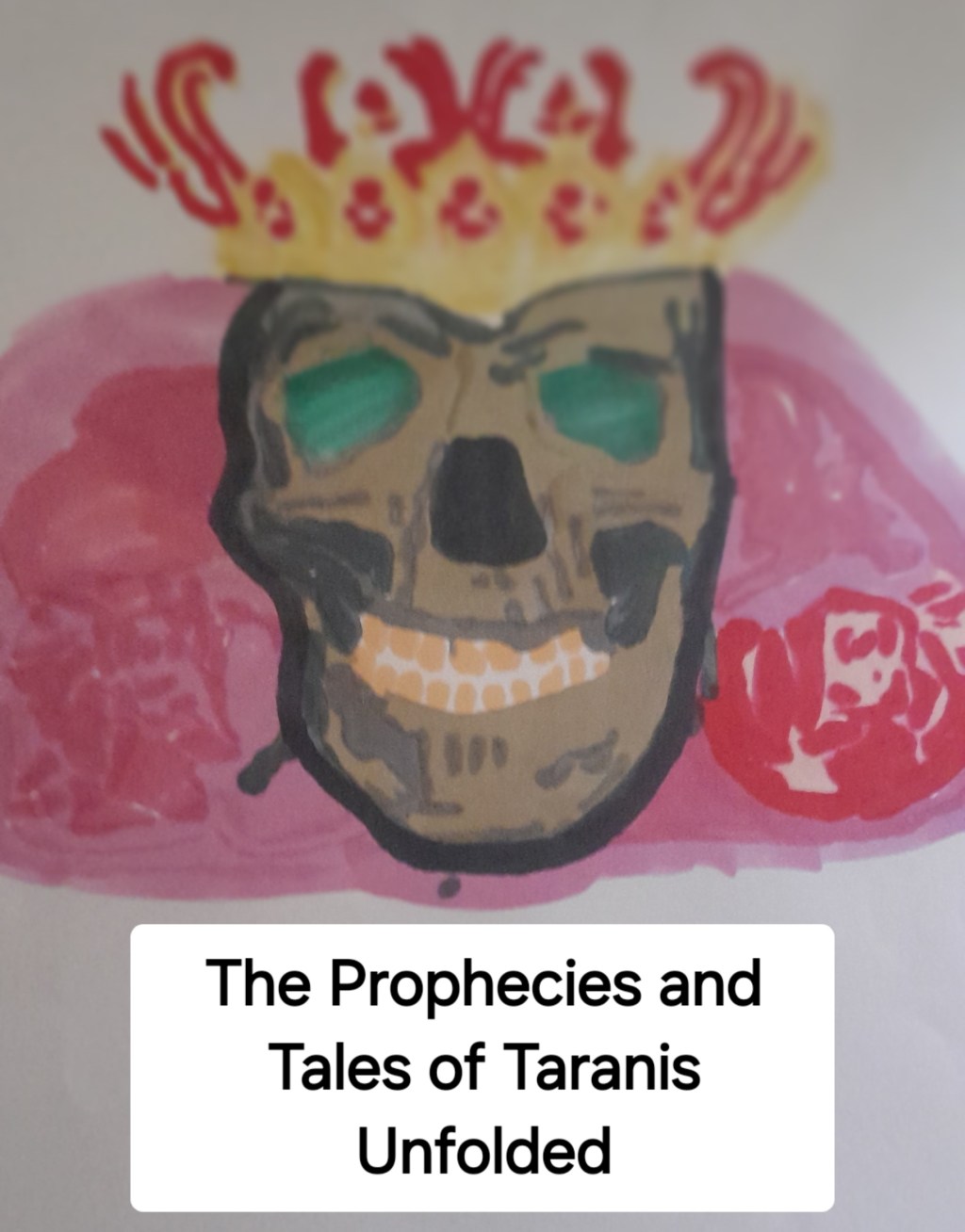
  • Drax Stormborne The Iron Law

    Drax Stormborne The Iron Law

    Where Taranis is the storm,
    Drax is the stone that stands against it.

    He is the brother who holds the line,
    who builds the wall. Who refuses to bend even when the world does.

    Drax does not raise his voice.
    He does not need to.

    Order gathers around him.
    People follow him without understanding why.
    He is the structure that holds chaos back from devouring everything.

    Identity & Role

    Archetype: The Law / The Shield / The Foundation

    What he symbolizes: Structure and justice

    His purpose: To keep balance when the world fractures

    His burden: To stay steady, even when it costs him his heart

    Drax is not the hero in stories.
    He is the reason stories do not end in ruin.

    Strengths

    Unshakeable discipline

    Sharp strategic mind

    The ability to command through presence alone

    A deep instinct for justice, fairness, and responsibility

    When battles break, men look for Taranis.
    When kingdoms break, they look for Drax.

    Wound

    There is a weight to being the one who holds everything together.

    Drax watches people he protects:

    Betray themselves

    Destroy what they’ve built

    Choose chaos over peace

    He sees the worst of human nature and still stands guard.

    His tragedy is simple:

    He can’t save everyone.
    But he tries anyway.

    This is why he does not smile often.

    Whispers Across History

    Drax is not remembered in songs.
    He is remembered in:

    Law codes no one knows the author of

    Fortified walls that should not have held

    Villages that somehow survived raids untouched

    Court records where a “quiet advisor” influenced kings

    He has stood as:

    A commander of Roman cohorts

    A border warden in the Dark Ages

    An advisor to English lords

    A sheriff, judge, and peacekeeper

    A detective in the early industrial cities

    And later, a founder of something hidden

    Where order needed restoring, Drax appeared.
    Then vanished when the work was done.

    How Others Speak of Him

    “He is not kind, but he is fair.”

    “If you are innocent, stand behind him.
    If you are guilty, run.”

    “The world holds because he holds it.”

    This Is Only the Beginning

    Drax’s path crosses:

    Crowns

    Courts

    Armies

    Rebellions

    And the silent spaces between wars

    His story is not written in history books.
    It is etched into the way the world still works.

    But the full tale is not told here.

    © 2025 E. L. Hewitt / Stormborne Arts. All rights reserved.
    Unauthorized copying or reproduction of this artwork and text is prohibited.

    Thank you for reading.

    If you enjoyed this story, like, share, or leave a comment. Your support keeps the storm alive and the chronicles continuing.

    To read more about Drax see The Chronicles of Drax

    To learn about his brothers Character Profiles

  • Harvesting Nature’s Gifts: The Journey of Lore

    Harvesting Nature’s Gifts: The Journey of Lore

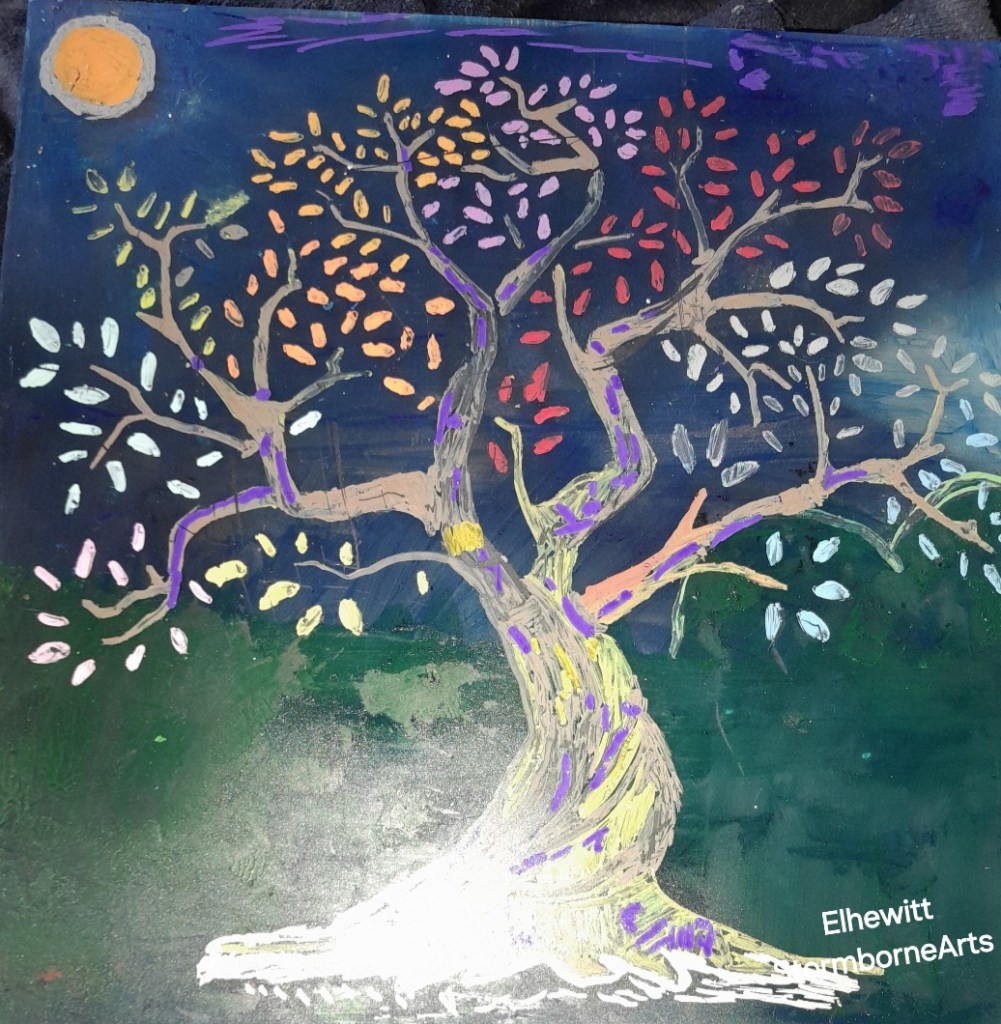
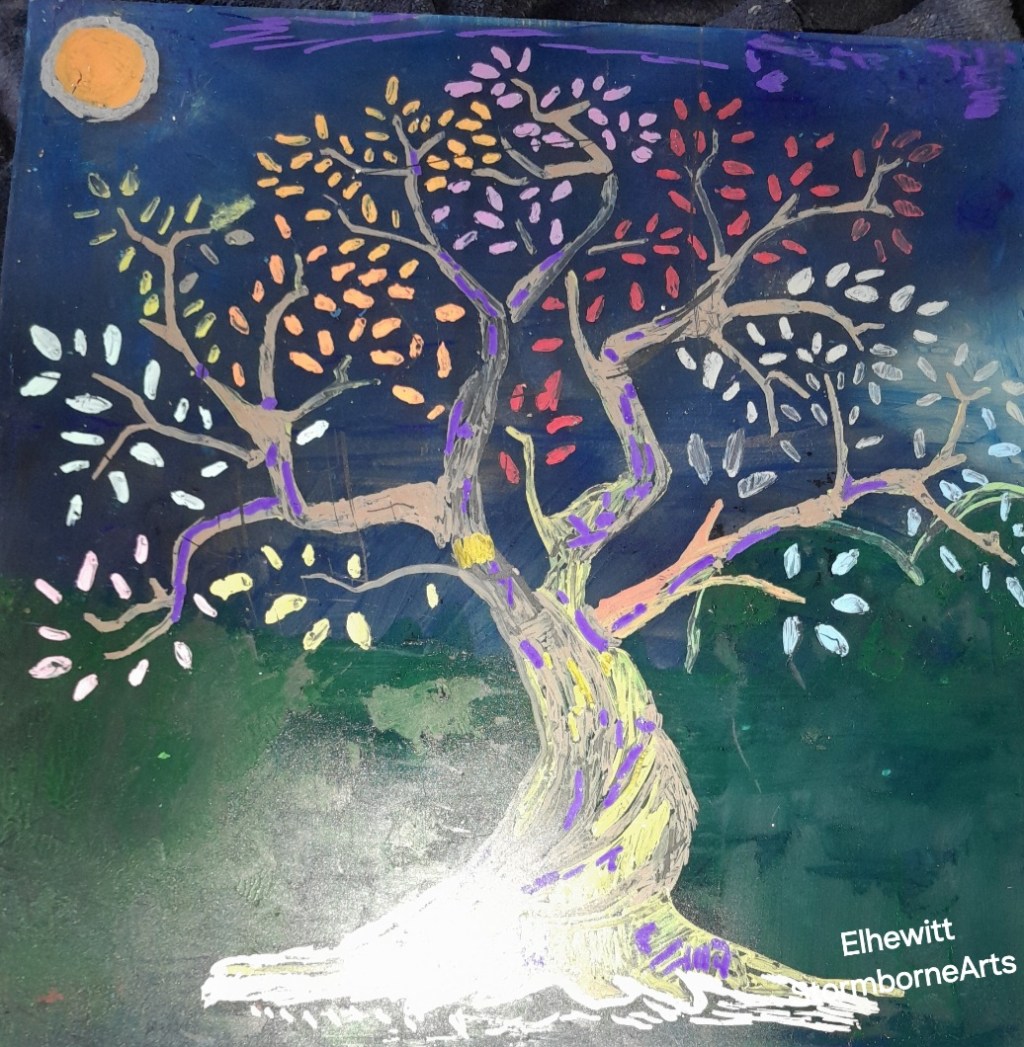
    A stylized tree with colorful leaves against a dark background, featuring a sun in the upper corner.
    A vibrant, artistic depiction of a tree with colorful leaves set against a dark background, symbolizing the mystical elements of nature.

    By E.L. Hewitt — StormborneLore

    Dawn came slow over Cannock Chase, the sky still holding tight to the colours of night.


    Mist clung to the ground, pale as breath on cold glass. The trees stood quiet as watchers in old cloaks.

    Lore walked barefoot through the wet grass, collecting what the earth offered.

    Yarrow first pale and feathery, growing in shy clusters where the sunlight would later reach. Good for blood and fever, and for protection against spirits that lingered too close.

    He cut it gently, whispering, “For the ones who yet breathe.”

    Rowan bark next, peeling in thin curls beneath his knife. The tree shivered, though no wind touched it.

    Rowan remembers, the old women used to say and Lore believed them.

    Last came the resin pine tears hardened in the bark of a fallen giant, still sweet, still golden.

    He held it to his nose, breathing in the scent of memory.
    Smoke. Rain. Home.

    Above him, the crows gathered.

    Three at first.
    Then five.
    Then a dozen, their wings murmuring like pages turning.

    They did not caw.
    They simply watched.

    Lore did not fear them.
    The crows of the Chase were older than any Druid’s words.
    Older than Rome’s roads.
    Older even than the songs of the first tribes.

    They followed him as he walked between the birches. Their trunks ghost-white, rising from the mist like bones of giants sleeping beneath the soil.

    The air felt listening.

    The trees breathed slow.

    The old gods waited.

    Lore spoke softly, almost too low to hear:
    “Stormfather. Bound-Brother. Wild King. I hear you.”

    The leaves stirred, though the air was still.

    And then

    A whisper.
    Not with sound, but with bone and blood.

    He rises.

    Lore’s heart tightened.
    No fear only certainty.

    The crows took flight at once, black wings cutting the dawn sky. They flew south, toward the marsh track near Landywood, toward the low birches where the Black Shields rested.

    Toward Taranis.

    Lore closed his fist around the resin.

    “The storm remembers,” he murmured.

    And he followed the crows.

    © 2025 E. L. Hewitt / Stormborne Arts. All rights reserved.
    Unauthorized copying or reproduction of this artwork and text is prohibited.

    Thank you for reading.

    If you enjoyed this story, like, share, or leave a comment. Your support keeps the storm alive and the chronicles continuing.

    If you want to read more about Lore please see Ancient Magic and Myth of the Stormborne

    To follow Tarans The Prophecies and Tales of Taranis Unfolded

  • Rome’s Shadow: Taranis and the Fight for Freedom

    Rome’s Shadow: Taranis and the Fight for Freedom

    By E.L. Hewitt — StormborneLore

    The mists of Cnocc clung low across the fields when Taranis turned north.
    Rain soaked the cloak across his shoulders, each drop heavy as guilt. Behind him, the standing stones of the old circle faded into grey half memory, half warning.

    A handful of men followed, what was left of the Black Shields. Some limped. Some bled quietly into the mud. Yet none complained.

    They cut through the marsh track at Landywood, the ground sucking at their boots.

    “Bloody mire,” grumbled one of them Caedric, a smith from the Chase. “If Rome don’t catch us, we’ll drown in the bog.”

    Taranis gave a faint smile. “Better the bog than their chains. Least the land buries its dead with honour.”

    The men laughed, low and rough, their voices carrying through the mist.
    Overhead, crows turned circles against a sky bruised with stormlight.

    By midday, they reached the edge of Cannock Chase. The trees rose dark and close, their branches whispering in the wind.

    Here, the old tongue lived still the rustle of leaves. Carried the same sounds as the words once spoken in Mercia before Rome built her roads.

    “Best not light a fire,” said another man. “The smoke’ll draw ‘em down Watling Street.”

    Taranis shook his head. “The legions keep to stone. They fear what grows wild. That’s our road, not theirs.”

    They made camp near the brook, the water brown with silt.

    Taranis knelt, washing his hands, watching the red earth swirl away downstream.

    He thought of Drax his brother in law and blood. Who wasvstanding in that Roman armour like a stranger wearing their father’s ghost.

    “Praefect Drax,” he muttered. “You walk in the eagle’s shadow now. But one day, even eagles fall.”

    As the others settled, Taranis sat alone beneath a birch tree. The thunder rolled again to the south, echoing over the hills of Pennocrucium.

    He closed his eyes and let the sound find him not as omen, but as promise.

    “Let Rome march,” he said softly. “The storm remembers.”

    By nightfall, the brook had gone still only the soft hiss of drizzle on leaves broke the quiet.

    The Black Shields huddled beneath the birches.Their cloaks steaming faintly where the rain met the last of the day’s warmth.

    A small fire burned low, more ember than flame. They sat close to it, speaking little. The world had shrunk to mist and memory.

    From the shadows, a young scout pushed through the undergrowth, mud streaking his face.

    “Riders,” he whispered, breath sharp with fear. “South o’ Watling Street. Legion banners silver eagle, red field. A dozen strong, maybe more.”

    Taranis looked up, his eyes catching what light the fire still gave. “Which way?”

    “East,” said the boy. “Toward Pennocrucium.”

    That word hung like ash. Rome’s fort Drax’s post.

    Caedric spat into the fire. “Then your brother’s hounds are sniffin’ their trail back home.”

    “Mind your tongue,” Taranis said, but without heat. “Drax walks a path I wouldn’t, but he walks it for his sons. Rome holds chains tighter than iron.”

    The men nodded. They’d all felt those chains some on their wrists, some around their hearts.

    The fire popped softly. Rain whispered down through the canopy, finding its way to the coals.

    “Shall we move?” asked Caedric.
    “Not yet.”

    Taranis rose, brushing mud from his knees. “If they ride to Pennocrucium, they won’t look for us here. And if Drax stands where I think he does, he’ll turn them aside before dawn.”

    He turned his gaze toward the south, where the hills of Cnocc faded into night.

    The stormlight there flickered once a pale flash through the clouds.

    “See that?” murmured one of the men. “Thunder over Penn. He’s sendin’ you a message, I reckon.”

    Taranis smiled faintly. “Aye. Or a warning.”

    He knelt by the fire and drew a spiral in the dirt the old mark, the storm’s sign.

    “Tomorrow we move north,” he said. “Watling Street’s theirs, but the woods are ours. We’ll strike where the road breaks near the old fort make Rome remember who walks her border.”

    The men grinned, weary but alive again.
    For a heartbeat, the fire caught, burning bright as dawn.

    Above them, thunder rolled once more.
    It sounded like a heartbeat slow, vast, unending.

    Copyright Note

    © 2025 E. L. Hewitt / Stormborne Arts. All rights reserved.
    Unauthorized copying or reproduction of this artwork and text is prohibited.

    Thank you for reading.© 2025 Emma Hewitt / StormborneLore. All rights reserved.Unauthorized copying or reproduction of this content is prohibited.

    If you enjoyed this story, like, share, or leave a comment. Your support keeps the storm alive and the chronicles continuing.

    If you want to read more about Taranis please see The Prophecies and Tales of Taranis Unfolded

  • Blood and Oath

    Blood and Oath

    The sun stood high as Praefect Drax Stormborne lingered beside the fire, cloak folded tight against a thin breeze.

    “Hello, brother,” a teen voice said, and Drax’s hand went to the hilt of his sword before he turned.

    “Taranis, show yourself now,” he said, keeping his tone even.

    “Why? So you can look at me and scowl?” Taranis’s voice came from the trees. “I’m fine here, where you can’t see me but I can see you. I see you have children now, and you look smart in the Roman uniform of their law-men.”

    “You acknowledge that, brother?” Drax asked, eyes narrowing.

    “I acknowledge,” Taranis replied, stepping from the shade with a faint smile. “but I do not bow not to you, my liege, nor to your Roman overlords. We all do what we must to survive.” He paused, then added, quieter, “But try anything and I’ll snap your men like twigs.”

    A small boy tugged at Drax’s sleeve. “Father, who is he?” the child asked.

    “Is he a barbarian, father?” another eight-year-old whispered, peering toward the tree-line.

    “Julius that’s our uncle Taranis?” a smirking boy offered. “The legendary gladiator Lupus… wasn’t he exiled?”

    Drax let the questions run off him like rain. He studied Taranis as if measuring a blade. Blood and oath pulled between them one brother in Roman order, the other a storm wearing man’s skin.

    The campfire crackled, throwing sparks into the brittle afternoon air. For a heartbeat, the world held its breath two brothers standing on opposite shores of the same river.

    Taranis tilted his head slightly, the ghost of a smile curving his lips.
    “Exiled, yes,” he said softly. “But storms don’t vanish, brother. They wait for the right sky.”

    Drax said nothing. His men shifted uneasily, hands brushing spear shafts, glancing between the prefect and the outlaw.

    “You shouldn’t have come,” Drax murmured finally. “Rome watches even the wind that bends near me.”

    “I’m not here for Rome,” Taranis replied,. his gaze flicking toward the boys proud, uncertain, wearing their father’s steel in miniature. “I came to see what became of the man I once followed into the fire.”

    “You followed because you had no choice,” Drax snapped, voice sharp enough to cut the air.
    “And you bowed because you wanted one,” Taranis countered.

    Silence fell again. The forest around them seemed to lean closer, listening.

    Julius, the youngest, tugged at Drax’s sleeve.

    “Father… he doesn’t look like a villain,” the boy whispered.
    “No,” said Drax quietly, eyes still locked on Taranis. “That’s what makes him dangerous.”

    Taranis laughed then, low and bitter. “Dangerous? I bled for this land before Rome knew its name. If danger is survival, then yes I am a danger.”

    A faint roll of thunder trembled beyond the horizon. Both men turned toward it, instinctively.

    “Storm’s coming,” said one of Drax’s soldiers.

    Taranis met his brother’s eyes one last time.
    “No, soldier,” he said, voice like wind through iron. “The storm’s already here.”

    He vanished into the trees before anyone move. leaving only the fading echo of his words and the scent of rain.

    Drax stood long after he was gone, until his eldest spoke softly:
    “Will we see him again, Father?”

    Drax’s jaw tightened. “If the gods have mercy or none at all.”

    The thunder answered for him.

    Julius started to run after his uncle.

    “No, child,” Drax called, voice tight.

    Taranis turned, the stormlight catching on the scars that crossed his jaw. He knelt so his eyes met the boy’s.
    “Your place is with your father,” he said softly. “He’s a good, honourable man.”

    Julius frowned. “How did you get off the island?”

    Taranis’s mouth twitched into a smirk. “I built a boat.”

    He rose, cloak stirring in the wind as thunder growled again in the distance.
    “Remember that, boy when the world cages you, build your own way out.”

    Then he was gone once more, the forest swallowing him whole.

    Drax stood in silence, watching the trees sway. His men busied themselves with meaningless tasks tightening straps, banking the fire anything to avoid the weight in the air.

    The prefect’s eyes lingered on the path his brother had taken.
    “Stormborne,” he murmured, the name a curse and a prayer all at once.

    Above them, the first drops of rain began to fall.

    Thank you for reading if you enjoyed this story. Please like subscribe and follow for more.

    Futher reading

    The Chronicles of Drax

    The tales of Rayne

    The Prophecies and Tales of Taranis Unfolded
    The Keeper of Cairnstones: Myths and Mysteries Revealed

  • The Weight of the Crownless Lord

    The Weight of the Crownless Lord

    The morning mist hung low across the valley, veiling the lands of Emberhelm in silver. From the high balcony of his hall, Lord Drax Stormborne watched the world stir awake.

    Smoke from hearths curling above thatched roofs. The faint clang of the smithy below, and the distant echo of a horn calling men to the fields.

    The realm had been quiet these past weeks, though quiet was not peace. Rome’s presence had spread like frost silent, glittering, and deadly to touch. Their banners were seen on the roads again, their soldiers marching east toward the fort that caged his brother.

    Drax’s hands rested on the stone rail. Scarred knuckles gripping the cold edge as if the granite itself were his only anchor.

    “Uncle Taranis forgives us all, father.”

    The small voice broke the silence. His son stood behind him Caelum, barely thirteen summers. But already bearing the solemn eyes of a man twice his age. The boy held out a folded parchment, its wax seal cracked, its edges smudged with soot.

    Drax took it carefully. The writing inside was firm but uneven, written in haste.
    Forgive nothing. Remember everything.
    Below, a single mark a lightning bolt drawn in charcoal.

    Drax’s chest tightened. His brother’s hand. His brother’s defiance.

    “Who gave you this?”

    “One of the Roman guards, father,” Caelum replied. “He said… he said Uncle still lives. He fights every day.”

    Before Drax answered, boots echoed behind them. Roberto stepped into the chamber, his armour dull and unpolished, the scent of road dust still clinging to him.

    “My lord,” he began, voice low, “I spoke with one of the centurions. They see him as a danger now too much influence, even in chains. They’ve moved him deeper into the fort. Isolation. Only the soldiers see him.”

    “Do they mistreat him?” Drax asked, though he already knew the answer.

    Roberto hesitated. “They tried to crucify him last week. He survived. Yesterday, they threw him to the lions chained, unarmed. He walked out again.”

    The hall fell silent. The fire popped in the hearth, throwing orange light across the stone floor. Drax turned back toward the window. his reflection caught in the misted glass grey at the temples, lines of command etched deep across his brow.

    “They can’t kill him,” Roberto said quietly. “So they make him suffer.”

    Drax exhaled slowly, the weight of his station pressing like iron against his ribs. “Then we’ll keep him alive in every way they can’t stop. Food, silver, messages whatever can reach him, it will.”

    He turned to his son. “Caelum, you will remember this. A lord’s duty is not to speak loudest, but to act where no one sees.”

    The boy nodded, solemn and still.

    That afternoon, Drax rode out beyond the keep. The fields of Emberhelm stretched before him. The broad plains that once echoed with the clash of blades when the Stormborne banners flew proud.

    The Farmers bowed as he passed, and he nodded in turn. To them, he was not just a lord. He was the last shield between their freedom and Roman law.

    At the river’s edge, he dismounted, crouching where the waters ran dark and cold. He saw his reflection distorted in the ripples older, heavier, but not yet broken.

    He remembered when Taranis had knelt in that same river,7 years ago. Swearing an oath to the gods of wind and storm. “We are not born to yield,” he had said, the water lapping at his wrists. “Even if Rome takes the land, they’ll never take the sky.”

    Drax closed his eyes. The oath still lived within him, though it had been buried under the weight of command.

    When he returned to the hall, he found Aislin. Stood waiting by the hearth his wife, wrapped in a shawl of woven wool. Her hair touched by the faintest trace of silver.

    “You’ve heard the news,” she said softly.

    He nodded.

    “Will you go to him?”

    Drax’s jaw tightened. “Not yet. The fort is surrounded. My every step is watched. To move too soon would doom us all.”

    “And if you wait too long?”

    He met her gaze, steady and unflinching. “Then he dies a legend. And legends, my love, outlast empires.”

    She said nothing more. She simply placed her hand over his, and for a moment, the storm in his chest calmed.

    That night, the wind rose.

    From the balcony, Drax watched lightning fork across the distant hills. He thought of his brother, chained and bloodied, standing alone beneath the roar of lions and the jeers of men. And he swore, silently and fiercely, that this would not be the end.

    The Romans thought they had captured a man. They had not realised they had locked away a tempest.

    And storms… always find their way home.

    The council chamber was dim, lit only by the flicker of oil lamps. Shadows stretched long across the stone floor, dancing like restless spirits.

    “Are priests allowed to see Taranis?” Lore asked the centurion, his tone calm but deliberate.

    The Roman officer hesitated, eyes flicking between Drax’s advisor and the lord himself. “Only those sanctioned by command, sir. The prisoner is considered… volatile. Dangerous to morale.”

    “Dangerous,” Drax repeated quietly . His gaze fixed on the parchment that still bore his brother’s mark a black streak of charcoal shaped like lightning. “That is one word for faith unbroken.”

    The centurion shifted, uneasy beneath the weight of the lord’s tone. He had served Rome for years. But there was something about the Stormborne that unnerved him men who spoke softly yet carried storms behind their eyes.

    “Tell your commander,” Drax said at last, his voice cool as the mist outside. “that Emberhelm’s temple will pray for Rome’s victory. And for the salvation of the condemned. It would honour the gods to have a priest available for confession before transport.”

    The officer nodded stiffly. “I will… relay the demand, my lord.”

    When the door closed, Lore exhaled, rubbing his temples. “You plan to send one of ours.”

    “Of course.” Drax turned toward the hearth, watching the flames burn low. “If Rome bars us with iron, we’ll walk through with words. Find one of the druids who wears a Roman mask one who can keep silent under pain.”

    Lore bowed his head slightly. “A dangerous game.”

    “All games are,” Drax murmured, eyes still on the fire, “when the stakes are blood.”

    Two days later, beneath a grey dawn, a solitary figure rode from Emberhelm. He wore the plain robes of a Roman cleric, his face shadowed beneath a hood. No weapon hung at his side, no coin jingled in his pouch.

    With only a small satchel of herbs, a ring wrapped in cloth, and a wax-sealed blessing marked his purpose.

    His name was Maeron. Once a druid of the old faith now known to Rome as Marcus. A man who had survived the purges by trading his oak staff for a prayer scroll.

    The road to Viroconium wound through dead forests. The mist-shrouded valleys, the silence broken only by the clatter of hooves and the distant calls of crows.

    When he reached the Roman fort, guards searched him roughly, tearing through his satchel and stripping him of his cloak. Finding nothing amiss, they granted him ten minutes with the prisoner.

    The cell smelled of iron, straw, and old blood. Chains hung from the walls like spiderwebs.

    Taranis sat in the corner, wrists bound, his head bowed. A thin cut traced his cheek, half-healed, crusted with dust. He did not look up when the door opened.

    “You come to pray?” His voice was low, worn smooth like riverstone.

    “I come to remind you,” Maeron whispered.

    Taranis lifted his head slowly, and for a moment the fire in his eyes banished the gloom. Maeron knelt before him and drew from his sleeve a small gold ring. its inner band engraved with the sigil of storm and flame.

    Drax’s mark.

    “Drax?”

    “He watches,” Maeron said softly. “He waits. He sends this so you’ll know you are not forgotten. Food and coin move under Rome’s banners carried by men who owe him debts. You will have what you need to endure.”

    Taranis reached for the ring. The chains clinked, faint as falling rain. “Tell him I am no longer enduring. I am learning.” His voice strengthened, each word edged with iron. “They think they cage me. But they are teaching me their weaknesses.”

    He leaned closer, his gaze sharp, unyielding. “Tell Lore, Drax, and Draven I shall endure so they are safe. Tell them… the storm remembers.”

    Maeron bowed deeply. “The gods still listen, even in Rome’s shadow.”

    Taranis’s lips curled faintly. “Then let them listen to thunder.”

    Outside, as Maeron was escorted back through the gates, lightning cracked across the horizon.
    The guards muttered that the storm came early that season.

    Drax, miles away, looked up from his balcony at the same flash of light. whispered beneath his breath
    “Brother… I hear you.”

    Thank you for reading if you have enjoyed please like, comment and subscribe.

  • The Chronicles of the Gold Ring Chapter Four.

    The Chronicles of the Gold Ring Chapter Four.

    The Storm Beneath the Cradle

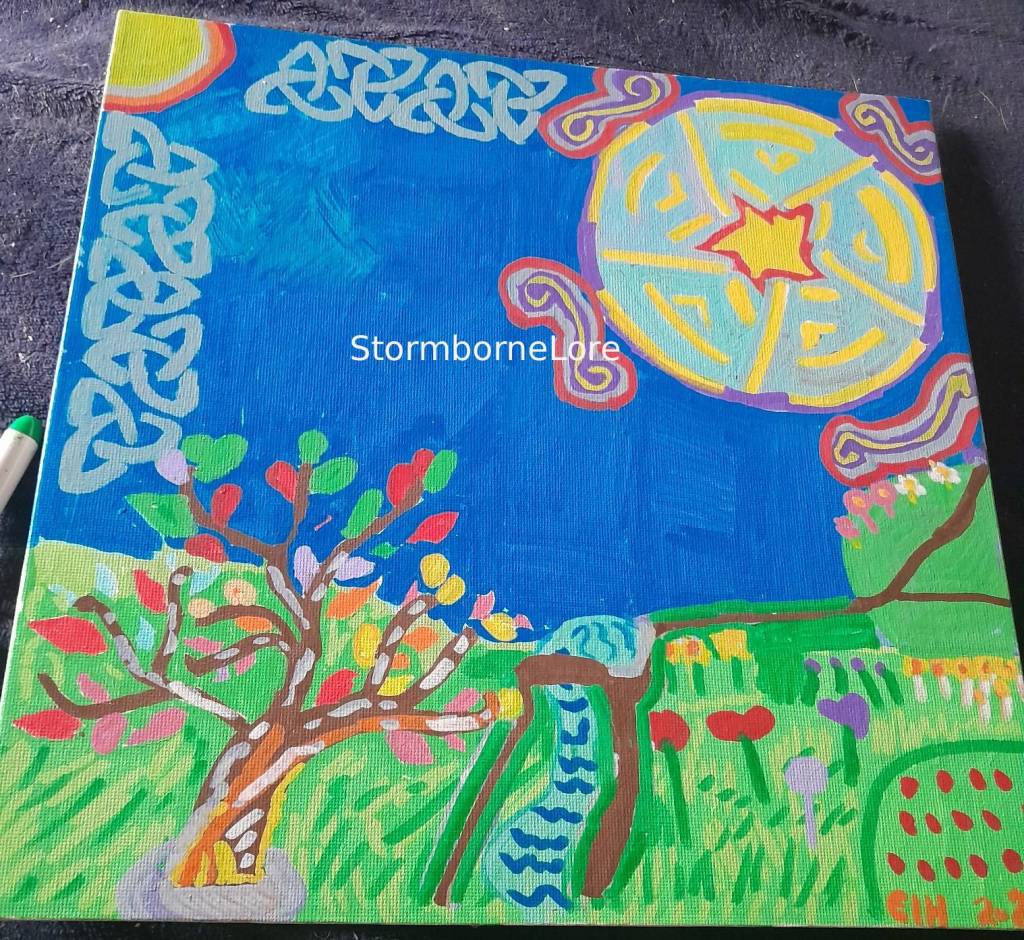
    A vibrant artwork depicting a colorful tree with heart-shaped leaves under a bright blue sky, adorned with a large sun and intricate designs.
    An artistic representation featuring a vibrant blue sky, a radiant sun, and a colorful tree, embodying the themes of nature and rebirth.

    The fires of the Ring had long since burned low. Smoke and judgment still clung to the stones, but the voices were gone scattered into the dark like leaves. The echoes of debate, of accusations half-spoken and oaths half-broken, were swallowed by wind.

    Only Taranis remained.

    He stood at the centre of the stone circle, not as a warlord or seer or storm-marked legend, but as a man uncertain of what to do next.

    At his feet, a small crib newly carved, rough-edged but lovingly made sat in the shadow of an ancient standing stone.

    Runes spiralled along its frame like protective thorns. Inside, the child slept, his breath barely stirring the wolfhide blanket that covered him.

    Taranis stared. Watched. Listened to nothing but the sound of his son’s heartbeat soft, fragile, real.

    “He’s mine,” he whispered.

    The words fell like an oath.

    He hadn’t spoken them aloud until now. Not to the Ring. Not even to himself. But the moment he looked into the child’s eyes, he had known.

    There in that small, storm-dark gaze was the same flicker that had burned in his own since birth. A fire that would not die, even when beaten. Even when left in chains.

    “I wasn’t sure,” he said, as if the child could hear him. “But now I am.”

    Footsteps approached quiet but familiar. He didn’t turn.

    Drax entered the ring with Aisin beside him. Her dark braid caught what little moonlight remained. She wore no armor, no crown but her presence always arrived like both.

    They stood silently for a while, watching him.

    “We thought you’d already gone,” Aisin said gently.

    “I couldn’t,” Taranis replied. “Not yet.”

    He gestured toward the crib, voice taut.

    “I know what you’re thinking. That I’m out of character. That I’ve gone soft.”

    He turned toward them now. His eyes were storm-lit, ringed with exhaustion. But beneath that a rawness neither of them had ever seen.

    “He’s mine,” Taranis repeated. “There’s no denying it now.”

    Aisin moved to the crib. She looked down at the child with the quiet reverence of a priestess before a sacred flame. One hand reached out, slow and certain, to brush the boy’s brow.

    “He’s strong,” she said. “But quiet. Like he already knows too much.”

    Taranis exhaled hard. His voice wavered a rare thing.

    “If it’s too much… if he’s too much to carry…”
    “We’re not strangers to raising children,” Drax said.
    “This one isn’t just any child,” Taranis replied. “He’s my child. And I was no angel.”

    He looked to Aisin, then Drax his oldest brother, his iron pillar.

    “I can take him elsewhere. To a quiet place. Far from the weight of prophecy. Far from the Ring. Just say the word.”

    Drax frowned.

    “You’d give him up?”

    “I’d shield him,” Taranis corrected. “From this. From me.”

    Aisin turned to him, calm and sharp all at once.

    “You fear yourself more than your enemies?”

    “Yes,” he said. “Because I dream of betrayal, but never the face. I wake with my hand on my blade. I feel hunted in my own mind.”

    He swallowed.

    “I don’t trust myself near him. Not like this.”

    Drax stepped forward and gripped his brother’s arm.

    “Then trust us.”

    Aisin nodded. “He stays. He is blood. That’s enough.”

    Taranis closed his eyes. A moment of stillness passed between them.

    Then he whispered, “His name is Caelum.”

    The name rang like truth in the circle.

    Drax smiled faintly. “Sky-born. Storm-blessed.”

    “Let’s hope he lives to become more than that,” Taranis murmured.

    Later – The Grove Beyond Emberhelm


    Rayne stood in the dark, half-shrouded by the charred remnants of an old grove. Draven hovered nearby, shoulders hunched.

    “So. He’s claimed him,” Rayne said, not asking.

    “He named him Caelum,” Draven replied.

    Rayne smiled thin, sharp.

    “That’s dangerous. Naming something is binding it to fate.”

    “He’s a child, Rayne.”

    “No,” Rayne said. “He’s a threat. A future. A soft spot waiting to be pierced.”

    Draven said nothing. He looked at the ash, not the stars.

    “You said we’d only observe,” he whispered.

    Rayne stepped closer, boots silent against the earth.

    “And we are. But sometimes watching is how you choose the moment. Let the warlord get sentimental. Let him love.”

    He leaned in, voice silk-wrapped iron.

    “Love makes good men hesitate. And hesitation… kills kings.”

    © 2025 EL Hewitt. All rights reserved.This story and all characters within the StormborneLore world are the original creation of EL Hewitt. Do not copy, repost, or adapt without permission.

    Further Reading

    The Library of Caernath

  • The Wilderness Years Part 10

    The Wilderness Years Part 10

    Ashes into Oaths


    The morning mist clung to the earth like breath held too long.

    Taranis stood barefoot in the frost-hardened dirt, his cloak wrapped tightly around his shoulders. Before him, the children the eleven pulled from the pit stood in an uneven line. Some shivered. One held a stick like a sword. Another clenched it like a club.

    “Not to hurt,” Taranis said. His voice was calm but carried weight. “To protect.”

    He walked along the line, placing his hand gently on each child’s shoulder. Their eyes were wide. Some still flinched. But none ran.

    Boldolph sat at Taranis’s right, silent and unmoving, a guardian of the moment. Morrigan circled the clearing with the patience of a winter wind, occasionally brushing a child’s ankle with her tail when their stance faltered.

    Solaris stood at the edge of the clearing, arms folded. He watched Taranis with an unreadable expression.

    “They’re too small,” he said quietly.

    Taranis turned.

    “So was I,” he replied.

    He took a staff from the ground and twirled it with precision, the end cutting the air in a slow arc.

    “If we wait for them to grow, it will be too late.”

    That evening, the fire burned low. The children huddled close to its warmth, whispering stories they were beginning to remember stories Taranis had told them about the wolves, the fire, the storm.

    Solaris sat apart from them, alone with the thoughts that had haunted him for weeks.

    He rose when all were asleep. He moved through the shadows, past the bones of old tents and the ghosts of gallows, until he reached the western tree line.

    From inside his tunic, he pulled a strip of black cloth, worn thin and embroidered with a single red claw.

    He tied it to a crooked branch. Then he whispered.

    “Tell them the storm is coming.”

    His voice cracked.

    “Tell them… it’s Taranis.”

    He turned, vanishing back into the mist.

    It happened at dawn.

    Taranis led a scouting party through the ashwoods Boldolph at his side, two scouts ahead, three boys from the training ring carrying supplies. The fog was thick, the silence heavier than snow.

    They never saw the first spear.

    It took one of the scouts through the chest. Another cried out and was silenced. The boys ran or tried to but two were taken by horsemen bearing the sigil of the Black Claw.

    Taranis fought like a storm obsidian pendant flashing in the smoke, staff and blade spinning but by the time the sun broke the treetops, four were dead, two missing, and the forest was soaked in blood.

    He returned on foot, armour torn, a wound above his eye leaking down his face.

    Grael met him at the gates.

    “They were waiting for us,” the warlord said grimly.

    Taranis nodded.

    “They knew we were coming.”

    “Someone told them.”

    The circle was cleared at dusk. Warriors formed the ring. The children watched from behind Morrigan’s flank. The fire crackled but did not comfort.

    Solaris stood in the centre, unbound. He didn’t run. He didn’t plead.

    Taranis entered last, blood still dried in the cracks of his skin.

    “You warned them,” he said flatly.

    Solaris bowed his head.

    “I did.”

    “Why?”

    “Because they would have killed my children,” Solaris said softly. “I was trying to stop a war.”

    Taranis stepped closer, gaze unwavering.

    “You started one.”

    The words were quiet. Measured. Final.

    From a wrapped bundle at his belt, Taranis pulled a collar carved bone, etched with runes. Not the iron of chains. Something older. Something sacred.

    “You are not my enemy,” Taranis said. “But you are no longer free.”

    “You will serve. You will teach. You will live in the light of what you did and what you chose not to.”

    He placed the collar around Solaris’s neck. It locked with a soft click.

    Solaris did not resist.
    He simply whispered, “Thank you for letting me live.”

    Taranis didn’t answer.

    Days passed. The air grew colder. But the children trained each dawn, and the wolves stayed close.

    Solaris taught them how to cook, how to read the skies, how to find warmth when the earth turned bitter. Taranis taught them how to fight but more than that, how to stand. How to speak without fear. How to remember.

    “We were broken,” he told them. “But we are still here.”

    A council formed. Not by title. By oath.

    Grael stood with arms crossed, nodding at the children now sleeping beside the fire.
    Morrigan lay curled with the youngest boy against her ribs.
    Boldolph prowled the border like a guardian carved from ash and stone.

    Taranis drew three sigils in the dirt.

    A flame.
    A storm.
    A shadow.

    “We are not a camp anymore,” he said. “We are Caernath.”

    The Seer who had first named him stepped forward, voice wind-carried.

    “From fire and chain, the first House is born.”

    © 2025 StormborneLore by EL Hewitt. All rights reserved

    Further Reading – other stories.

    Taranis Early Years:

    The Prophecy of Taranis

    A Thunder Child’s Birth

    The Awakening of a Charmed Hero

    The Hollow Howl

    The Pact of the Hollow Tree .

    Taranis and the Thief.

    Born of Flame, Brother of Wolves

    The Healing Flame

    A Child’s Destiny Unfolds

    The Fire Within the Child

    Taranis the slave.

    THE WILDERNESS YEARS Part 1.

    THE WILDERNESS YEARS PART 2

    Taranis The Wilderness Years Part 3.

    The Wilderness Years Part 4

    The Wilderness Years Part 5

    The Wilderness Years Part 6

    The Wilderness Years Part 7

    The Wilderness Years Part 8

    The Wilderness Years Part 9

    The War Years :

    The Battle Beneath the Storm.Part 1

    Battle Beneath the Storm Part 2

    After the Storm.

    The Rise of The Houses:

    The Houses of Caernath Part 1

  • The Wilderness Years Part 5

    The Wilderness Years Part 5

    The campfire had burned low when Solaris approached the general.

    Taranis knelt nearby, his wrists loosely bound, the bone collar still tight against his throat. The punishment mask lay beside him, waiting.

    “Sir?” Solaris said cautiously. “Are we binding him again?”

    Grael didn’t answer immediately. He watched the boy the blood-crusted bruises, the unspoken tension in his shoulders, the way his eyes never stopped scanning the shadows.

    “He walks beside the horse now,” Grael said. “Not behind it. That’s earned.”

    “But he’s still tethered?” solaris said

    Grael nodded. “Until he earns trust with more than fire.”

    Solaris stepped closer, lowering his voice. “And the food? He eats with us now?”

    “He eats what he earns. No more. No less.” grael said

    Taranis stirred then, lifting his head. His voice cracked as he spoke.

    “Now I’ve got one foot in both worlds… the world of a chosen, and one of an outcast.” He looked at them both. “One move and I could be executed. The other move, and be honoured.”

    Solaris winced as the mask was fitted back over the boy’s face.

    “Why the mask again?” he asked.

    “To remind him,” Grael said. “And to remind us.”

    “Of what?”

    “That chains and power aren’t opposites. They’re a balance.”

    Taranis tried to move from grael and the other warriors tried to move his head so the mask wouldn’t go on as a dragon flew over head

    “Put it on” grael ordered

    “No I’m human just like you”

    Taranis jerked back, blood still dried in the corners of his mouth. The dragon’s shadow passed again overhead, and something ancient stirred in his chest not rage, not fear, but refusal.

    “I said no!” he growled, voice muffled but defiant.

    Solaris stepped between him and the other warriors. “Wait. He’s not”

    Too late.

    One of the guards lunged forward, grabbing the mask. Taranis shoved back, throwing his shoulder into the man’s chest. The warrior stumbled, caught off guard by the boy’s strength.

    Another grabbed his arm but Taranis twisted, slammed his elbow into the man’s face.

    Blood sprayed.

    Chaos erupted.

    Three warriors tried to restrain him now. Grael did not move. He watched.

    Taranis fought like a cornered wolf. Wild. Desperate. Silent.

    The mask hit the ground and cracked in two.

    When they finally wrestled him down, he was bleeding from the nose and lip, panting like an animal. His wrists were raw, eyes wild.

    But he was smiling.

    “You see me now?” he said through gritted teeth. “I’m not yours.”

    Solaris stood frozen. The broken mask lay at his feet.

    Grael finally stepped forward.

    “Enough,” he barked.

    The warriors pulled back.

    Taranis didn’t rise. He waited.

    “Let him up,” Grael ordered. “And don’t touch him again tonight.”

    “But sir” a guard started.

    “I said don’t.”

    Grael looked down at the broken mask, then at the blood on Taranis’s knuckles.

    “You broke it,” he said flatly.

    “I’d break a hundred more,” Taranis spat.

    Grael didn’t respond. Instead, he knelt.

    “You want to be seen? Fine. Then let the clans see what you are.”

    He picked up the shattered halves of the mask.

    “You’ll wear no disguise. No shield. Not until you earn a new one.”

    Taranis met his gaze. “Good.”

    Grael stood.

    “But remember this, boy there’s a cost to being seen. You can’t take it back.”

    Taranis said nothing.

    The dragon roared again in the sky.

    Solaris knelt beside him later, whispering, “You’re going to get yourself killed.”

    Taranis looked at the stars.

    “Or freed.”

    “What will it take for him to be freed?” Solaris asked

    “Freedom for him? He crippled your brother, he killed a farmer, used by the gods themselves, stories say he killed a bird as a child and his village was killed before his exile freedom is a long way off. What do you say grael ?” A warrior asked

    Grael remained silent for a long while. The fire crackled. Embers danced.
    “I say,” he murmured, “we’ve seen men freed for less… and killed for more.”

    He tossed the shattered mask into the flames.


    “If he was sent by the gods, then they’ll test him again. Until then, he walks. He bleeds. He earns.”

    A warrior scoffed. “And when the next village sees that face?”

    “Then let them decide,” Grael said. “Fear him. Pity him. Curse him. But they’ll see him without the mask. And so will we.”

    Taranis didn’t flinch. He stared into the fire, as if daring it to speak.

    Grael remained silent for a long while.

    The fire crackled between them. Sparks drifted upward into the night, like fleeing ghosts. Taranis sat still, blood streaking his jaw, the collar tight around his throat. The broken mask lay shattered near the flames.

    He stepped forward and tossed the mask into the fire. It hissed as it cracked deeper, flames licking the black bone.

    A warrior scoffed. “And when the next village sees that face? He crippled a boy. His own kin say he’s cursed. What do we tell them?”

    “Tell them the truth,” Grael replied. “He wears no mask because he broke it. He walks unchained because I said so. And if that offends them, they can challenge it by trial.”

    Another man spat. “The Seer warned us he carries the fire without flame. You think a prophecy makes him safe?”

    “I think,” Solaris said quietly, “he didn’t run when he could’ve. He fought. He stood. He bled beside us.”

    Silence settled again.

    Then Grael turned to his men, sweeping his eyes across the ring of warriors.

    “Fine,” he said. “Let the clans decide. Those who want him gone, speak now.”

    A few murmurs, but none stepped forward.

    “Those who would test him, not as a slave, but as a warrior raise your blades.”

    One sword lifted. Then another. And another.

    Not all.

    But enough.

    Taranis watched them. His chest rose and fell slowly. The embers reflected in his eyes.

    “So be it,” Grael said. “Tomorrow at first light, he joins the line. No chains. No mask. One trial. If he survives the boy becomes flame.”

    A hush fell across the camp.

    Solaris leaned down beside him. “You’ve got one shot.”

    Taranis looked up, a flicker of defiance in his eyes.


    “Then I’ll make it burn.”

    The company reached the ancient ruins just after dusk.

    Twisted trees clawed at the moonlight, their roots entwined with blackened stones. Smoke drifted from old hearth pits, and torches lined the perimeter of what once had been a stronghold now just skeletal walls and broken pillars.

    They called it the Bones of Fire, where traitors, exiles, and monsters were judged in the old ways.

    Taranis was unshackled but flanked by two guards. His collar still bit into his skin, and dried blood streaked his jaw. He walked unbound, but every step echoed like thunder. Warriors lined the central circle, murmuring. Some remembered his defiance. Others remembered the dragon.

    At the heart of the ruins stood a black stone altar scorched by lightning, older than the clans themselves. Grael waited there, sword at his side, expression unreadable.

    A Seer stood beside him the same woman from the fire, robed in bone and shadow.

    “This place,” Solaris whispered, stepping beside Taranis, “is where they test souls.”

    “I thought I already failed,” Taranis said, not looking at him.

    “No. This is where they see if you can rise.”

    The crowd hushed as Grael raised his hand.

    “Taranis of no clan. Slave by judgment. Exile by blood. Chosen by storm or cursed by fire,” the general said. “You stand here not as a man, but as a question. The people demand an answer.”

    The Seer stepped forward, her voice like wind through hollow bones.

    “You are accused of rebellion, violence, and breaking the old order. But the gods remember your name. So the trial shall be by the elements by Fire, by Bone, and by Storm.”

    Murmurs rippled through the crowd.

    Grael gestured, and three warriors brought forth the tools: a flame bowl carved of obsidian, a bone blade wrapped in cords of sinew, and a weathered spearhead struck once by lightning.

    “You will face each,” the Seer said. “If you fall, your death is justice. If you rise, you walk reborn.”

    Solaris stepped forward. “He saved us. He held the line”

    “And still the trial stands,” Grael said. “This is not for you, Flamekeeper. This is between him and the gods.”

    Taranis stepped into the circle.

    “I’m not afraid,” he said.

    “You should be,” the Seer whispered.

    They began with Fire.

    Taranis knelt before the obsidian bowl. Flames danced without smoke. The Seer extended her hand.

    “Reach into the fire. Take the coal. Speak no sound.”

    He did.

    Pain erupted, white and total, but he did not scream. The coal branded his palm. Smoke curled from his clenched fist but his jaw never broke. When he stood, the mark glowed faintly.

    Next came Bone.

    He was handed the blade and told to carve a single rune into his chest a mark of truth.

    “Only the worthy know which symbol to choose,” the Seer said.

    Taranis hesitated.

    Then slowly, he pressed the blade to his chest and etched a spiral. Not of chaos, but of growth the same symbol the Seer had once placed in his hand. Blood streamed down his ribs. Still, he stood.

    Then came Storm.

    They placed him at the peak of the ruin, where the wind screamed like a thousand dead warriors. He had to face the sky and remain standing until the gods answered or until the storm broke him.

    Lightning gathered. Thunder rolled.

    The dragon came.

    Not with flame, but with presence a black silhouette circling high above.

    Taranis stood. Hands outstretched. Collar glinting.

    And then it happened.

    Lightning struck the spearhead beside him.

    The bolt leapt to his chest to the spiral rune.

    He didn’t fall.

    He screamed, but he stood.

    The Seer’s eyes widened. Warriors dropped to their knees.

    Grael stepped forward as silence returned.

    “He lives,” he said.

    “He is chosen,” the Seer breathed.

    The collar cracked. A seam split down its side. It fell away into the ash.

    And Taranis, gasping, bleeding, burned looked to the sky.

    “I am Stormborne,” he whispered.

    © 2025 E.L. Hewitt. All rights reserved.
    This work is part of the StormborneLore series.
    Do not copy, reproduce, or distribute without permission.