Tag: mercia

  • After the Burning

    After the Burning

    Chronicles of Taranis / Thunorric Stormwulf
    © 2025 E. L. Hewitt / Stormborne Arts

    The burning of the church was a sunrise to everyone who saw it. But to Thunorric, it was the opportunity he needed.
    In the confusion, he slipped the chains placed on him by the Sheriff of Tamworth. Then rode straight toward the shire of his birth. He was fully aware that he would now be hunted by the king’s riders. The Church, and any thief who wanted coin badly enough.

    His only hope for shelter was Rægenwine’s inn though even family can not be trusted. He never thought he would rely again on the man who betrayed him to the Romans. Then the man also betrayed him to the sheriff.

    He halted his horse on a green hilltop. Morning light poured through the trees, bathing the grass in gold.

    “War,” he murmured to the black stallion he’d stolen from a lord near Tettenhall Wood. “It’s going to be a wonderful day.”

    He urged the horse into Cannock Woods and vanished beneath the canopy.

    The Hunter in the Trees

    “Where there’s war, riot, and discord,” he muttered, “I’ll be front flank for all to see.”

    He found a small nook between the trees and dismounted, letting the stallion graze. The soft tread of his boots calmed him. A thin stream whispered nearby.

    He picked up a thick branch and began carving it into a weapon sharpening one end. Crossing another and moved quietly through the autumn leaves. When he spotted a deer drinking at the stream, a few swift blows brought the animal down. Soon a fire crackled beneath a great oak, and he began preparing the meat.

    “Cooked venison for now,” he said to himself, “and dried meat for days.”

    As he ate, he watched the woods for soldiers.

    His mind drifted to his brothers Dægan, Leofric, Eadric, and Rægenwine and to the nobles of Mercia and Wessex. All of whom would now curse his name. Demon. Devil. Stormwulf. Escaped again.

    He pictured the sheriff: a man of fifty, muscular and loud, barking orders with more anger than sense. Thunorric chuckled at the thought.

    But when he thought of his thirteen sons, his smile faded.
    The oldest five were old enough to serve. He’d given them his blessing.
    But the younger ones… they would have questions. Questions his brothers might not answer.

    The ache in his chest was sharper than any blade.

    Yet he was a wanted man a demon to the Church, a criminal to the king. After years of taking from the rich to feed villages starved by unfair taxes. He had earned little but their fear.

    The Black Shields his hidden movement would continue without him. They always had.

    He breathed in the scent of sweet leaves, wet earth, fungi, and old wood. All of which was fresher than the damp stinking cell the monks had held him in.

    He slept for a few hours. When he woke, dusk pressed against the trees.

    The Crossroads

    He mounted the stallion, wrapped a cloth over his face, and rode toward the crossroads. Where he had robbed the king’s carriages many times before.

    He spotted one now four horses, armed guards, and a noble family inside.

    Perfect.

    Thunorric burst from the treeline like a wolf, blade ready.
    The drivers panicked. One tried to lift a horn, but Thunorric struck first.

    He stabbed the driver in the arm and seized the reins, forcing the horses to halt.

    “Out. Yow get,” he barked.

    A beautiful lady froze as he pressed his blade to her neck.

    “Everything you’ve got. Hurry, or she dies.”

    “You can’t do this!” the older man shouted. “Do you know who I am?!”

    “Aye,” Thunorric said calmly. “But I don’t care. Give me what I want and live or I take it off your corpse.”

    “It’s him,” whispered one of the sons. “The demon.”

    In minutes, Thunorric had their clothes, weapons, and coin. He tied one of their horses to his saddle.

    “I’ll be kind,” he said with a smirk. “I’m only taking one.”

    As he rode away, the noble roared:

    “The king and the sheriff will hear of this!”

    Thunorric laughed.

    “Tell ’em the devil said vilis.”

    He galloped toward Moel-Bryn, changed into the stolen clothes, burned his old rags, cooked fresh meat. Then travelled through wind and rain toward Worcester.

    The Boy on the Road

    Just outside the city, a young man leapt from the shadows tall, muscular, dark-skinned, no more than sixteen winters old.

    “No one else here,” Thunorric said. “Just the Wolf of Rome. Alaric. Good to see your face. Any news?”

    “Plenty.” The boy’s Yorkshire accent was thick. “Your reward’s huge now. You’re declared outlaw.”

    “So?” Thunorric shifted his stance. “You going to take me down?”

    “Oh hell no.” Alaric snorted. “You’re the demon now. Staffordshire demon, some say Mercia demon. Others say death won’t let you rest. And besides I owe you my life. Figured if I warned you, debt’s paid?”

    Thunorric nodded once. “Debt paid. Thank you.”

    “May the gods be on your side,” Alaric called as Thunorric rode on.

    He reached his old home, washed, rested briefly, then rode west toward the Welsh border. Enough coin in his pocket to reach Spain if needed.

    Meanwhile at court, the half-naked noble boy from the robbed carriage arrived with his family. Guards tried not to chuckle.

    “Well then,” the king said, approaching, “dare I ask what happened?”

    “The demon,” the lord spat. “He stole everything and killed our driver.”

    Tamworth’s great hall echoed with uproar long before sunrise. Smoke curled along the rafters. The sheriff knelt before King Coenwulf, mud on his boots, throat bandaged.

    “The creature escaped your custody,” the king growled. “You let him burn an abbey and now he humiliates one of my lords.”

    “My lord… the storm”

    “The storm does not shatter bell towers,” Coenwulf snapped. “Men do.”

    “What do they call him now?”

    “Stormwulf, sire. Some say the Staffordshire demon. The Mercia demon.”

    Whispers spread. Hard men crossed themselves.

    Coenwulf did not.

    “Then let him be hunted,” he said. “Anyone who shelters him dies beside him. Anyone who brings me his head receives land, silver, and title.”

    He nodded to the scribe.

    “Write.”

    The vellum unfurled.

    “Let it be known throughout Mercia and the borderlands that Thunorric, called Stormwulf. outlaw and murderer, stands beyond the law of crown and Church.
    Taken dead or alive.
    Reward: one purse of gold for his body, two for his head.”

    A scarred hunter stepped forward.

    “I’ll bring your demon in chains.”

    Coenwulf nodded once.

    The hunt began.

    The Inn at the Border

    Thunorric crossed the last ridge before the Welsh border as dusk bled into the trees. The air tasted of rain and smoke.

    He approached the inn wedged between two standing stones. His brother Rægenwine’s inn the same man who had betrayed him twice.


    But Thunorric couldn’t blame him. The man had believed he was protecting the children.

    He tied the horse beneath the oak and stepped inside.

    Every sound died instantly.
    Tankards stopped in mid-air. Dice froze. The bard’s string snapped.

    “I’m not here for trouble,” Thunorric said, walking to the bar.

    Rægenwine looked up colour draining from his face.

    Thunorric lifted his hood just enough for the firelight to catch his eyes.

    “Rægenwine,” he said softly. “You’re forgiven.”

    “I… I didn’t expect that,” Rægenwine whispered.

    “Aye, well.” Thunorric stepped closer. “Don’t mistake forgiveness for trust.”

    “You have every right to hate me,” Rægenwine murmured.

    “I don’t hate you,” Thunorric said. “You did what you thought was right. Rome tricked you. They tricked many. But betrayal has a weight and you’ve paid more of it than you know.”

    Rægenwine swallowed. “You came back. That must mean something.”

    “It means the roads are crawling with hunters,” Thunorric said. “King’s men. Church men. Thieves hungry for silver. And I needed shelter only for an hour.”

    “You’ll have it,” Rægenwine promised. “I’ll turn away anyone who asks.”

    Thunorric’s smile was thin and dangerous.

    “If I wanted you dead, brother… you wouldn’t hear the door open.”

    Rægenwine bowed his head. “I’m sorry. I was only trying to keep the children safe.”

    Thunorric exhaled. “Good. Now pour me a drink. The storm’s on my heels.”

    Rægenwine hurried, hands trembling.

    Thunorric turned to the Black Shields behind him.

    “Look after this inn,” he murmured. “And his family in my absence.”

    Just as the ale touched his hand, the door opened.

    Cold air.
    Wet leaves.
    Heavy, familiar footsteps.

    The Brothers Arrive

    Dægan and Leofric stepped inside.

    The inn froze again.

    Dægan tall, broad-shouldered, cloak the colour of storm-clouds, bearing the king’s mark.
    Leofric leaner, ink-stained hands, eyes like old winter, a scribe and warlock whose words carried as much weight as steel.

    Rægenwine bowed. “My lords… I didn’t know you were coming.”

    “You didn’t need to,” Dægan said calmly. “Where is he?”

    Leofric’s gaze drifted toward the back tables.

    “No need,” he murmured. “He’s here.”

    Dægan spotted him with the Black Shields.

    Thunorric didn’t turn.
    Didn’t flinch.
    Didn’t pause.

    “…and if you reach the ford by nightfall,” he said to the Shields, “light no fire. The hunters have dogs.”

    One Shield swallowed. “Wolf… your brothers”

    “I know,” Thunorric said. “I heard them the moment they stepped in.”

    He finally turned, smirking beneath his hood.

    “Well then,” he drawled, “if it ain’t the golden sons of Mercia.”

    Dægan stepped forward. “Brother, we need to talk.”

    Thunorric’s eyes gleamed.

    “About which part? The abbey burning? The king’s writ? Or the price on my head?”

    Leofric’s jaw tightened. “All of it. You’ve started a storm bigger than you realise.”

    Thunorric smiled slow and wolfish.

    “I didn’t start the darkest of storms,” he said.
    “I am the darkest of storms. Devourer of souls. Destruction at the end. Death and resurrection.”

    And the inn went silent the silence that comes before something breaks.

    ©2025 E. L. Hewitt / Stormborne Arts. All Rights Reserved.This work, including all characters, settings, lore, concepts, and text, is the original creation of E. L. Hewitt. No portion of this material may be reproduced, shared, reposted, copied, adapted, or distributed in any form. without prior written permission from the author.Unauthorized use, including AI reproduction of this text, is strictly prohibited.

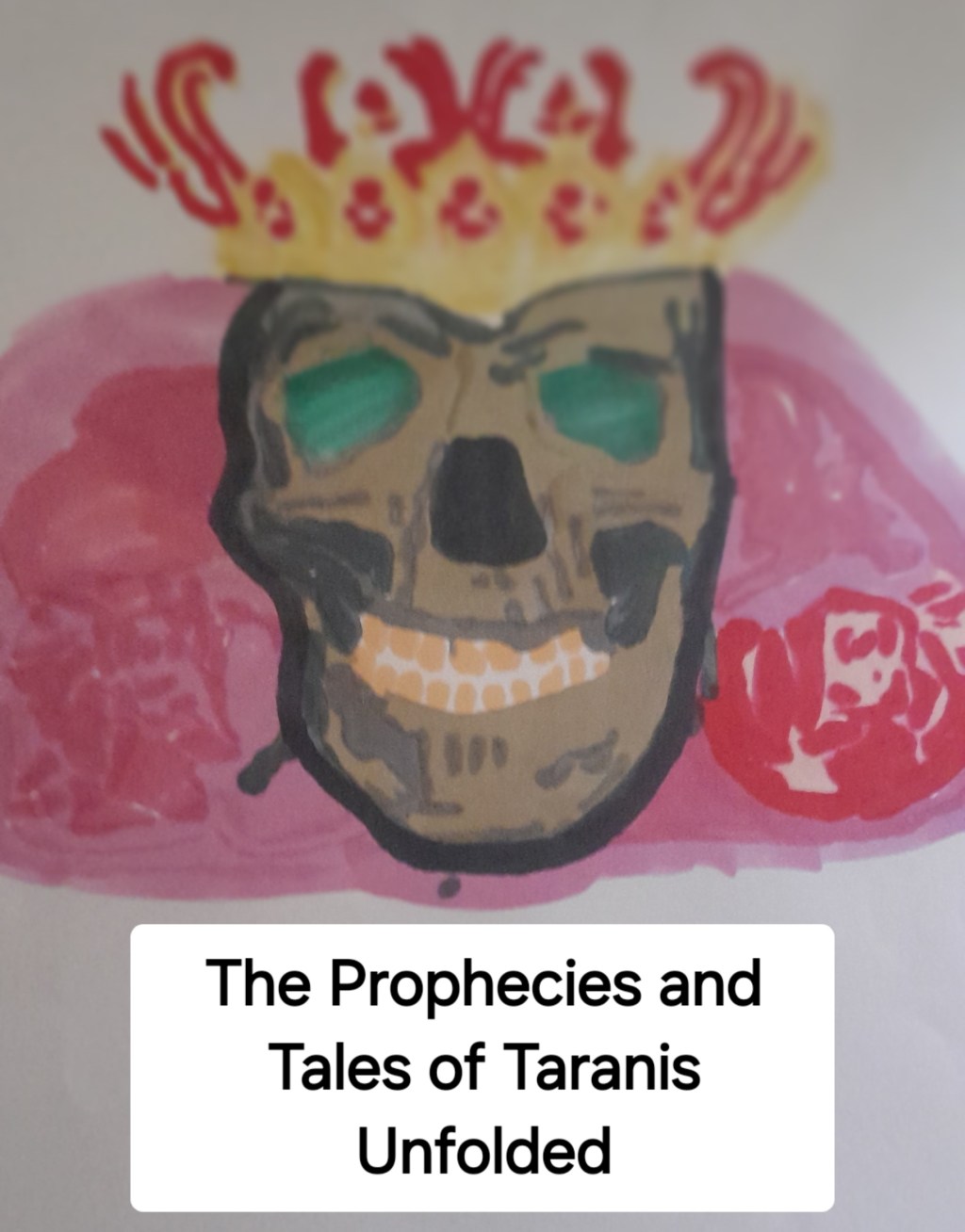
    To read more on Taranis /Thunoric please see The Prophecies and Tales of Taranis Unfolded

  • The Storm’s Justice: A Mercenary’s Journey

    The Storm’s Justice: A Mercenary’s Journey

    When the legions withdrew, law went with them.


    Britain splintered into a hundred petty crowns, each clawing for the ruins of Rome.


    Forts became keeps, temples turned to halls. The roads grew haunted by men who had once marched in order and now wandered for coin.

    Among them rode one they called Stormwulf a hunter without master, born of lightning and exile.


    His eyes still carried the reflection of fires older than the Empire, and wherever he went, the rain followed.

    He took work others would not. Guarding merchants through the wild country, driving raiders from villages, hunting beasts the new priests called devils.


    He never stayed long; gold burned his hands, and gratitude never lasted past sunrise. Those who hired him learned quickly the storm served no king, only itself.

    When asked his name, he gave none.
    When pressed, he said, “Names are for men. I am only what the thunder leaves behind.”

    He rode the dead roads west, through forests where Roman stones still stood like broken teeth.


    Sometimes, in the glint of his sword, he saw the ghost of his own reflection . Not the god he had been, nor the man he pretended to be, but something caught between both.


    He wondered which would die first his memory of the divine, or the world’s memory of him.

    At night, when the fire sank to coals, he spoke softly to the empty dark.
    Not prayers he had no god left to pray to but old words, in a tongue the wind still understood.
    The forest listened. The rain replied.

    By dawn, the storm would be gone, and so would he.
    Only the hoofprints remained, filling slowly with water as the day began again, lawless and unbroken.

    The rain drove him south into the forests of Mercia, where no king’s banner reached.


    For seven days he followed the scent of smoke and wet earth. Until he found a clearing rimmed with ancient ash trees.
    There, beneath branches silvered by moonlight. Men and women waited deserters, thieves, freed slaves, and one witch whose eyes gleamed like stormlight on iron.

    They had heard the stories of Stormwulf the mercenary who rode alone, the one lightning never struck.
    They had lost homes and names, but not hunger.


    When he asked why they waited for him, the witch said. “Because the world has forgotten justice, and you remember what it sounds like.”

    That night, by firelight, he drew a blade across his palm and bled into the roots of the largest ash.
    The others followed, one by one, their blood mingling with his in the cold soil.


    They swore no oath to king or god, only to the storm itself. That they would strike against cruelty wherever it ruled, and share the spoils until the world ended or they did.

    The ash grove became their hall, their altar, their hiding place.
    They raided the tax caravans that bled the villages dry. He burned the grain stores of greedy thanes, and gave food to those who had nothing left but prayers.
    To some they were outlaws; to others, saints.

    Villagers said rain followed their path. That thunder rolled when they rode, and that the lightning spared any roof that had offered them bread.
    In taverns, men cursed them.
    At hearths, women whispered their names with hope.

    Thunorric though few dared call him that. As they sat by the fire one night and watched the sparks rise into the branches.


    For the first time in centuries, he thought the storm is more than destruction.
    In this grove of ash and blood and ruin, it be reborn as mercy.

    But storms are not made for peace.
    And in the darkness beyond the grove, men with silver promises already waited to break what they did not understand.

    It began with a rumour and ended with a corpse.

    A messenger came to the Ash Grove at dusk, bearing word of a bounty.


    A relic had been stolen from the Thane of Wednesbury. a silver cross, heirloom of his son, taken in a raid along the border road.


    The thief was said to be dangerous, armed, and protected by outlaws.
    The Thane’s men offered coin enough to feed the band for a season.

    Stormwulf listened in silence.
    Silver was always a warning, but hunger speaks louder than caution.
    Rægenwine urged him to take it a simple job, he said, quick and clean.
    Thunorric agreed, though the rain that night had an edge to it he did not like.

    He tracked the thief for two nights through tangled wood and flooded fields. The trail led north, where the road curved past a fallen Roman wall and into the low marsh.

    There he found the boy no older than fifteen. mud-streaked, clutching a silver cross so tightly the metal cut his palm.

    “Give it to me,” Thunorric said, sword drawn but voice calm. The boy shook his head. “It was my father’s. He’ll kill me if I go back.”

    Lightning cracked overhead.
    For a heartbeat, the world turned white, and the storm spoke only in instinct.
    When the light faded, the boy lay still, the cross gleaming in his open hand.

    By dawn the Thane’s riders came.
    They found the mercenary kneeling beside the body, soaked to the bone, blood running down his arm.
    The silver lay on the ground between them like a sentence.

    His companion the man who had brought the message was gone.
    So was the promised coin.

    The riders bound him in chains and dragged him through the mud toward Wednesbury.


    The villagers hid behind their doors as thunder followed the procession.


    Some swore the sky darkened as he passed. Others that the rain hissed like boiling water when it struck his skin.

    At the gates, the Thane himself waited, eyes hollow from grief and pride.
    He looked at the prisoner and said only, “The devil has many faces. Today it wears yours.”

    They threw Thunorric into the stockade beneath the old Roman wall.


    The guards whispered that the thunder outside matched the beating of his heart.


    None dared sleep that night.
    By morning, the storm had not moved.

    And in the east, where the sky bruised toward dawn, lightning traced the shape of chains across the clouds.

    The chains tasted of rust and rain.
    They had bound him with iron cold enough to sting the bone. Nailed the ends to the stone floor, and left him beneath the abbey where the damp never slept.


    Outside, thunder prowled the hills; inside, men whispered prayers to keep it from coming closer.

    At dawn they brought him to the hall.
    The abbot waited beneath a carving of the Crucifixion, the air thick with incense and candle smoke.
    Around the edges of the room, monks muttered as if their breath smother a storm.

    “You are to be tried by the Church,” said the abbot. “For murder and blasphemy. You will answer for the blood on your hands.”

    Thunorric laughed, a low crack of thunder in his throat.
    “You caught me, monk. When’s trial? Trial of my peers? Trial by ordeal? You going to make me eat blessed bread? Or make me hold hot iron? Because pray your prisons hold me.”


    He leaned ahead, the chains grating like thunderheads shifting.
    “I will see the fall of your Church like I saw the fall of Rome.”

    A shiver passed through the monks.
    The abbot’s face stayed stone, but his fingers trembled on the rosary.
    “Then pray you are wrong, creature,” he said. “For even storms must break against the rock of faith.”

    They dragged him back to the cell.
    Light seeped in through a single slit, thin and grey as mercy.
    He counted the hours by the sound of bells and the slow drip of water through the ceiling.

    That night a young monk came with bread and a bowl of water.
    He hesitated before sliding them through the bars.
    “You should not mock the abbot,” he said. “God listens.”

    Thunorric looked up, eyes catching what little light remained.
    “Then let Him listen,” he said softly. “Let Him hear what men do in His name.”

    The monk flinched but did not run. “You killed a child,” he whispered.

    “I killed a thief,” Thunorric answered. “A thief my master set before me. The sin is his, not mine.”

    “Sin can’t be passed like silver.”

    “Then tell your god that mortals have made it currency.”

    The monk said nothing more. He left the bread, untouched.

    Days bled together. The storm outside circled but did not strike.
    When the monks prayed, the sound reached him like waves breaking on distant rocks.


    He slept little, dreaming of the ash grove. Of blood sinking into the roots, of brothers who had once shared his fire.

    On the seventh night lightning struck the abbey’s bell tower.
    The sound tore through stone and sleep alike.


    Dust rained from the ceiling; iron shook against iron.


    In the flash that followed, he saw his own shadow stretch enormous across the wall wolf-shaped, man-shaped, god-shaped.

    When silence returned, he smiled.
    “The storm remembers,” he said.

    No one answered. Only the rain, steady and patient, tapping the bars like a drumbeat waiting to start.

    The rain did not stop when they chained him below the abbey.
    It hammered the roof as if trying to find a way in.


    Every drop that slipped through the cracks struck stone with the sound of distant drums.

    Thunorric lay on straw that smelled of salt and mould.


    The chains pulled at his wrists and ankles, ringing faintly whenever he breathed.


    They had been forged from iron scavenged out of a fallen star, the monks said.


    Iron from the sky to hold a thing born of the sky.

    The abbey above thrummed with activity bells, chanting, the scurry of fearful feet.
    They prayed louder each time thunder rolled, as though voices out-shout the storm.


    He listened to them and thought of armies he had seen crumble. Of kings who believed walls stand against weather.

    By the second night, he knew every sound of the place.
    The monk who snored near the stairs, the one who coughed through his prayers.


    The drip of rain that found its way through the ceiling and landed exactly on the scar across his collarbone.

    When the door finally opened, light spilled in thin and uncertain.
    A young monk stepped inside carrying a jug of water and a bowl of barley.
    His robe hung too big on him; his courage fit even worse.

    “You should eat,” the monk said.

    “I should be free,” Thunorric answered.

    The monk hesitated. “You blaspheme without fear.”

    “I fear nothing made by men,” Thunorric said.
    He lifted his chains and let them fall again, the sound echoing through the stone like thunder’s laugh.
    “What is your name?”

    “Eadwine.”

    “Then remember it, Eadwine. Names are the only thing that keep you whole when the world starts to drown.”

    The boy swallowed. “They say the iron that binds you fell from the heavens.”

    “It did,” Thunorric said. “Once I called such iron home.”

    Eadwine’s eyes widened, but curiosity outweighed fear. “Are you a demon?”

    “No. Just older than the words you use to name your demons.”

    For a moment neither spoke. The rain filled the silence.
    Eadwine set the bowl down, stepped back toward the door, and whispered,. “If you are not a demon, pray for forgiveness.”

    Thunorric smiled, slow and sharp. “I do not pray. I remember.”

    When the door closed, the cell grew dark again.
    He flexed his hands; the iron hummed softly, as though recognising him.
    Above, the bells began another hymn.
    He mouthed the words he still knew from older tongues,
    and somewhere far beyond the walls, thunder rolled an answer.

    Days slid past like rain over stone.
    The monks said nothing of trial or mercy, only came and went with bowls of barley and water. leaving prayers behind them like footprints in mud.
    Thunorric counted time by thunder.

    When none came, he marked it by the drips that fell from the ceiling. a rhythm that never stopped and never changed.

    Sometimes he thought the walls breathed.


    At night, when the chants above faded to murmurs, the stones seemed to whisper in languages long forgotten.
    They spoke in the hiss of water, in the slow groan of the beams.

    In the heartbeat of iron cooling after lightning. He almost hear his brothers’ names in the noise Dægan, Leofric, Eadric, Rægenwine. Spoken like fragments of an unfinished prayer.

    The young monk, Eadwine, came often.
    He brought bread now, softer than before, and a thin blanket that smelled of smoke.


    He said it was charity; Thunorric said it was guilt.


    They talked in low voices, wary of echoes.

    “Why do you listen to the storm?” Eadwine asked one evening.

    “Because it remembers,” Thunorric said. “Everything else forgets.”

    The monk glanced at the ceiling, where the rain whispered against the roof. “What does it remember of me?”

    “That you are small and afraid, but still you open the door. That is enough.”

    Eadwine left quickly after that, though he bowed before closing the latch.
    Thunorric watched his shadow vanish up the stairs and listened to the faint sound of bells above.


    The iron around his wrists felt warm. The links hummed, soft as bees in a summer field.

    That night lightning struck the bell tower.


    The sound rolled through the stones, shaking dust from the ceiling and waking every soul in the abbey.
    The bells screamed once, then went silent.

    In the darkness after, the whispering returned clearer now, closer.
    The walls no longer murmured in strange tongues. But in words he knew: old words of the storm, promises made under skies that no longer existed.


    He closed his eyes and breathed the damp air, feeling the thunder build somewhere beyond the hills.

    The storm was not done with him.
    It waited, patient as the sea, outside his cage of stone.

    “When will you let me out for air?” Thunorric asked.
    The words rolled through the cell like a low growl.

    Brother Eadwine stood on the other side of the bars, the torchlight painting his face in trembling gold.
    “The abbot says the storm has not passed,” he answered. “Until it does, you stay below.”

    Thunorric smiled without warmth. “Then I will die of your caution before I die of your judgment.”

    “You still think yourself beyond it,” the monk said.

    “I have outlived every law you worship,” Thunorric replied. “But the air here stinks of fear. Even gods choke on fear.”

    Eadwine looked away. He had grown thinner since the first day pale from fasting and from the whispers that haunted the abbey halls.


    Each night the brothers spoke of signs: candles that guttered without wind. Prayers lost mid-word, dreams of wolves pacing the cloister.

    The young monk reached through the bars with the key. “I can take you to the cloister walk. Only a moment. You’ll be bound.”

    Chains clinked; the iron groaned as if warning them both. Eadwine’s hands shook, but he fastened the cuffs and led the prisoner up the narrow stair.

    Outside, dawn pressed pale and heavy through the mist. The cloister garden was all wet grass and gravestones.
    Thunorric inhaled deeply, the scent of rain and ash thick in his lungs.

    “This is mercy?” he asked.

    “It is all we can give.”

    He laughed softly. “Then your god is a miser.”

    They stood in silence until the bells called the monks to Prime.
    From the far end of the yard came the sound of hooves pack horses bringing supplies from the village.


    Among the drivers was a man with a hood drawn low. Thunorric knew the gait, the way the man favoured one knee.

    “Rægenwine,” he said, voice quiet but certain.

    Eadwine turned. “You know him?”

    “I knew him before he learned the price of betrayal.”

    The hooded man looked up then, eyes meeting Thunorric’s across the wet garden.


    For a heartbeat neither moved. Then Rægenwine tipped his head as if in apology and went inside with the brothers to deliver his goods.

    Eadwine frowned. “A friend?”

    “Once.” Thunorric tugged lightly at the chain between his wrists. “Now a man who carries guilt heavier than this iron.”

    Rain began to fall again, slow and deliberate. The storm that had circled for days was gathering its breath.

    Eadwine guided him back below. “If you would pray”

    “I told you,” Thunorric said, descending into the dark. “I do not pray. I remember.”

    The door closed, the bolts dropped, and the world shrank to the smell of rust and damp stone.


    Thunorric looked up at the ceiling and added, his voice flat but not unkind.


    “Tell your abbot I will not convert. The Romans tried and failed. I will not give him satisfaction.”
    He glanced toward the untouched bowl on the floor. “And you, monk eat before the storm does.”

    The abbey smelled of rain and fear.For three nights thunder had stalked the hills without striking, and sleep had fled every cell.When the door to Thunorric’s chamber burst open, the storm followed in behind it like breath drawn through broken teeth.

    Two monks entered carrying rope and holy water . Their orders were to bind the prisoner for purification. The abbot had declared that only prayer and pain scourge the darkness from him.

    Neither expected the darkness to strike back.Thunorric rose before they touched him.Even in chains he moved like a wolf shaking off a snare.

    The first monk’s bowl shattered against the wall, scattering water that hissed where it landed on the iron. The second swung a cudgel. Thunorric caught it in both hands and wrenched it free, the links of his shackles screaming in protest.

    “Orare potes,” he said, his voice steady and low, eyes bright as lightning.“Sed animas tuas non servabit cum tenebrae se explicabunt.” You pray, but your prayers will not save your souls when the darkness unfolds.

    The monks froze, terror whitening their faces.The torches guttered. Shadows crawled up the walls as if the stone itself had learned to move.One monk fled; the other fell to his knees, clutching the crucifix at his throat.

    Thunorric only smiled, slow and dangerous. “You brought chains to the storm,” he said. “Now you’ll learn what storms do to chains.”

    Outside, the wind rose.The bells began to toll of their own accord, a wild, discordant peal that no hand guided.

    Brother Eadwine appeared at the top of the stair, face pale, torch shaking.

    “Enough!” he cried. “You’ll kill them!”

    Thunorric turned his gaze upward. “No, little monk. The storm will.” Lightning struck somewhere above, shaking dust from the ceiling and splitting the air with light.

    For an instant the cell burned white, and every shadow in the abbey seemed to reach toward him.

    When the thunder rolled away, only silence remained deep, electric, waiting.The air in the corridor shimmered, alive with the scent of rain and iron.The storm had found its way inside, and it was listening.

    “Secure him!” one of the monks shouted, his voice cracking over the storm’s roar.

    Thunorric fought like something born of the tempest itself even in chains, he struck faster than they could move. A smirk cut across his face as two of them slammed him back against the wall. the iron biting deep into his wrists.

    “Make the irons short,” another commanded. “No outside time. No food until he yields.”

    The torches flickered, casting wild shadows that danced across the damp stone.

    “Did you two come in for a specific reason?” a third monk muttered from the doorway, “or just to feed the devil’s pride?”

    No one answered. The rain outside hit harder, drumming against the roof like distant hooves.

    Thunorric looked up through the bars of light that fell across his face. “If I am the devil you fear,” he said quietly, “then you built his temple yourselves.”

    The youngest monk hesitated Eadwine. He looked between his brothers and the man in chains, then down at the key trembling in his hand.

    Lightning struck again, the sound rolling through the walls like the breath of a god. The oldest monk crossed himself. “He’s calling it down,” he whispered. “He’s calling it here!”

    “Get back!” Eadwine shouted but the warning came too late. The bell tower exploded in white fire.

    Stone screamed. The floor shuddered. The iron that bound Thunorric snapped with a sound like thunder tearing through bone.


    He rose from the shattered floor as the storm poured in through the cracks. wind, rain, and lightning chasing one another in a single violent breath.

    The monks fell to their knees, covering their heads. Some prayed. Some screamed.


    Only Eadwine stood frozen, staring through the smoke as the prisoner walked past him unbound, eyes bright with stormlight.

    “Run,” Thunorric said.

    Eadwine did.

    When the roof gave way, fire met rain in a clash that split the night. By dawn, only blackened stones remained.
    Villagers who came to pray found the cross shaft split and scorched. The abbey gone as if it had never been.

    They said a wolf’s shape was seen walking from the ruins, lightning dancing in its wake.


    They said the storm that took Wednesbury never touched the same ground again.

    Eadwine lived, though his hair turned white that night.


    He wandered south for years, barefoot and silent, until he reached the ruins of the Roman road at Pennocrucium.


    There he built a small chapel from the stones he carried. One for each brother who had died that night.
    Some say when he prayed, the wind changed direction, as if listening.

    And always, there were travellers on the road who spoke of a hooded man watching from the trees.
    Sometimes he offered bread. Sometimes nothing but silence.
    When asked his name, he gave none.
    When pressed, he said.

    “Names are for men. I am only what the thunder leaves behind.”

    By then the story had changed no longer a prisoner, but a judgment.
    Some called him Saint, others called him Stormwulf.
    Both names fit the weather that followed him.

    The monks rebuilt, but their new walls never stood for long.
    Every year, on the night of the storm’s return. The bells rang without hands, and the rain whispered one name across the stones
    Thunorric.

    And so the legend endured, whispered between churches and barrows, carried by rain across the ages.


    Not as a warning, but a reminder: that faith built on fear will always fall to the storm.

    Copyright Note© 2025 E. L. Hewitt / Stormborne Arts. All rights reserved.Unauthorized copying or reproduction of this artwork and text is prohibited.

    Thank you for reading.

    Read more from the Stormborne Brothers:

    The Prophecies and Tales of Taranis Unfolded
  • Drax Stormborne: The Night of Hollow Fires

    Drax Stormborne: The Night of Hollow Fires

    Pennocrucium was dying.The fort that once rang with steel and Latin orders now lay quiet under a bruised evening sky. The last of the Roman banners hung in the wet like torn skin. The gold stitching dull and heavy with rain.

    Fires in the watchtowers had burned down to ash. Barracks stood open. Doors unbarred.No sentries.No horn.No empire.Drax stood in the centre of the courtyard, gloved hands behind his back, cloak dark with rain.

    He could still see where the eagle standard had stood, planted in the earth like a promise. He had bled beneath that symbol. Killed beneath it. Buried men beneath it.

    Defended it long after others began to whisper that Rome no longer had the strength to defend itself.Now the standard lay in the mud.He let out a slow breath.

    “This is how it ends,” he said quietly. “Not with fire. With retreat.”A few of his men were still with him. Not many. Veterans. The ones too loyal or too stubborn to walk away until ordered.

    “Praefect,” Maren said, stepping to his side. Rain had plastered the boy’s hair to his face, and his jaw worked the way it always did . When he was circling fear and pretending not to feel it. “The last wagons are packed. They’re taking the southern road to Viroconium before dark.”

    “Good,” Drax said. His voice stayed even. He didn’t look at his son. “They’ll be safer south.”Maren hesitated.

    “What about us? Us.Not the cohort. Not the banner. Us.” Drax let the word settle in his chest.

    “We’re not going south,” he said.Maren swallowed.

    “Are we going after them?”

    “No,” Drax said. “We’re going home.”The boy didn’t answer, but he understood. Drax saw it in the way the tension left his shoulders and something else took its place.

    Not ease. Something older. Something like hunger.Thunder rolled low over the Chase.Beyond the walls, the land lay open and dark. The tree line a ragged edge against a sky. That hadn’t decided yet if it meant to rain or break clear. Mist gathered low over the fields in pale bands.

    The air smelled of smoke from scattered farmsteads and peat fires. The smoke that drifted up on this night, every year, since before Rome ever named this place.

    Spirit night.Nos Galan Gaeaf.The first night of winter. Drax looked north, toward the low hills and the mist and the deep-breathing dark of the land that raised him.

    “Home,” he said.Then he walked into the new winter.

    © 2025 E. L. Hewitt / StormborneLore. All rights reserved. Unauthorized copying or reproduction of this work is prohibited.

    To read more about Drax please see The Chronicles of Drax

  • Taranis Stormborne: The Storm’s Farewell By E. L. Hewitt

    Taranis Stormborne: The Storm’s Farewell By E. L. Hewitt

    The rain had eased by morning, though the ground still steamed where the storm had passed.

    The Mist clung to the Chase like breath, thick and cold, rolling through the hollows where the Romans once marched proud. Taranis stood by the broken road, cloak heavy with water, hair plastered to his brow.

    He could still see the ruts of cart wheels half-buried in mud Rome’s mark, carved deep into the land.

    “Won’t last,” he muttered, toeing one of the stones. “Nowt they build ever does.”Byrin came up behind, shoulders hunched against the chill.

    “They’ve gone, lord. Last cohort took the south road yestere’en. Fort’s empty now.”Taranis grinned, the kind of grin that didn’t reach his eyes.

    “Aye, I know. Felt it in the wind. Empire’s breath cut short.”He knelt, pulling a scrap of bread from his pouch, laying it on the old stone. Where once the eagle banners stood. Then he poured a splash of mead beside it.

    “For them as fought, an’ them as fell,” he said quiet-like.

    “An’ for the land, what outlives us all.”Byrin shifted his weight.

    “Spirit night, innit? Galan Gaeaf, like th’owd folk say. When t’dead walk an’ th’winds carry their names.”Taranis nodded, eyes on the fire they’d lit a low orange glow crackling through damp wood.

    “Aye. Let ’em walk. Let ’em see what’s come o’ Rome. Maybe they’ll find peace in the storm’s breath.”One by one, the men came forward, tossing bits of bread, small charms, even blades into the flames.

    Their offerings for their kin, for luck, for the year turning.

    “Break the road,” Taranis said after a time. “Let the dead cross free. Rome’s way ends here.”The sound of stone splitting echoed through the trees like thunder.

    Byrin wiped sweat from his brow. “Yow reckon we’ll be free now, lord?”

    Taranis looked north, where the sky lightened just enough to show the edge of winter coming.

    Free?” he said, voice low. “No mon’s ever free o’ summat storm, king, or ghost. But th’land’ll be ours again, leastways till next lot fancies it.” He turned toward the fire once more.

    The wind caught it, scattering sparks into the mist like stars. Somewhere, a raven called deep and hollow. Taranis lifted his blade, resting it against his shoulder.

    “Come on,” he said. “Let’s feed the fire one last time, then go. Night’s drawin’ in, an’ spirits’ll be walkin’ soon.”Behind ’em, the last stretch of Roman stone cracked under hammer blows.

    As steam was rising from the breaks like breath from a wounded beast.Taranis didn’t look back. He just walked, slow and steady, into the mist where thunder rolled soft and low, like the old gods stirrin’ in their sleep.

    © 2025 E. L. Hewitt / Stormborne Arts. All rights reserved.Unauthorized copying or reproduction of this artwork and text is prohibited.

    Thank you for reading.If you enjoyed this story, like, share, or leave a comment. Your support keeps the storm alive and the chronicles continuing.

    To read more about Taranis see The Prophecies and Tales of Taranis Unfolded

  • Galan Gaeaf Celebrations: History and Superstitions

    Galan Gaeaf Celebrations: History and Superstitions

    Nos Galan Gaeaf Hapus

    During Roman Britain, people celebrated a festival very like Samhain it was called Galan Gaeaf.


    When the Romans invaded England, they began to see its celebrations blend with their own traditions:

    Feralia a Roman festival to honour the dead, sharing the same reverence for ancestors.

    Pomona a Roman celebration for the goddess of fruit and trees. which gave rise to the tradition of bobbing for apples.

    Galan Gaeaf is an Ysbrydnos a spirit night. when the veil between worlds thins and spirits walk the earth.
    The term first appears in literature as Kalan Gayaf. In the laws of Hywel Dda, and is related to Kalan Gwav.


    In Christian tradition, it became All Saints’ Day, but for those who still celebrate Calan Gaeaf. It remains the first day of winter a time of endings, beginnings, and remembrance.

    Let us not forget our past our warriors, our farmers, and the land itself that gives us life.

    Ancient Traditions

    As a harvest festival, farmers would leave a patch of uncut straw. Then race to see who can cut it fastest. The stalks were twisted into a mare, the Caseg Fedi.


    One man would try to sneak it out in his clothes. If successful, he was rewarded; if caught, he was mocked.

    Another tradition, Coelcerth, saw a great fire built. Each person placed a stone marked with their name into the flames. If any name-stone was missing by morning, it was said that person would die within the year.


    Imagine the chill of dawn as people searched the ashes for their stones!

    Then there was the terror of Y Hwch Ddu Gwta. The black sow without a tail and her companion, a headless woman who roamed the countryside. The only safe place on Galan Gaeaf night was by a roaring hearth indoors.

    Superstitions were everywhere:
    Touching or smelling ground ivy was said to make you see witches in your dreams.


    Boys would cut ten ivy leaves, discard one, and sleep with the rest beneath their pillows to glimpse the future.


    Girls grew a rose around a hoop, slipped through it three times. cut the bloom, and placed it under their pillow to dream of their future husband.

    It was also said that if a woman darkened her room on Hallowe’en night and looked into a mirror. Her future husband’s face would behind her.
    But if she saw a skull, it meant she would die before the year’s end.

    In Staffordshire, a local variation involved lighting a bonfire and throwing in white stones . If the stones burned away, it was said to foretell death within a year.

    Food and Feasting

    Food is central to the celebration. While I don’t make the traditional Stwmp Naw Rhyw. a dish of nine vegetables I make my own variation using mixed vegetables and meat.

    There’s little real difference between the Irish Gaelic Samhain and the Welsh Calan Gaeaf.


    Each marks the turn of the year the death of one cycle and the birth of another.


    Over time, every culture left its mark: the Anglo-Saxons with Blōdmonath (“blood month”). Later Christian festivals layered upon the old ones.

    The Borderlands of Cheslyn Hay

    I was born in a small village called Cheslyn Hay, in South Staffordshire. WHhich I think is about five miles from what the Norse called the Danelaw, the frontier lands.


    Before the Romans came, much of Staffordshire and indeed much of England was part of ancient Welsh territory.
    Though little is known of this period, imagination helps fill the gaps between the facts.

    The Danelaw was established after the Treaty of Wedmore (878 CE). Between King Alfred of Wessex and the Viking leader Guthrum.

    It divided England roughly from London northwards, trailing the Thames, through Bedfordshire, along Watling Street (A5), and up toward Chester.

    Watling Street the old Roman road that passes through Wall (near Lichfield). Gailey was often described as the de facto border between Mercia (to the west) and the Danelaw (to the east).

    Cheslyn Hay lies just west of Watling Street, near Cannock and Walsall. Placing it right on the edge of Mercian territory within sight of Danelaw lands.
    Because of that proximity, the area would have been influenced by both sides.


    Norse trade routes and settlers passed nearby, along Watling Street and the River Trent.


    Villages like Wyrley, Penkridge, and Landywood show both Old English and Celtic/Norse roots.

    It’s easy to imagine that my ancestors have traded or farmed alongside Norse settlers. after all, many Vikings were farmers too.


    Part of my family came from Compton and Tettenhall Wood. Where a local battle is still spoken of today; the other side from Walsall.


    Archaeological finds near Stafford and Lichfield suggest Viking artefacts and burial mounds, linking the landscape to that history.

    So while Cheslyn Hay wasn’t technically within the Danelaw. It stood upon the Mercian frontier what I like to call “the Border of the Ring” . where Saxon, Norse, and Brythonic traditions once met and mingled.

    My Celebration Tonight

    As I live in a flat, I’ll light a single candle instead of a bonfire. Cook a small feast vegetables and pork with a potato topping.


    For pudding, I’ll have blueberries, strawberries, and banana with an oat topping and warm custard.


    I’ll raise a glass to my ancestors and set a place at the table for any who wish to join.

    Thank you for reading.
    Nos Galan Gaeaf Hapus

  • Ow bist, bab? (Authors Note)

    Ow bist, bab? (Authors Note)

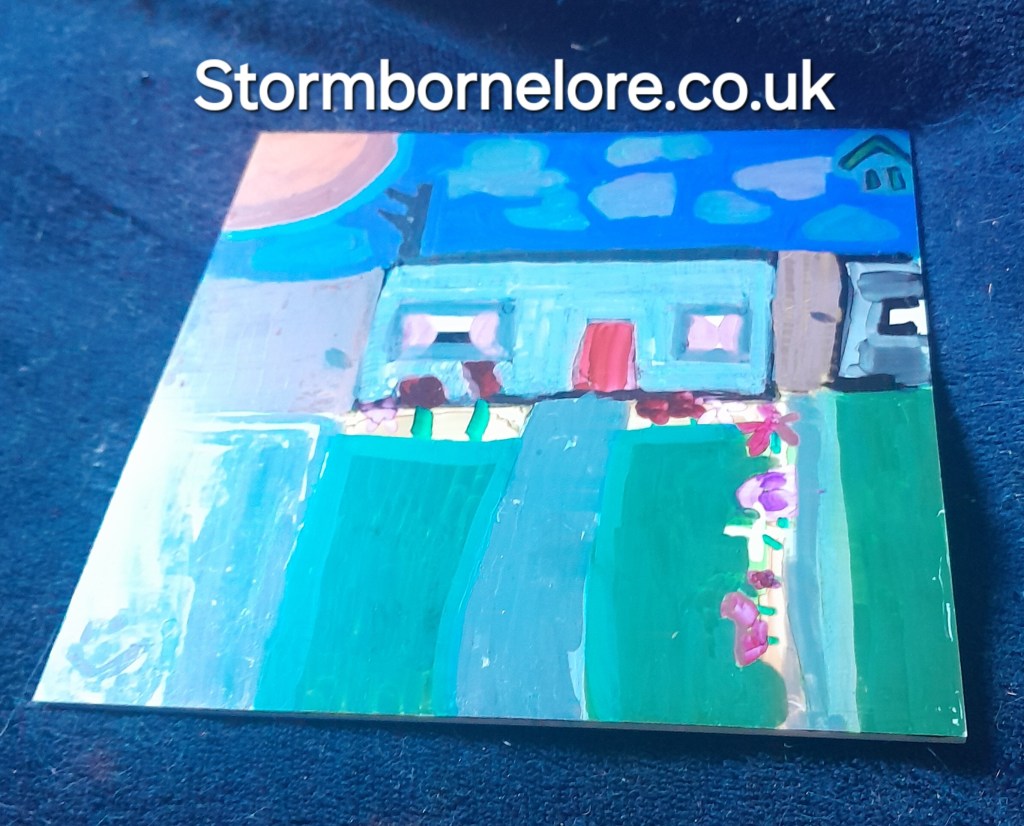
    A colorful painting depicting a Tettenhall Woood Prefab a red door and flower beds in front, set against a blue sky with clouds.
    A colorful illustration depicting a quaint Tettenhall Woods Prefab surrounded by a vibrant garden, representing the warmth of the Black Country dialect and local culture.

    It’s a proper cowd one out there this Sunday, so what better day to dive into a new post?


    Today, it’s a little disclaimer about the language that features in my stories…

    Author’s Note: The Tongue of the Land

    While the Black Country dialect does not belong to the Roman period. It is used within these stories to represent the voice of the common people. The humble folk who stood beside Taranis, shaped by soil, storm, and memory.

    The dialect itself descends from Old English. First spoken between 1100–1300 CE, and remains alive in parts of the West Midlands today.


    The earlier language spoken in Roman-era Mercia has long been lost, leaving no written record.

    By using this dialect, I seek not historical precision but continuity.. To let the living voice of the land speak through its past.

    To those who do not understand the dialect…

    “Ow bist, bab?”
    means “How are you, love?”

    “It’s a proper cowd one out there”
    translates to “It’s really cold outside.”

    So all together:

    “How are you, love? It’s a really cold one out there this Sunday, so what better day to dive into a new post?”

    The Black Country dialect has a warmth and rhythm all of its own . It’s how my grandparents and neighbours spoke, and how the land itself still seems to talk on quiet days.

    It’s the same voice I hear when I write of the Stormborne. Ordinary folk shaped by wind, stone, and rain, who carry the old sounds onward through time.