Tag: lived experience

  • Facing Fear: How I Conquered My Phobias One Step at a Time

    Facing Fear: How I Conquered My Phobias One Step at a Time

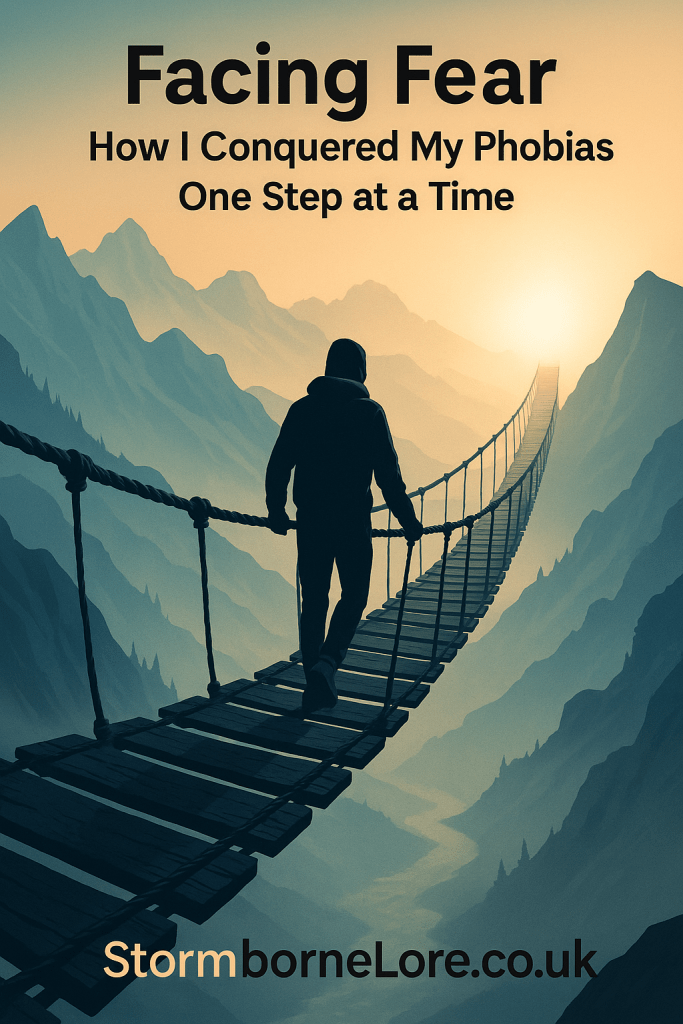
    A person walking on a rickety bridge over a mountainous landscape with the title 'Facing Fear' and subtitle about conquering phobias.
    An illustration depicting the journey of conquering fear, showcasing a figure walking on a precarious bridge against a backdrop of mountains.

    What Is Fear?
    Fear is our most ancient survival tool a natural response to danger, real or imagined. But sometimes, fear outstays its welcome. It whispers that we can’t… until we believe it.

    For some, fear is an occasional visitor. For others, it’s a daily shadow phobias, anxiety, panic attacks. I’ve lived with those shadows.

    But I’ve also walked through them.

    My Fears And How I Faced Them
    I’ve been fortunate. Not because I had no fear but because life gave me the opportunity to learn how to manage it.

    A climber ascending a rocky cliff in Staffordshire, wearing protective gear and focused on the climb.
    A climber scaling a rock face, representing the journey of overcoming the fear of heights.

    🌉 Fear of Heights
    I learned to rock climb in Staffordshire and Wales.

    I faced my limits on a rickety old bridge in Bavaria, and still crossed it.

    I even abseiled down rockfaces and braved a Tyrolean traverse in Pembrokeshire the kind that would once leave me frozen.
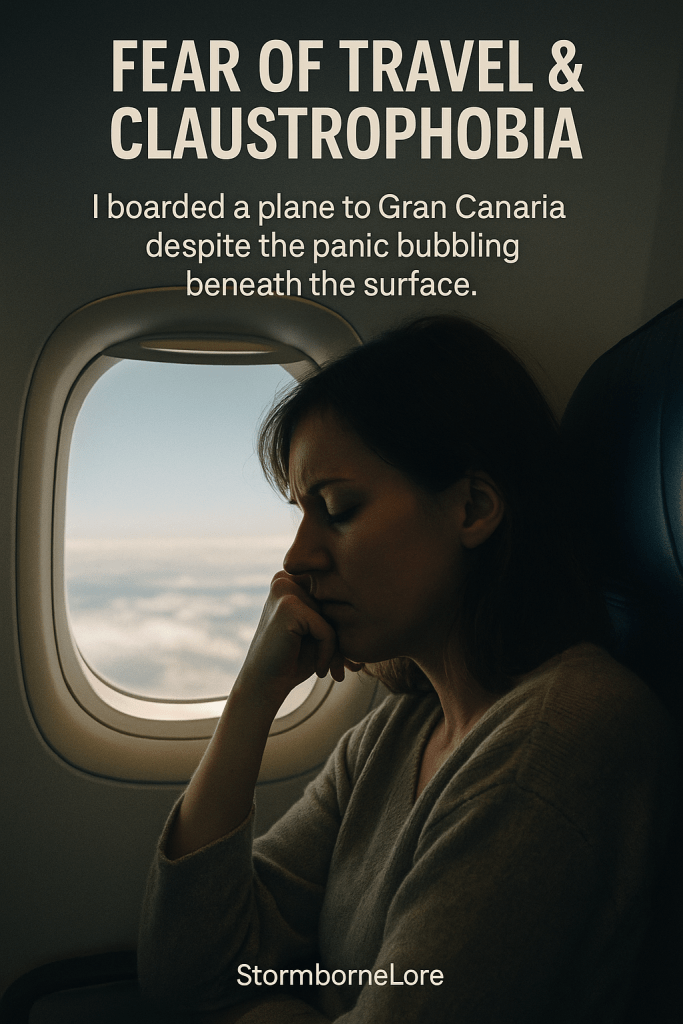
    A woman sitting on a plane, looking pensive and anxious while gazing out the window, with text overlay about fear of travel and claustrophobia.
    A woman on a plane grappling with her fear of travel and claustrophobia, reflecting on her journey.

    ✈️ Fear of Travel & Claustrophobia
    I boarded a plane to Gran Canaria despite the panic bubbling beneath the surface.

    Tight, enclosed spaces were once unbearable. But with support, I found my breath and moved through them.

    🏞️ Agoraphobia
    Being outdoors, especially alone or in open spaces, used to trigger spirals of panic.

    Over time and with exposure, grounding techniques, and support I reclaimed those spaces.

    🧠 How?
    Anxiety groups helped me understand my fear, not just fight it.

    Tactics like grounding, breathwork, visualization, and controlled exposure allowed me to manage reactions and regain control.

    Support networks reminded me I wasn’t alone.

    Fear Doesn’t Vanish But You Can Walk With It
    I haven’t eliminated fear. But I’ve redefined my relationship with it.

    Fear still shows up sometimes before a challenge, a new trip, or a difficult day.

    But now, I meet it with tools, not terror.

    I share this not because I’ve ‘won’, but because you can too. Fear doesn’t make you weak. Facing it makes you brave.

    Final Words
    Whether your fear is public speaking, flying, crowded places, or the dark know this:

    You are not broken.
    You are not alone.
    You are not weak.

    You are learning.
    And healing.
    And growing.

    Every time you show up despite fear, you win something back.

    If you’re struggling, reach out. Speak to someone. Join a support group. Try one small thing.

    You’ve already survived everything life has thrown at you. That’s proof of your strength.

    An illustration featuring a vibrant red dragon and a muscular black wolf wearing a golden shoulder strap, with both characters positioned against a colorful background. Text in the image expresses gratitude for reading and encourages liking and following the creator 'StormborneLore.'
    A powerful illustration featuring a fierce red dragon and a majestic black wolf figure, symbolizing strength and resilience.

  • Living with Psychotic Depression: Personal Stories and Insights

    Living with Psychotic Depression: Personal Stories and Insights

    Abstract artwork featuring concentric circles in various shades of blue, red, and purple, with a central intricate design in gold and brown.
    Abstract artwork depicting swirling colors and intricate patterns, representing the complexity of mental health.

    Understanding Psychotic Depression

    There are many types of mental illness some considered minor others major. But personally seen the devastating effects of mental illness.

    For years I was told I had BPD with associated psychosis, agoraphobia, anxiety. But then the psychiatrist diagnosed me with a condition called Psychotic Depression.

    Psychotic depression is not a term many people hear until it touches their life. For some, it’s a diagnosis; for others, a hidden truth they never had words for.

    It is a severe form of major depressive disorder (MDD). That includes psychosis a break from reality through hallucinations or delusions.

    What Is Psychotic Depression?

    Psychotic depression blends the hopelessness of clinical depression with the unreality of psychosis. The result is a state where:

    • Delusions (false beliefs) often focus on guilt, punishment, illness, or worthlessness.
    • Hallucinations (often auditory or visual) align with negative internal narratives.
    • The person lose touch with reality, unable to distinguish fact from fear.

    It can be terrifying, isolating, and life-threatening.

    Core Symptoms:

    • Deep, prolonged sadness
    • Loss of interest in life
    • Fatigue or inability to move
    • Feelings of worthlessness or guilt
    • Thoughts of death or suicide
    • Psychotic symptoms:
    • Hearing voices
    • Believing you’ve committed unforgivable sins
    • Feeling watched or judged by unseen forces

    These aren’t “dramatic” feelings they are real experiences for those living through psychotic depression.

    What Causes It?

    Psychotic depression is often triggered by a combination of:

    • Genetics (family history of mood or psychotic disorders)
    • Trauma or extreme stress
    • Chronic illness or disability
    • Imbalance in brain chemicals like serotonin, dopamine, cortisol

    It’s not your fault. And it’s more common than most think.

    Treatment Options

    Psychotic depression is serious but it is treatable.

    • Medication: Usually a combination of antidepressants and antipsychotics
    • Electroconvulsive Therapy (ECT): Effective in severe or treatment-resistant cases
    • Therapy: Often after stabilization, to handle trauma and build tools for recovery
    • Support systems: Family, friends, and community matter

    If you or someone you love is experiencing this, seek professional help right away.

    A Personal Note:

    “I believed I’d infected the world just by being alive. A voice in my mind confirmed it, over and over. I couldn’t tell what was real only that I was dangerous. I wanted to disappear.”

    You are not alone. You are not broken beyond repair.


    StormborneLore is a space where fire still burns even in the dark.

    If you are in the UK:

    • Call Samaritans on 116 123 (24/7)
    • Text SHOUT to 8528 (crisis text line)

    If you are in the USA:

    • Call or text 988 (Suicide & Crisis Lifeline)