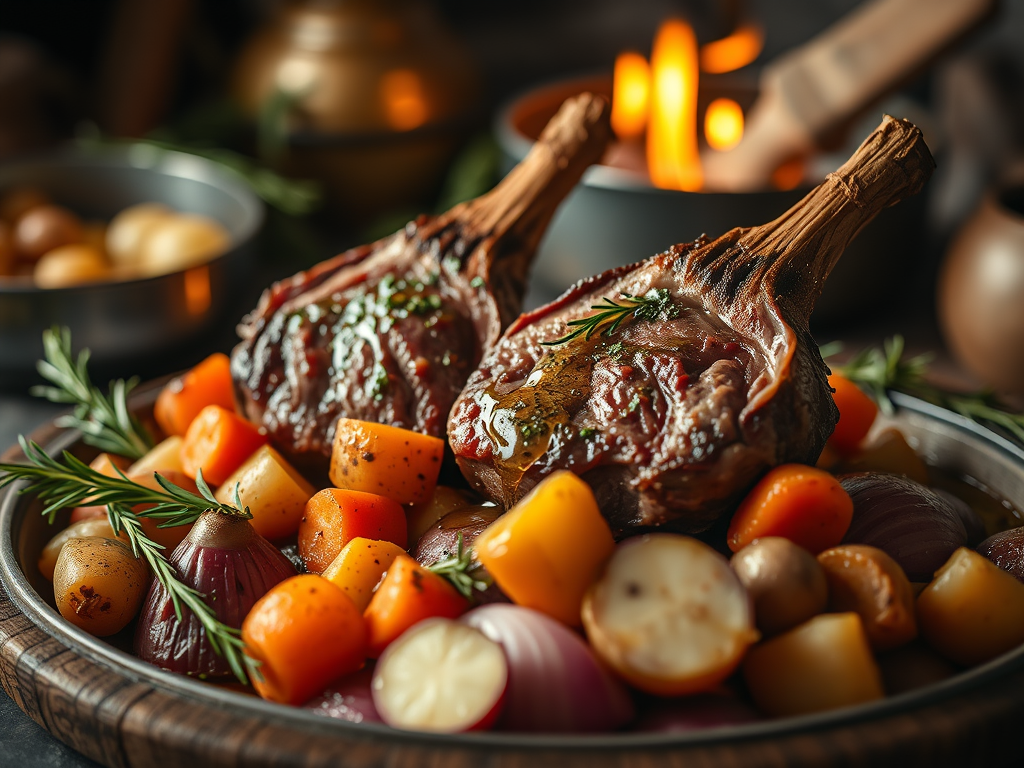
A hearty feast of lamb and roots inspired by Bronze Age Britain. Slow-roasted for warmth, strength, and balance.
📜 Cost: approx. £9.00 – serves 2 generously
🌱 Dietary Notes: Contains meat; gluten-free; diabetic-friendly (low glycemic impact with honey optional)
🍴 Setting: Ideal for House Terra or the Hearthrest kitchens of Emberhelm
Ingredients:
2 lamb neck slices (bone-in or boneless)
2 large carrots, chopped
1 large parsnip or swede, cubed
1 red onion, quartered
2–3 small potatoes, halved
1 tbsp honey (optional for diabetics, or substitute with erythritol/monk fruit)
2 tbsp oil (rapeseed or olive)
2 sprigs fresh rosemary or thyme
½ tsp coarse sea salt
Black pepper to taste
Optional: splash of stock or water for braising
Method:
Prepare the fire (or oven):
Preheat oven to 180°C (fan) / 200°C / gas mark 6. If cooking over a firepit, get embers glowing steadily.
Sear the lamb:
In a cast-iron pan or heavy skillet, sear neck slices on high heat with a splash of oil until browned on both sides (~2–3 mins each).
Assemble the roots:
In a roasting tray, toss chopped vegetables with oil, herbs, salt, and a drizzle of honey (or sweetener). Spread in a single layer.
Add lamb & roast:
Nestle the lamb among the vegetables. Add a splash of water or stock to keep it moist. Cover loosely with foil.
Roast in the hearth (or oven):
Roast covered for 1 hour. Remove foil, baste with pan juices, then roast uncovered for another 20–30 mins until browned and tender.
Serve with:
Crusty barley flatbread, pickled roots, or a handful of wild greens.
Historical Insight:
In Bronze Age Britain, neck cuts were favoured for slow roasting near the fire – tough, flavourful, and nourishing. Root vegetables like parsnip, swede, and onion were common near settlements, roasted in clay ovens or embers. Honey added rare sweetness and symbolised prosperity.
Health Notes:
Rich in protein and iron
Root veg provide fibre, vitamin C, and potassium
Slow cooking softens connective tissue, making it easier to digest
Possible Substitutes:
Lamb: beef shin, pork neck, or plant-based roast (e.g., seitan)
Veg: beetroot, celeriac, or turnips
Honey: maple syrup or date molasses for vegan option
✅ Diabetic-Friendly: Yes, especially if honey is reduced or replaced with low-glycemic sweetener
✅ Gluten-Free: Yes, provided stock & honey are checked
Freezer safe
If you recreate this recipe, tag #StormborneLore so I can see your version.
 StormborneLore