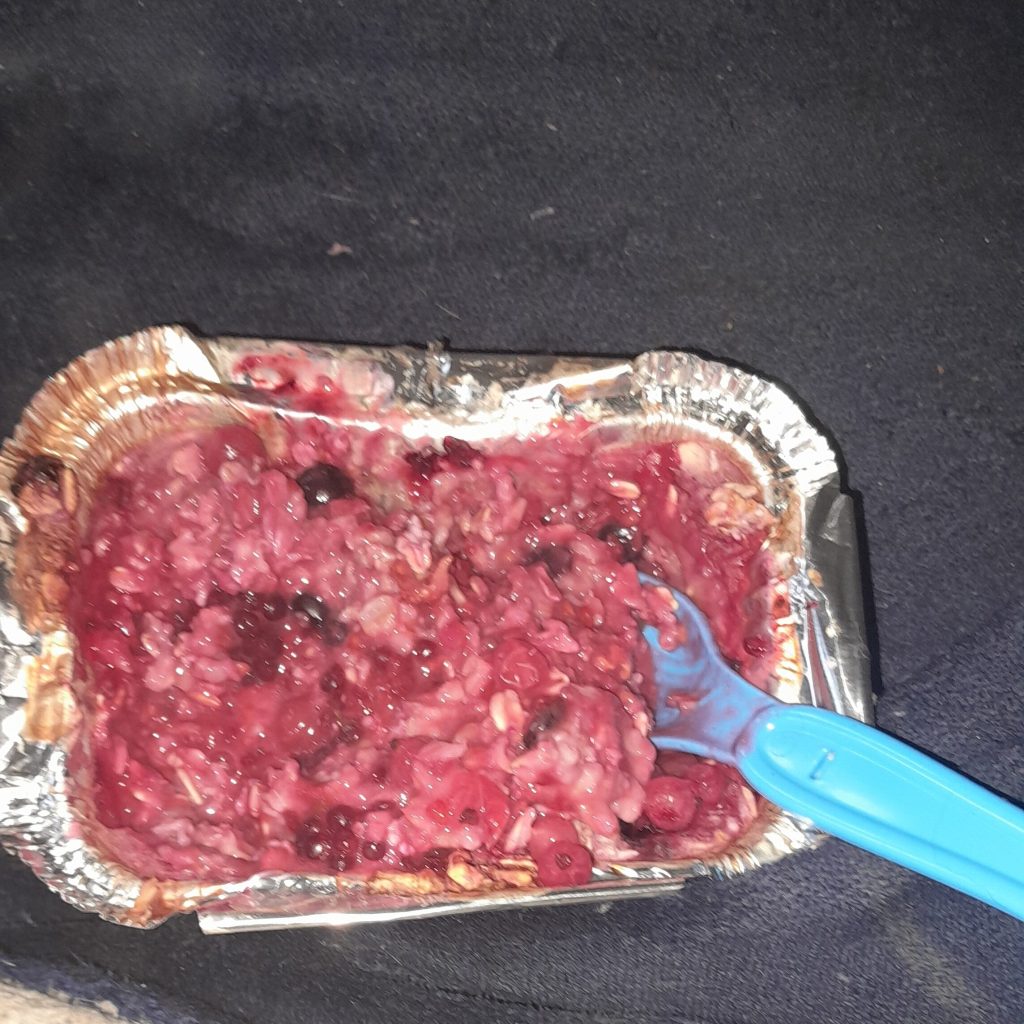
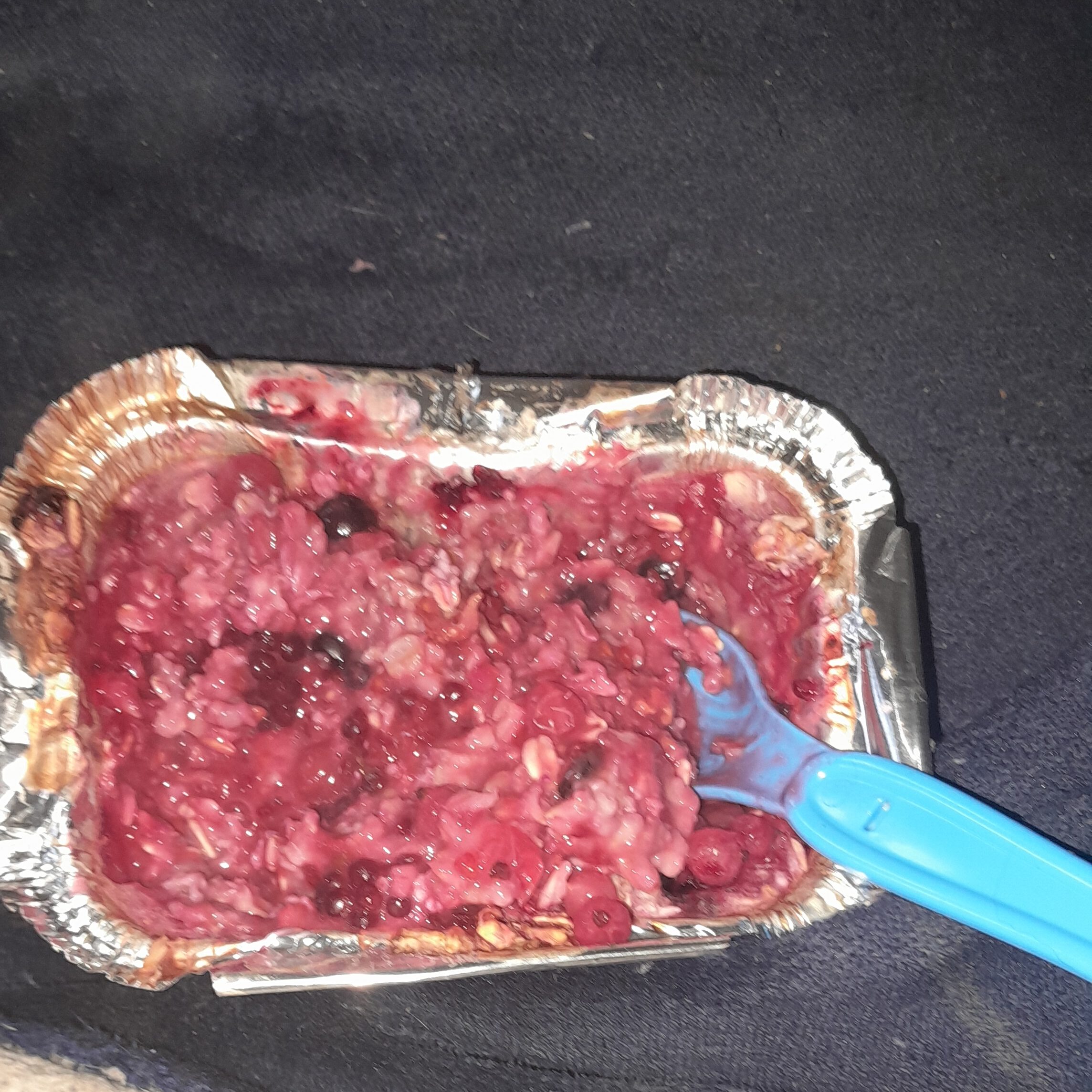
Warm and fruity oats with berries, a comforting breakfast perfect for cooler mornings.
There’s something comforting about the simplicity of oats and berries on a cool morning warm, sweet, and full of colour. This quick recipe costs less than £1 and can be made in a small foil tray or oven-safe dish perfect for one or two servings.
Ingredients
Water
1 handful oats
1 small bag summer fruits (fresh or frozen)
Method
Place all ingredients into your container or foil tray.
Mix well to combine.
Cook for 15 minutes until the fruit softens and the oats thicken.
Serve warm, or let it cool for a chilled, fruity porridge. Add a drizzle of honey or a spoon of custard for extra sweetness.
Health Benefits
Oats help regulate blood sugar and keep you full longer.
Berries are rich in antioxidants, vitamin C, and fibre.
Water keeps it light and easy to digest no milk needed.
A simple breakfast that tastes like summer and keeps you going through the colder days.
Cost per serving: £0.87 Cooking time: 10–15 minutes Appliances: Air fryer or oven Dietary: Diabetic-friendly, low waste, simple ingredients
A Comfort Breakfast with Ancient Roots
Breakfast doesn’t need to be complicated or expensive.
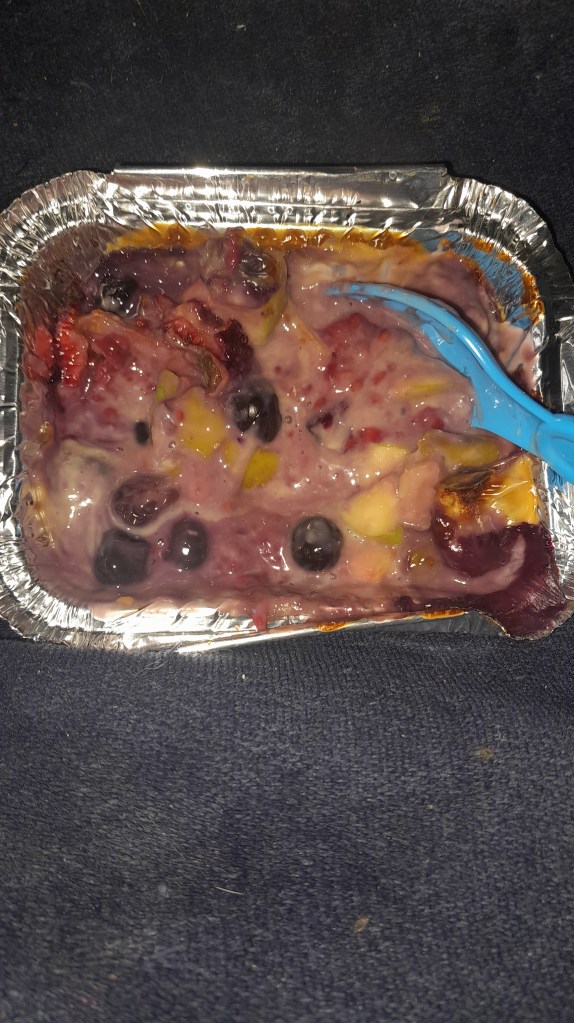
This warm fruit and custard bowl costs less than £1 per serving. It takes just minutes to make, and blends ancient orchard ingredients with a little modern creativity.
It’s sweet, creamy, and comforting, yet naturally light . A perfect start for cold mornings or when you want warmth without heavy sugar.
Ingredients (Serves 1)
6 blueberries
8 raspberries
1 small apple, chopped (skin on for fibre)
100ml light or low-sugar custard
Method
Prepare the fruit: Add the chopped apple, blueberries, and raspberries to a small silver foil tray. You can lightly spray with low-fat cooking oil if you want extra shine, but it’s not essential.
Cook the fruit. Place the tray in the air fryer at 180°C (or oven at 190°C) for 5 minutes. until the berries start to soften and release their juice.
Add the custard: Pour the custard over the warm fruit. Return the tray to the air fryer for another 8 minutes. until the custard thickens and bubbles lightly at the edges.
Stir and serve. Once cooked, gently mix the fruit and custard together. The berries will swirl through the cream, creating a rich marbled colour. Serve warm straight from the tray or pour into a small bowl.
Taste & Texture
The heat caramelises the fruit slightly, giving it a deep jammy sweetness that balances the creamy custard.
The apple stays firm, adding texture, while the berries burst with colour. Purple, red, and gold — like something from an autumn feast.
️
History Note.. Apples Through the Ages
Apples have grown in Britain since the Neolithic era, though early types were wild crab apples tart and small.
The Romans later introduced sweeter varieties, and by the Anglo-Saxon period, orchard apples were common across Mercia and Wessex.
Stewed apples and berries were eaten with grains, honey, or curds. Simple meals that warmed the body before work in the fields.
This modern take, baked with custard, keeps that same comfort alive 1,500 years later.
💷 Under £1 Breakdown (approx.):
1 apple – 25p
6 blueberries – 15p
8 raspberries – 20p
100ml light custard – 27p
Total: £0.87 per portion
💡 Storage Tip:
Cool leftovers and refrigerate for up to 24 hours. Eat cold or reheat gently.
Health Benefits of Warm Fruit & Custard
This simple £1 breakfast looks indulgent., But it’s full of natural goodness and balance ideal for steady energy and gentle digestion.
Apple – Fibre & Heart Health High in soluble fibre (pectin) which helps stabilise blood sugar and support digestion. Has antioxidants that reduce cholesterol and inflammation.
The natural sweetness means you don’t need extra sugar.
Blueberries – Brain & Blood Sugar SupportRich in anthocyanins, the deep-blue plant compounds that improve blood flow and memory.
Shown in studies to help balance blood glucose levels especially helpful for type 2 diabetes.
Low-calorie but nutrient-dense: vitamin C, K, and manganese.
Raspberries – Fibre & Gut
Health One of the highest-fibre fruits keeps you full and aids digestion. Has natural anti-inflammatory compounds and vitamin C.
Their low glycaemic index makes them a smart fruit choice for diabetics.
Light Custard – Protein & Comfort.
Provides a small amount of protein and calcium for bone strength.When made with low-fat milk and reduced sugar, it adds creaminess without spiking blood sugar.The warmth helps soothe digestion, especially in colder weather.In balance:
Natural fruit sugars are moderated by the fibre and protein from the custard.
Quick, filling, and kind to the stomach ideal for slow mornings or a light recovery meal.
Every ingredient is budget-friendly and rooted in traditional British produce.
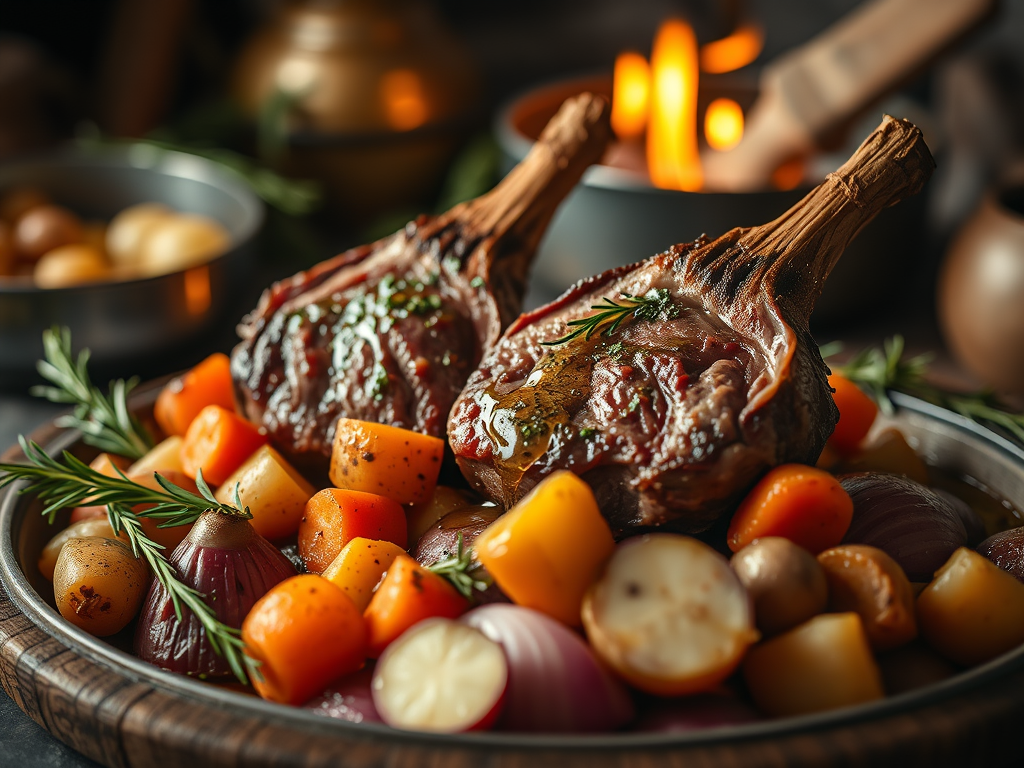
A hearty feast featuring slow-roasted lamb neck slices with a medley of root vegetables, inspired by Bronze Age Britain.
A hearty feast of lamb and roots inspired by Bronze Age Britain. Slow-roasted for warmth, strength, and balance.
📜 Cost: approx. £9.00 – serves 2 generously 🌱 Dietary Notes: Contains meat; gluten-free; diabetic-friendly (low glycemic impact with honey optional) 🍴 Setting: Ideal for House Terra or the Hearthrest kitchens of Emberhelm
Ingredients:
2 lamb neck slices (bone-in or boneless)
2 large carrots, chopped
1 large parsnip or swede, cubed
1 red onion, quartered
2–3 small potatoes, halved
1 tbsp honey (optional for diabetics, or substitute with erythritol/monk fruit)
2 tbsp oil (rapeseed or olive)
2 sprigs fresh rosemary or thyme
½ tsp coarse sea salt
Black pepper to taste
Optional: splash of stock or water for braising
Method:
Prepare the fire (or oven): Preheat oven to 180°C (fan) / 200°C / gas mark 6. If cooking over a firepit, get embers glowing steadily.
Sear the lamb: In a cast-iron pan or heavy skillet, sear neck slices on high heat with a splash of oil until browned on both sides (~2–3 mins each).
Assemble the roots: In a roasting tray, toss chopped vegetables with oil, herbs, salt, and a drizzle of honey (or sweetener). Spread in a single layer.
Add lamb & roast: Nestle the lamb among the vegetables. Add a splash of water or stock to keep it moist. Cover loosely with foil.
Roast in the hearth (or oven): Roast covered for 1 hour. Remove foil, baste with pan juices, then roast uncovered for another 20–30 mins until browned and tender.
Serve with: Crusty barley flatbread, pickled roots, or a handful of wild greens.
Historical Insight: In Bronze Age Britain, neck cuts were favoured for slow roasting near the fire – tough, flavourful, and nourishing. Root vegetables like parsnip, swede, and onion were common near settlements, roasted in clay ovens or embers. Honey added rare sweetness and symbolised prosperity.
Health Notes:
Rich in protein and iron
Root veg provide fibre, vitamin C, and potassium
Slow cooking softens connective tissue, making it easier to digest
Possible Substitutes:
Lamb: beef shin, pork neck, or plant-based roast (e.g., seitan)
Veg: beetroot, celeriac, or turnips
Honey: maple syrup or date molasses for vegan option
✅ Diabetic-Friendly: Yes, especially if honey is reduced or replaced with low-glycemic sweetener ✅ Gluten-Free: Yes, provided stock & honey are checked
Freezer safe
If you recreate this recipe, tag #StormborneLore so I can see your version.


 StormborneLore