The tide was retreating when they found the broken chains. The sight of melted iron through as if struck by lightning.
“Gods preserve us,” whispered one of the guards, stepping back. “No blade have done that.”
Tiberius knelt beside the scorched links. “He didn’t break free,” he muttered. “He shed them.”
The centurion barked orders.,Sending riders to the northern watch and ships to sweep the channel. But even as they moved, the sky began to darken. The wind shifted, dragging the scent of iron and rain across the water.
“He’s gone home,” Tiberius said at last. “Back to the place Rome never tamed.”
“To Britannia?” asked the young guard again, voice shaking.
“Aye,” said the older legionary. “And if the stories are true, every storm between here and there will answer his call.”
From the cliffs, they can see the faint shimmer of the sea calm for now, but seething beneath.
The Emperor’s standard flapped once, hard enough to snap its pole.
“Should we tell the mainland?” the centurion asked.
Tiberius stood slowly, eyes on the horizon. “Tell them nothing. Let them think he drowned. If the gods favour us, maybe they’ll believe it.”
But none of them truly did. Even as the orders went out, the men felt the pressure in the air, that strange stillness before thunder. Somewhere far to the north, in the heart of Britannia, the wind began to rise.
“What if he’s caught out there commander?”
Tiberius didn’t answer at first. His eyes stayed on the sea, the horizon split between light and shadow.
“If he’s caught,” he said finally, “then the sea itself will break first.”
The young guard frowned. “You speak as if he’s a god.”
Tiberius turned to him, his face hard. “You weren’t here when they brought him in chains. You didn’t see the storm that followed. The ships burned before they reached the harbour. No oil, no fire arrows, just lightning, and him standing in the rain, laughing.”
The guard swallowed, his knuckles white around his spear.
Another soldier older, scarred, voice low spat into the dirt. “Men like that ain’t gods. They’re reminders. Rome builds, Rome burns, and the earth keeps its own count.”
Thunder rolled far out to sea, deep and slow.
“Get word to the docks,” Tiberius ordered. “Seal the forges. Lock down the armoury. And if the Emperor asks…” He paused, eyes narrowing. “…tell him the storm never left the island.”
The men scattered to obey, but above them, the gulls were already fleeing inland.
The wind picked up again not from the west, but the north. And on the water, beneath a bruised sky, something vast and dark moved with purpose.
Taranis stood at the prow of the small boat, the sea hissing beneath its hull as if warning him back. He only smiled.
The wind carried the scent of earth his earth and beyond the mist. The cliffs of Britannia rose like the bones of old gods. Behind him, the island of exile vanished into shadow. Before him lay vengeance, memory, and the ghosts of his kin.
“Home,” he murmured. “Or what’s left of it.”
His brothers would be the first. Drax, bound by Rome’s gold and law; Rayne, lost between loyalty and freedom. Then the old comrades, the broken men who once bore the wolf upon their shields. The Black Shields would rise again not as soldiers. But as something Rome can not name and never kill.
He shifted his weight, watching the distant shoreline of Letocetum take shape through the fog.
Beyond that lay the salt pits of Salinae. The forests near Vertis, the villages that still whispered his name like a curse and a prayer.
“Word travels faster than ships,” he said to the empty wind. “By the time I step ashore, they’ll already know.”
Lightning rippled across the far horizon, faint but deliberate, as though the heavens themselves answered.
He gripped the tiller and laughed quietly to himself not with joy. But with the fierce certainty of a man who had waited too long to be mortal anymore.
When the first gulls circled overhead and the shore drew near, Taranis whispered the words that had haunted his exile.
“Rome fears the storm. Now it will remember why.”
The tide carried him in. Somewhere in the fort at Rutupiae Drax Stormborne turned toward the sea. With a feeling of dread, without knowing, that the storm had come home.
“Father, what does exile mean?” Julius asked, peering up with wide, uncertain eyes.
Before Drax could answer, Marcus spoke first, his tone full of the confidence only youth could forge. “It means Father can kill Uncle Taranis. It means Uncle has no home, and should be on his island. Right, Father?”
The fire crackled. For a long moment, Drax said nothing. The weight of the question pressed heavier than the armour across his shoulders.
“No, Marcus,” he said at last, voice low. “Exile does not always mean an enemy. Sometimes it means Rome has no place for a man who refuses to kneel.”
The boys exchanged a glance, uncertain. Julius frowned. “But you serve Rome. Uncle does not.”
Drax looked out toward the dark treeline where his brother had vanished. The smoke twisting like ghostly fingers into the grey sky. “I serve peace,” he said. “Rome just calls it something else.”
“Will you fight him, Father?”
Drax’s jaw tightened. “If I must. But I hope the gods grant me a choice before that day.”
Marcus turned back to the fire, his expression thoughtful. “Uncle said the storm’s already here.”
“Aye,” Drax murmured, his gaze distant. “And sometimes the storm wears a familiar face.”
Thunder grumbled again, rolling through the valleys. Drax drew his cloak closer. Feeling the weight of legacy settle across him the burden of blood and oath, of brotherhood turned to legend.
Somewhere beyond the hills, Taranis walked free.
Drax, bound by Rome and duty, wondered who among them was truly exiled.
The sun stood high as Praefect Drax Stormborne lingered beside the fire, cloak folded tight against a thin breeze.
“Hello, brother,” a teen voice said, and Drax’s hand went to the hilt of his sword before he turned.
“Taranis, show yourself now,” he said, keeping his tone even.
“Why? So you can look at me and scowl?” Taranis’s voice came from the trees. “I’m fine here, where you can’t see me but I can see you. I see you have children now, and you look smart in the Roman uniform of their law-men.”
“I acknowledge,” Taranis replied, stepping from the shade with a faint smile. “but I do not bow not to you, my liege, nor to your Roman overlords. We all do what we must to survive.” He paused, then added, quieter, “But try anything and I’ll snap your men like twigs.”
A small boy tugged at Drax’s sleeve. “Father, who is he?” the child asked.
“Is he a barbarian, father?” another eight-year-old whispered, peering toward the tree-line.
“Julius that’s our uncle Taranis?” a smirking boy offered. “The legendary gladiator Lupus… wasn’t he exiled?”
Drax let the questions run off him like rain. He studied Taranis as if measuring a blade. Blood and oath pulled between them one brother in Roman order, the other a storm wearing man’s skin.
The campfire crackled, throwing sparks into the brittle afternoon air. For a heartbeat, the world held its breath two brothers standing on opposite shores of the same river.
Taranis tilted his head slightly, the ghost of a smile curving his lips. “Exiled, yes,” he said softly. “But storms don’t vanish, brother. They wait for the right sky.”
Drax said nothing. His men shifted uneasily, hands brushing spear shafts, glancing between the prefect and the outlaw.
“You shouldn’t have come,” Drax murmured finally. “Rome watches even the wind that bends near me.”
“I’m not here for Rome,” Taranis replied,. his gaze flicking toward the boys proud, uncertain, wearing their father’s steel in miniature. “I came to see what became of the man I once followed into the fire.”
“You followed because you had no choice,” Drax snapped, voice sharp enough to cut the air. “And you bowed because you wanted one,” Taranis countered.
Silence fell again. The forest around them seemed to lean closer, listening.
Julius, the youngest, tugged at Drax’s sleeve.
“Father… he doesn’t look like a villain,” the boy whispered. “No,” said Drax quietly, eyes still locked on Taranis. “That’s what makes him dangerous.”
Taranis laughed then, low and bitter. “Dangerous? I bled for this land before Rome knew its name. If danger is survival, then yes I am a danger.”
A faint roll of thunder trembled beyond the horizon. Both men turned toward it, instinctively.
“Storm’s coming,” said one of Drax’s soldiers.
Taranis met his brother’s eyes one last time. “No, soldier,” he said, voice like wind through iron. “The storm’s already here.”
He vanished into the trees before anyone move. leaving only the fading echo of his words and the scent of rain.
Drax stood long after he was gone, until his eldest spoke softly: “Will we see him again, Father?”
Drax’s jaw tightened. “If the gods have mercy or none at all.”
The thunder answered for him.
Julius started to run after his uncle.
“No, child,” Drax called, voice tight.
Taranis turned, the stormlight catching on the scars that crossed his jaw. He knelt so his eyes met the boy’s. “Your place is with your father,” he said softly. “He’s a good, honourable man.”
Julius frowned. “How did you get off the island?”
Taranis’s mouth twitched into a smirk. “I built a boat.”
He rose, cloak stirring in the wind as thunder growled again in the distance. “Remember that, boy when the world cages you, build your own way out.”
Then he was gone once more, the forest swallowing him whole.
Drax stood in silence, watching the trees sway. His men busied themselves with meaningless tasks tightening straps, banking the fire anything to avoid the weight in the air.
The prefect’s eyes lingered on the path his brother had taken. “Stormborne,” he murmured, the name a curse and a prayer all at once.
Above them, the first drops of rain began to fall.
Thank you for reading if you enjoyed this story. Please like subscribe and follow for more.
An artistic interpretation titled ‘The Shadows of an Empire’ by StormborneLore, showcasing intricate patterns and vibrant colors.
The Whispering Blades
“You’ll see the arena again, Lupus when the Empire finds another crowd worth impressing. But empires fade. Storms… they wait.”
“So what then? More isolation for the beast brought out to haul rocks or is he permitted to do what he wants?” another guard asked, half mocking, half wary.
Marcus didn’t answer at first. His gaze lingered on the prisoner the golden-eyed giant who once made cities tremble. Even in chains, there was something unyielding about him. The air seemed heavier when he stood too close, as if the storm itself remembered him.
“Let him work,” Marcus said finally, voice low. “If the gods haven’t broken him by now, we won’t.”
Taranis lifted the stone in silence, the weight nothing to him. His eyes met Marcus’s through the drifting ash not with hatred, but understanding. Men like Marcus were cracks in the Empire’s armour, and he already felt the storm beginning to seep through.
That night, whispers spread through the camps. The slaves spoke of tools vanishing, guards turning blind eyes. The strange marks carved into the rock walls of the caves symbols of the storm.
The Ordo was no longer training in secret. It was beginning to move.
The Whispering Blades
It began with the disappearance of a centurion. No body, no blood just his helmet left beside the sea. Then came the merchant ships that docked with half their crew missing and their cargo of weapons gone.
Rome’s prefects called it piracy. The guards called it witchcraft. But Marcus knew better. He had seen the marks black circles intersected by lines like lightning. Carved into the stones where the missing men last stood.
The storm’s sigil.
On the island, Taranis moved through shadow. The Ordo had become something more not merely prisoners, but a network. Smugglers, spies, deserters, slaves. Men who owed no loyalty to Rome but to one another, bound by the mark and by his word.
Their blades were not drawn in open rebellion but in silence. Messages replaced banners; coded phrases replaced oaths. In the dark corners of the empire, the name Lupus became a warning. A curse whispered between soldiers before they slept.
And from time to time, Marcus would find strange bundles left near the guardhouse. Parcels of food, maps, and notes written in a language he did not know. The storm was moving faster than he was capable of reporting.
One night, a messenger boat came through rough seas bearing the Emperor’s seal. A new order had been given:
“Transfer the prisoner known as Lupus to Sicily. The Emperor demands his presence for a special ceremony.”
Marcus read the scroll three times. The words were clear, yet something in him hesitated. He looked toward the cliffs, where lightning split the horizon. The faint echo of a hammer striking iron rang out in the volcanic dark.
The storm was preparing to leave its island.
In the morning, Taranis stood by the docks, chains freshly bound. The soldiers dared not meet his eyes. As he stepped aboard, the sea hissed against the hull, and the sky grumbled above them.
Marcus saluted him not as a guard, but as a soldier to another.
“The gods will tire before you do, Stormborne,” he said quietly.
Taranis smiled faintly, the expression like distant thunder. “They already have.”
The ship set sail toward Sicily. Behind them, the island burned in the dawn. A black wound sealed by smoke, hiding the thousand blades that whispered beneath it.
The storm was no longer waiting. It was coming ashore.
A colorful thank you note encouraging readers to like and subscribe, featuring a bright sunny sky and green landscape.
The island rose like a wound from the sea. Cliffs blackened by smoke and jagged rock, licked by molten streams that hissed as they met the waves.
Taranis Stormborne stepped onto the scorched soil, chains clinking, eyes burning with quiet fury. The guards flinched at his gaze, sensing a storm that would not be tamed.
Days and nights blurred into one endless trial. He lifted stones heavier than any sword, endured storms that tore at his flesh., Taranis bore the mockery of Rome’s guards.
Yet each hardship was fuel. Each lash, each shout, An each impossible task was a lesson in patience. In endurance, in power that is quiet but absolute.
He was not alone for long. The exiles, criminals, and broken soldiers were gathered by the emperor’s decree.
Taranis was sent to the island as unwanted remnants of a fading empire. Many despaired, some sought only survival. But Taranis saw potential. In every desperate man, he saw loyalty waiting to be earned, strength waiting to be honed.
Under the cloak of night, he gathered the willing. They trained in secret. The volcanic caves became their arena; the cliffs their obstacle course. The ash-strewn beaches their battlefield. Each man swore a quiet oath, blackened by soot and sealed with the mark of the hand.
They were no longer prisoners. They were the first of the Black Shields the Ordo Scutorum Nigrorum.
Messages traveled beyond the island. But the smugglers whispered of shadows moving in the hills. As escaped slaves returned bearing tales of a golden-eyed gladiator who taught men the secrets of survival and strategy. Rome did not yet hear the name, but the seeds were planted. A storm was coming, and it carried the memory of chains.
In the stillness of volcanic nights, Taranis would climb the cliffs alone, facing lightning forks across the horizon. He lifted his face to the sky, the wind whipping across scars older than the empire itself.
“Soon,” he whispered, voice low as distant thunder, “the storm will awaken. And all who have betrayed the storm will bow… or fall.”
Years passed like tides, and the island became a crucible. Every man, every strike of the hammer, every lesson whispered in the dark. Was a note in a symphony that only Taranis heard. The Ordo grew, silent and unstoppable. Not an army, not yet. But a promise. A shadow. A storm that waited.
The world beyond the cliffs continued, oblivious to the wheels turning in secret. And when Rome faltered, as it always would, the storm would be ready to rise again.
“Hey, what’s his Roman name? I heard it’s Lupus,” a young boy said, looking to Marcus as he walked to his cell.
“I don’t care what they call me,” Taranis replied, voice low and rough. “But answer me this, Dominus when do I see the arena again? Or am I deemed too dangerous?”
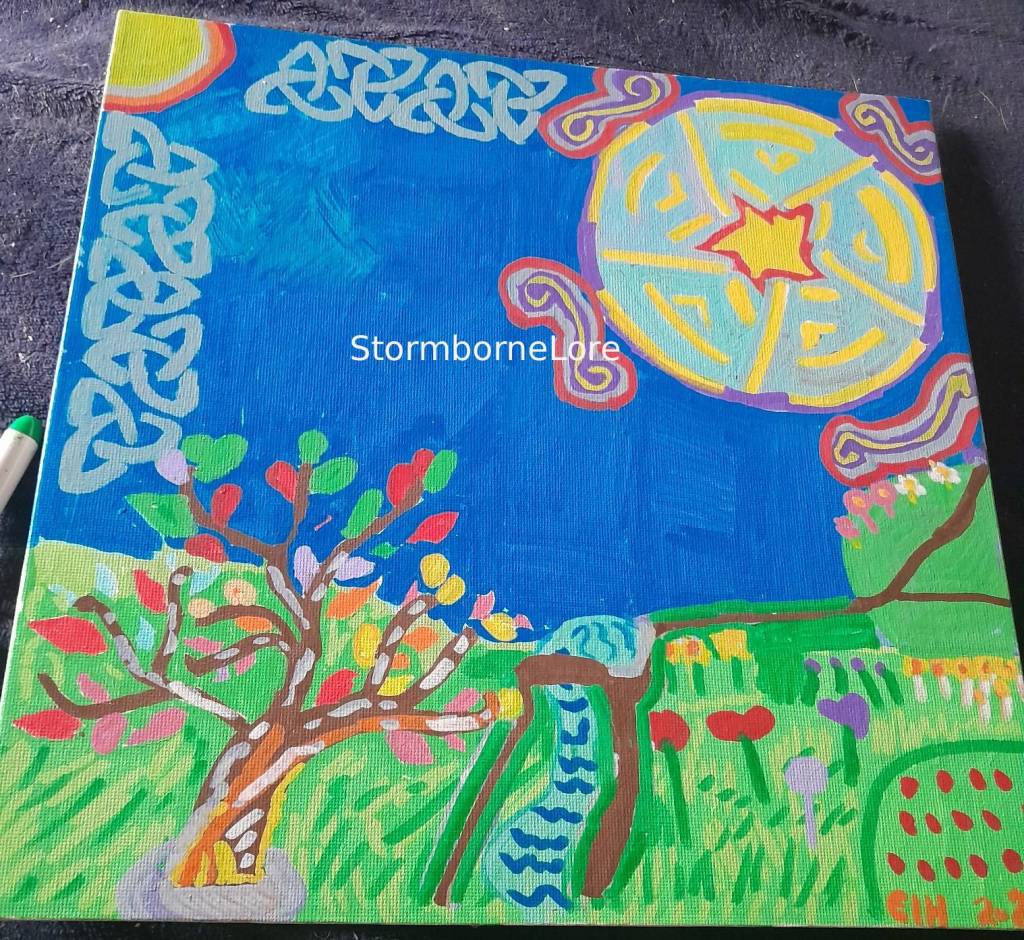
Artistic depiction reflecting the themes of dominance and rebellion in ‘The shadows of an Empire’ by StormborneLore.
The chains had not grown lighter with time, only quieter. Iron had long since given way to gold, yet weight was still weight . Taranis Stormborne felt every ounce of Rome’s fear in the links that bound him.
The ship that bore him south groaned through black waters. The guards would not meet his eyes. Some crossed themselves; others muttered old charms beneath their breath. When lightning flared over the horizon, a single flash revealed the island ahead jagged, volcanic, crowned with smoke.
His new world. His cage.
They called it Vulcarum Minor, a place for Rome’s unwanted gods.
The emperor had decreed he would not die, only vanish buried in salt and silence, where storms not reach. Yet the sea itself seemed to bow as the chained gladiator stepped onto the black sand. The air shimmered with heat and the scent of sulfur; the cliffs glowed faintly with fire beneath the stone.
There were others there broken soldiers, condemned priests, thieves who had stolen from temples. Men without names. And when they saw him, some whispered, “The Unbroken One.”
At night, when the guards slept, he spoke to them not of rebellion, but of memory.
Of oaths that outlast empires. Of the storm that lived in blood and bone.
Soon the whispers changed shape. The condemned began to mark their shields and cuffs with a blackened handprints. A sign of allegiance in the dark. They trained by moonlight, silent and tireless, forming a circle beneath the cliffs.
Taranis called them his Scutorum Nigrorum the Black Shields.
Not an army, not yet. A brotherhood. A promise.
As weeks became years, their network grew beyond the island. Soon ferrymen, smugglers, slaves who vanished and reappeared with gold, soldiers who served two masters. The storm’s reach was returning, invisible and patient.
When thunder rolled across the straits of Sicily, the guards whispered it was a warning from the gods. But Taranis knew better.
It was a reminder.
That no empire lasts forever.
A colorful thank you message encouraging readers to like and subscribe, featuring a bright sun and a blue sky.
The rain had thinned to a whisper, though the earth still drank its memory. The camp at Viroconium lay beneath a pall of grey the banners limp. The fires low, the air thick with the scent of wet iron and trampled earth.
From the timber walls came the faint murmur of Latin, measured and precise, a language of order wrapped around conquest.
Taranis Storm knelt in the mud outside the command tent, wrists chained, head bowed. The iron bit deep, the skin at his wrists raw and darkened with rust and blood.
The mark of the Stormborne ring had already been scrubbed from his armour. He was no longer heir, no longer rebel merely a trophy of Rome.
But even stripped bare, even silent, there was something in his stillness that unsettled the soldiers. Some swore the air shifted around him, that the faint tremor of thunder haunted the edges of his breath.
Others avoided his gaze altogether, crossing themselves as they passed. A man broken should not look like that unyielding even in ruin.
Inside the tent, the light was dim, filtered through canvas streaked with rain. The scent of oil lamps mingled with the metallic tang of blood. He had been made to wait hours, until the flap stirred, and three shadows crossed the threshold.
Drax came first.
Older now, heavier in both body and soul. The broad shoulders that had once carried their people’s trust. Now bore the eagle of Rome, its gold thread dull in the half-light. He paused by the entrance, rain dripping from his cloak, his eyes lingering on Taranis longer than words fill.
Behind him, Rayne entered, slower. His face was pale with sleeplessness, the hollows beneath his eyes deepening the cold fire in his gaze. He did not meet Taranis’s eyes. The torchlight caught the edges of his features sharp, beautiful, worn.
Draven followed last. He moved like a shadow quiet, deliberate, almost ghost like. His cloak brushed the ground, damp from the mist outside. When his eyes lifted, they carried both sorrow and warning.
No one spoke at first. The silence was a living thing, heavy and raw, pressing between them like the weight of the storm itself.
Then, slowly, Taranis lifted his head. The light touched his face. Revealing the dark bruises along his jaw. The faint smear of dried blood across his temple and eyes. Eyes that still burned with the calm fury of the storm.
“Brother,” he rasped, voice rough but steady. “Have you come to finish what Rome began?”
Rayne’s jaw tightened. “I came to make sure you lived.”
“Lived?” A hollow laugh escaped him no warmth, no humour. “They’ll march me south in chains, Rayne. You traded the Circle for a collar. Don’t pretend it was mercy.”
Drax’s tone was even, but heavy. “Enough. You both know what’s done can’t be undone. I took the oath so the rest of us survive. So that our kin would not hang from Roman walls.”
“And what of honour?” Taranis’s gaze snapped to him. “Or do we trade that too for a few more winters of peace and a Roman coin to buy it?”
Draven shifted in the corner. “Peace doesn’t last, brother. It only changes its face.”
Rayne’s voice cracked through the air, sharp as the wind. “You think I wanted this? You think I didn’t bleed the same as you when the Circle broke? I saw no victory left to take I chose survival!”
“You chose fear,” Taranis said softly. “And fear has a longer memory than Rome. It will rot what’s left of you.”
Rayne turned away, jaw clenched, the lamplight trembling against his cheek. “You’d have doomed us all for pride.”
“And you’d damn us for obedience,” Taranis countered.
The space between them trembled with tension brothers bound by blood and broken by choice.
Drax broke it first, his breath slow, his tone heavy with command. “They take you south tomorrow. I can do nothing more without risking every name tied to ours. Whatever happens after this live. Find your chance.”
Taranis’s lips curved, a ghost of the old stormborn grin. “I will. And when I do…” His eyes rose, burning through the gloom. “I’ll remember who stood, and who knelt.”
For a heartbeat, no one moved. Only the rain, soft and relentless, filled the quiet between them.
Draven looked away first, eyes glinting with something close to grief. Drax’s shoulders sagged, his silence an admission. Rayne lingered his hand hovering at the tent’s edge, uncertain, trembling.
“Taranis…” he began.
“Go,” came the answer, quiet but final. “Before you remember what it means to be one of us.”
But as Rayne turned to leave, Taranis’s voice cut through the rain again lower, heavier, carrying the weight of prophecy. “You know what you’ve done, brother. You’ve condemned the poor those I sheltered, the villages I defended. Rome will use your choice to bleed them dry.”
His gaze flicked to Drax, then Draven. “Do what you must to live in my absence. Keep them safe if you can. But remember this the storm doesn’t die. It only learns patience.”
The words hung in the air like thunder before the break.
Rayne hesitated, his throat tight with something between guilt and defiance. “If you live to see freedom, Taranis… will you forgive me?”
Taranis met his eyes grey meeting grey — and said nothing.
Outside, a trumpet sounded the signal for the night watch. The guards were coming.
The brothers turned, one by one, each carrying their silence like a wound.
Drax’s heavy boots faded first. Draven followed, his steps ghost like. Rayne lingered, then vanished into the rain.
Alone again, Taranis knelt in the mud and closed his eyes. The iron dug deep, but his breath was steady. The storm was not gone merely waiting beyond the hills, patient and unseen.
And somewhere, far to the south, Rome’s banners rippled in the wind ready to claim the storm for themselves.
They marched him up the salt-hill at Dodderhill, where the Roman timber bites into the skyline like bad teeth. Below, Salinae steams. The brine pits cough a white breath across the roofs, and every back in the town goes still; men with salt-burned hands, women with brined wrists, children with their mouths parted. All of them looking up. All of them waiting to see a lesson.
Storm’s wrists are raw from the iron. His shirt is torn where they hauled it over his head, the air is cold on old scars and new. There is a cut across his ribs from the morning’s struggle and the dried salt in it stings like sand.
A centurion with a wine-scarred mouth calls the charge in a language that thinks it is the only one that matters.
“Rebel. Murderer. Enemy of Rome.” The words land like stones. Men with square shields drag the condemned in a line. Three farmers. A boy who threw a stone. Storm.
“Use the cross for the big one,” the centurion says. “Make them see.”
They set the upright in the earth, ramming it with a post-driver until the ground answers. The carpenter’s nails gleam in a little wooden tray, thick as a man’s thumb. The hammer is clean. The executioner’s eyes flick to Storm and away again as if he’s looked at the sun too long.
Storm keeps his chin up because he will not bend. He smells oak smoke from the town, the sour of men in mail, the resin of fresh-split palings. He tastes brine on his teeth. A gull wheels and screams once, the cry torn thin by the wind.
A voice from the crowd below: not words, just a keening. Another voice, hoarse, calls his name the way a prayer is called: “Shield!”
He does not look down. He looks at the sky. Cloud, thin and grey and harmless. For now.
“Hold him,” the centurion says.
Four soldiers pin his arms. The fifth takes Storm’s right hand and forces it open against the cross-beam. The leather strap bites his palm. The executioner lifts the first nail. It is cold when it kisses the crease of Storm’s wrist.
Storm hears the old world in the edges of the day. The ring he once wore feels like a phantom weight on his finger. He sees Nessa’s hair in the corner of his sight when the wind shifts. He hears Boldolph and Morrigan somewhere he can’t walk to anymore. Rayne’s voice is the whisper in the hinge of the jaw: brother, hold still and we will live. Brother, lie down.
The hammer rises.
Thunder is far off. Not here, not yet. A single pulse on the horizon like a heart behind a ribcage. The executioner breathes. The hammer falls.
It meets iron and the iron skids, glancing off the nail head. The blow dents the wood and slams into Storm’s bones. He grunts despite himself. Blood beads. The executioner squints, checks the nail, lifts again.
The second stroke strikes home. Iron bites meat. The sky pulls tight.
A woman cries out below. “Enough! He fought for us!”
“Silence,” the centurion barks, not looking down.
Storm tastes copper. His vision narrows, then widens until he can see each hair on the executioner’s wrist, each pore, each fleck of sawdust stuck to the hammer’s face. It is the old sight, the red edge. He could go there—into the roar where nothing hurts until after—but he does not. He holds on. He wants to watch.
“Left,” the centurion says.
They take his other hand. Fingers spread. The nail’s cold mouth finds the vein. The hammer rises
and the wind turns.
Not a gust. A pivot. The kind of turning that changes seasons. Smoke from the brine pans below folds back on itself. Sparrows flatten to the earth. The hairs along Storm’s arms lift.
The first crack of thunder lands atop the fort like an axe into a block. Every man jolts. A standard topples with a clatter of bronze. The executioner flinches, the nail slips, and instead of flesh he drives it through the softened knot of the beam.
The shock carries up his arm. He swears. The soldier holding Storm’s elbow looks at the sky. The sky looks back.
Cloud blooms fast from the western line, rolling in on a bruise-coloured belly. A wolf-long shape seems to run along its edge and is gone. Another crack. Closer.
“Finish it,” the centurion snaps. But there’s a catch in it now, and he makes a sign with his two fingers as if to pinch off something unseen.
The hammer lifts for the third time.
Lightning hits the palisade post a spear’s throw away. Wood screams. Splinters go like hail. Men duck behind shields by training, but training breaks when the sky speaks in a voice older than their gods. A mule rears and snaps its lead. The nail tray overturns; iron skitters like teeth on stone.
Storm moves then.
He lets the red edge take him for a heartbeat just enough. He wrenches, twisting his pinned right wrist so the cut tears long and clean instead of deep. The leather strap splits where sweat has rotted it.
He brings his head forward under the beam, drives his shoulder into the soldier’s throat, hears the wet cough, feels the grip loosen. He kicks back, heel to knee, and the man behind him falls with a scream.
There is always a moment in a fight when the world decides. This is it.
He drives the crown of his head into the executioner’s face; the man drops the hammer, hands going to his nose. Storm grabs the hammer with his left hand, blood slicking the haft, and swings the weight into the chain on his left wrist. Once. Twice. The chain holds. The third blow finds the link that was barely peened shut, and it parts with a sweet, bright sound.
“Hold him!” the centurion bellows, but half his men are looking at the burning post and the other half are looking at the sky.
Shapes break from the heather below the berm three, five, a dozen men with black-painted shields and hunters’ faces. Brianna’s braid is bound with leather; Cadan’s scar shows white through ash. They come without horns or shouts, all knife and certainty.
Brianna hits the left flank like a thrown stone, her knife opening a belly before the man knows his shield is gone. Cadan slides under a spear and cuts the hamstring clean, then is up again and laughing because sometimes that is the only way to keep breath inside you.
“Storm!” Brianna barks.
He throws the hammer. She catches it by the neck and brings it down on a helmet rim, bending iron into eyebrow and eye. She tosses it back and he takes the chain a second time and frees his right.
The centurion finds his voice at last and orders the archers, but the bowstrings are wet now, the fletchings torn sideways by the sideways rain that has arrived without crossing the ground between. Arrows go high and crooked. One finds a farmer’s boy in the line of the condemned. The boy sits down as if to rest and does not get up again.
Storm would carry that if he let himself. Later, he thinks, later, and steps toward the centurion.
“Stand,” the centurion says, not to him but to what moves in his bones.
“I do,” Storm says.
They meet as men meet: iron-toothed and close. The centurion is trained. Storm is made. The first cut is Storm’s forearm across the centurion’s sword-hand, breaking the rhythm, and the second is Storm’s head against the man’s nose—again, because men are made of the same mistakes and the third is Storm’s thumb to the centurion’s eye. The man goes down with a sound nothing like command.
“Back!” a junior officer yelps. “Back to the fort!”
They drag their wounded. They leave their dead. They do not look at the cross. The storm does what storms do it eats the edges of everything.
From the town below, the people cannot see the cut and the grapple, only the outline of men against rain and the lightning that makes ghosts of them. Then those ghosts are gone into the gorse and the broom, and the hill is left with a burning post and an empty beam and a rumour that begins to run faster than hooves.
They bind Storm’s wrist tight with a strip of his own shirt and the last clean linen any of them have. The bleeding slows. His hands shake after it stops. He sits with his back against a birch, watching steam lift off his skin.
“Could have died,” Cadan says, not accusing, not gentle.
“Didn’t,” Storm answers.
Brianna crouches and studies the wound. “You’ll have two scars for one story,” she says. “The tale-singers will thank you.”
Storm looks at the knot of linen. He thinks of a nail driven through the heel of a stranger in a land he will never see, of crosses on a hill where a different empire stakes its truth. He thinks of Nessa’s mouth and Rayne’s eyes and of wolves that do not answer. He feels the tremor in himself and wonders if it will ever stop.
“Was it you?” Cadan asks. “The sky?”
Storm chews that like gristle and spits it out. “No,” he says. “It was the sky.”
Brianna huffs once, almost a laugh. “Then the sky is with us.”
They move as the light fails, cutting north and a little west, keeping to hedges and the backs of fields, avoiding every lane the Romans know.
The storm rolls away toward the Severn; behind it, the wood drips and the undergrowth smells green and clean as if nothing dies.
By the time they reach the low, wet ground where the oaks thicken half a day’s walk from the salt town, close enough to smell wood-smoke when the wind is right night has set.
They choose a place where yew anchors a little rise and an old fallen oak makes a table the size of a man. Cadan lights a small fire that no one will see unless they are meant to. Brianna lays out bread and dried meat and a handful of early wild garlic leaves, because ritual has to start with something you can eat.
Storm stands, because oaths are made on feet.
“We were a ring,” he says. “We were a house. We were a promise to people who do not want us anymore. Today I was meant to die to teach them to fear, and I did not. I don’t know if that is luck or the gods or a debt that will come due later.”
He looks at each of them. There are eleven counting him. Some are men who fought with him when the wolves still ran the ridge. Some are women who learned a knife because no one else would come. One is a boy who was a boy yesterday and is not anymore.
“I’m done waiting for any man’s mercy,” Storm says. “If you stay with me now, you stay knowing there will be no pardon. No ring to call us home. We will be hunted by chiefs and by Rome and by the stories men tell when they are afraid. We will strike and vanish.
We will take food from those who hoard it and give it to those who starve. We will cut chains where we find them. We will keep the lanes dangerous for those who would make them safe for empire. We will be the shadow that says not yet.”
He sets his palm on the fallen oak. Blood from the bandage seeps fresh and red and bright against the old grey wood.
“I name us,” he says, and the words come easy because they are true before he speaks them. “The Black Shields. Not for hiding” he taps the painted face of Brianna’s board, dull black with ash and pitch “but for what we carry in front of us so the ones behind can live.”
Brianna puts her hand over his. “Black Shields,” she says.
Cadan’s hand stacks next. “Black Shields.”
One by one, the others follow, rough palms and finer, scarred knuckles and bitten nails, hands that have stolen and fed and fought and held.
When they step back, the tree holds their blood in a dark print that already looks like a sigil.
A wind runs through the oak leaves though nothing else stirs. Somewhere far off a fox barks and another answers. In the dip of silence after, Storm thinks he hears just for a breath the long, low note of a wolf.
He looks up into the black roof of the wood and does not ask for a sign. He has had enough signs for one day.
“Sleep,” he tells them. “We move before light. The salt road will wake angry.”
Brianna nods, already spreading a cloak for the boy who is not a boy. Cadan checks the edges of the camp, his knife out, his shoulders easy for the first time since the hill.
Storm sits again with his back to the birch. His wrist throbs in time with his heart. When he closes his eyes, the hammer falls, and falls, and falls, and does not find him.
Below, the town spreads the story because towns are made to spread stories. By morning it will have a name it did not have yesterday the Hill of Ashes. By night there will be new chalk marks cut into the backs of gateposts that mean leave bread, and others that mean soldiers, and others that mean the Black Shields have passed.
He lets sleep take him only when the fire dies to a patient red and the rain begins again, soft and fine, washing the last blood from the bark.
From this moment Taranis Stormborne became known as Storm among his men.
The clouds hung low, casting a strange dark light over the gathering. The council of elders stood in a tight circle around a young boy.
“Stormborne, you are now and forever exiled from this village, this clan, and your family,” the elder leader declared, his eyes fixed on the child. Elder Ysra held the ceremonial staff before her, unmoving.
The little boy turned to his family. “Father, I didnot hurt anyone. Please” he begged, but his words were met with silence.
All thirteen of his brothers turned their backs. Then his mother did the same. Conan, his father, hesitated but looked away, knowing he could not stand against the council.
Taranis ran from the camp, tears blinding him as he fled into the woods. His sprint slowed to a walk. He stumbled across berries and gathered nettles to eat. His first meal as an exile—nettles and nuts.
“Not filling,” he whispered, “but the old ones ate it. Mama used to cook it.” He curled against the base of an ancient tree. Overhead, dragons roared. Wolves howled in the distance.
Time stilled. The ache of loneliness pressed down on him. He missed his brothers, his mothers humming, and even his fathers barked commands. He walked on, aimless, until he saw a white wolf. He froze.
The wolf approached, sniffed him, cautious but curious. Then a large black wolf circled nearby.
“We will not hurt you. Iam Boldolph,’ said the black wolf said not aloud, but directly into his mind.
‘You you wont?” the boy whispered as other wolves approached, dropping meat at his feet.
“No,” said the white wolf, lying down. “We are here to help. Your father sent us. I am Morrigan. Come, lie with me. Warm yourself.”
Taranis walked to her and buried himself in her thick fur. Boldolph stood guard, ever watchful.
He had lost his home, his name, and his kin. He had seen a friend die. Three winters passed, and the boy grew thin and pale, cradled in fur and silence. Then one morning, feverish and weak, he was found.
“Father, hes curled up with the wolves,” a boy said.
“We will take him. He will serve as a slave,” the man replied, lifting Taranis with ease.
They carried him to their camp. Women nursed him back to health, but one day he awoke and reached for his neck. A collar.
“Leave it,” said a teenage boy sitting nearby. ‘They will beat you if you touch it.”
“Who are you?” Taranis rasped.
” I am Solaris of black claw. I am one of your owners sons,” he said, offering him bread. “You are in the Black Claw clans camp. My father found you fevered and curled up with wolves. You are to stay here as a slave.”
From that day, Taranis worked from sunrise to sunset. He obeyed without question, learning to serve in kitchens and at the forge. He heard whispers of a cursed child, exiled and touched by dark forces.
On his eighteenth birthday, he hauled stones beneath the harsh gaze of the masters. One man held a branch, ready to strike.
He was tall now, but thin. His back bore scars from the collar and the lash. All he wanted was to see Boldolph and Morrigan again.
A slap of something warm and wet stung his spine.
“Keep it moving!” barked a voice.
The clan leaders sons played nearby. Solaris laughed with his younger brothers by the grain shed. One of them, a tall boy with a cruel grin, threw a rotten turnip.
It struck Taranis in the chest. The others laughed.
“Stop it,” Solaris snapped. “He is not our enemy.”
“He is a slave,” the older boy sneered. “You and Father found him half-dead. No name, no clan. Just stories of a cursed exile.”
That was me. Eight years old, alone in the snow. They said I was cursed. Touched by darkness.
But I was just a child.
He didnot remember lunging only the feel of dirt flying behind his heels. Rage took over.
The branch came down before he landed a punch.
Crack.
Pain burst across his shoulders. A second strike. A third, slower, deliberate.
Taranis didnot cry out.
The man loomed. “You want to fight the leaders sons? Try again, and we will gut the wolves that raised you. Make you skin them yourself.”
That stopped him.
His vision blurred. He tasted blood his or someone else’s he wasn’t sure but then a shadow blocked the light.
Solaris.
He stepped forward, fists clenched but low.
“You will kill him like this,” Solaris said.
“Hes still breathing,” the overseer growled. “Let the beast learn his place.”
“Hes not a beast.” Solaris growled
Silence.
“I have seen beasts. This ones still human.”
That day, there were no more beatings. But no food either.
Night fell cold. Taranis curled beside the embers, shivering.
Footsteps. He didnot lift his head. If they came to hurt him, so be it.
Something thudded beside him. Bread, wrapped in cloth.
“Its Still warm,” Solaris muttered. “I stole it before dinner. Donot die. Not yet.”
“it’s good I don’t intend to” Taranis took the bread in both hands. The warmth bled into his finger as he stared at the fire. There was a time hed healed a bird, mended his brothers broken arm. Even healed his brother but now He touched his collar.
“I will escape. I will kill them all,’ he whispered.
His family was a fading memory. The names Rayne, Drax, Draven, Lore blurred in his mind.
Then he heard a howl. “Thats Silver,” he whispered.” Thats Boldolph. And Morrigan. They stayed near.”
Men came. They dragged him to a tree marked by rope and tied his hands above his head. Children threw scraps at his face. Laughter. Rotten food.
A man approached. Large, green-eyed, wrapped in furs.
“Slave, you will stay here overnight. No food for two days for daring to touch my son,” he said. “Twenty lashes if you try anything.”
Taranis bowed his head. He knew not to speak. Not to fight.
As they walked away, he remained in silence, bound and bruised.
“Two days,” the man said to a woman. “No food. No water. Do not tend his wounds.”
The coals glowed nearby.
“Make him walk it,” said a boy named Root. They prodded Taranis toward hot stones.
He resisted.
“Please don’t make me’ he pleaded his hands rebound and a tether held by another boy.
“Walk,” another growled.
A younger boy smirked as he stepped across the coals unfazed.
“Hes not normal,” whispered Calor. “Is that the one the enemy fears?”
‘He speaks with wolves. And dragons,” the Seer answered.
“Bring our best fighter,” the leader ordered. “Let them fight.”
They dragged Taranis, barely conscious, to the firelit circle. The crowd formed in a crooked ring.
Barefoot, bruised, he stood in the dirt. His collar scraped with every breath.
Rukar, the clans champion, stepped forward. Twice his size. A necklace of teeth. Leather-wrapped fists.
“Fight,” the elder barked.
No weapons. No mercy.
The first punch knocked him flat. The second split his lip.
Thunder cracked. Lightning danced.
“Come on, exile,” someone jeered. “Show us your curse.”
But Taranis rolled. Rukars foot slammed into a stone instead of ribs.
Taranis launched upward, shoulder-first into Rukars knee. The brute staggered.
Dirt in the eyes. A headbutt. Teeth bared like a wolf.
Rukar swung. Another blow grazed Taranis temple. Blood poured.
This was not about victory.
It was about survival.
He twisted low, locking Rukars arm. A snap echoed. The champion fell, howling.
Silence.
Taranis knelt over him, ready to strike.
He didn’t move. He just stood
Bloodied. Shaking. Alive.
The Seers voice broke the silence. “The wolves taught him well.”
Taranis bowed to the master, kneeling as he had once knelt to his father.
“Take him to the tree,” the leader said. “Hes now a warrior-slave. He will earn his freedom in battle. But punishment for attacking my son still stands.”
They resecured him to the tree, pain burning through every limb.
Later that night, Solaris approached with broth. His father watched.
“You are a warrior-slave now,” Solaris said. “They will send you to war.”
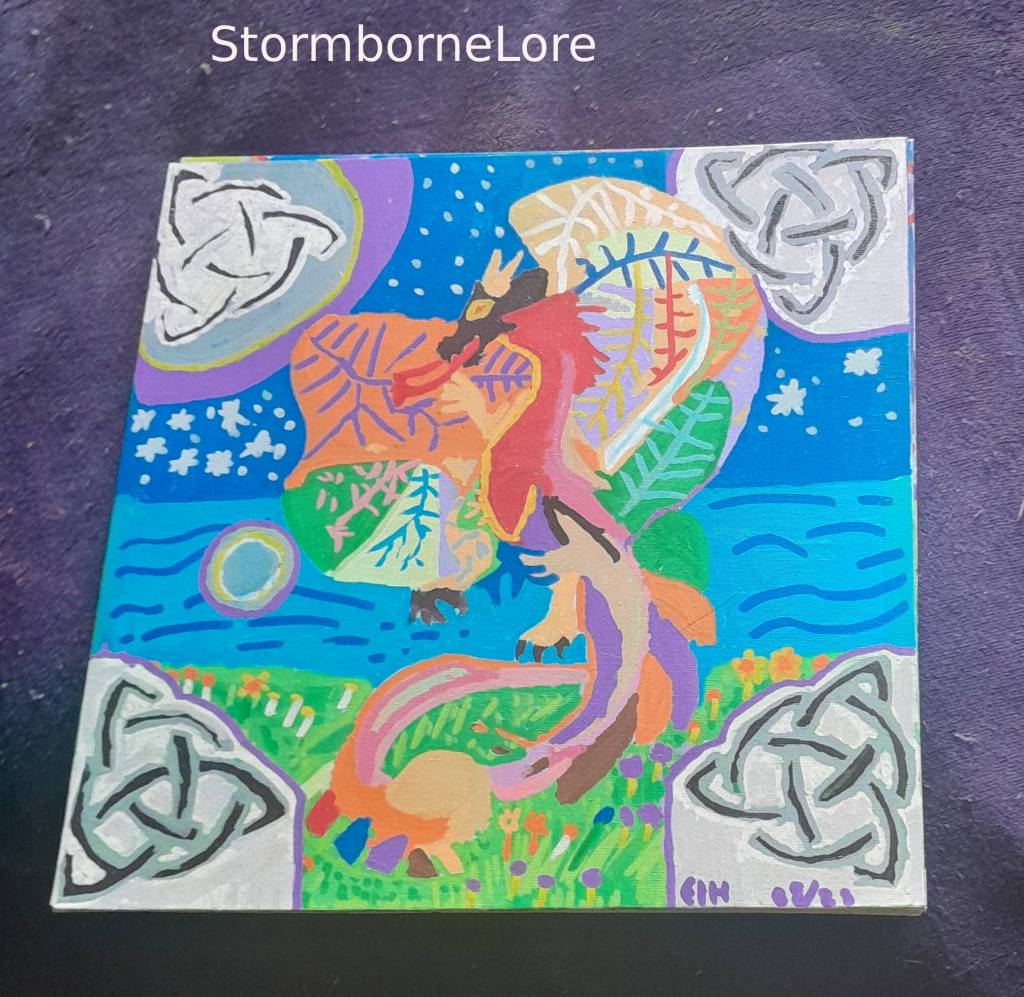
A vibrant artwork reflecting the themes of struggle and resilience in the narrative of StormborneLore.
House of Shadow
I do not speak of heroes. I speak of those who walked in silence. Of boots torn at the sole, and breath taken with care lest the wind betray them.
I walked the road to Umbra alone, but never unmarked. Each tree knew my name, each stone held a memory, and the crows whispered what the living dared not say.
My brothers called it exile. The warlords called it treason. The wolves knew better. They call it the long return.
I did not carry banners. I carried wounds.
I did not seek the throne. I sought peace and found shadows that bled like I did.
And when the night fell thick with frost, and even the stars looked away, I did not pray for light.
A heartfelt thank you for engaging with the narrative of StormborneLore, inviting readers to support the storytelling journey.




 StormborneLore