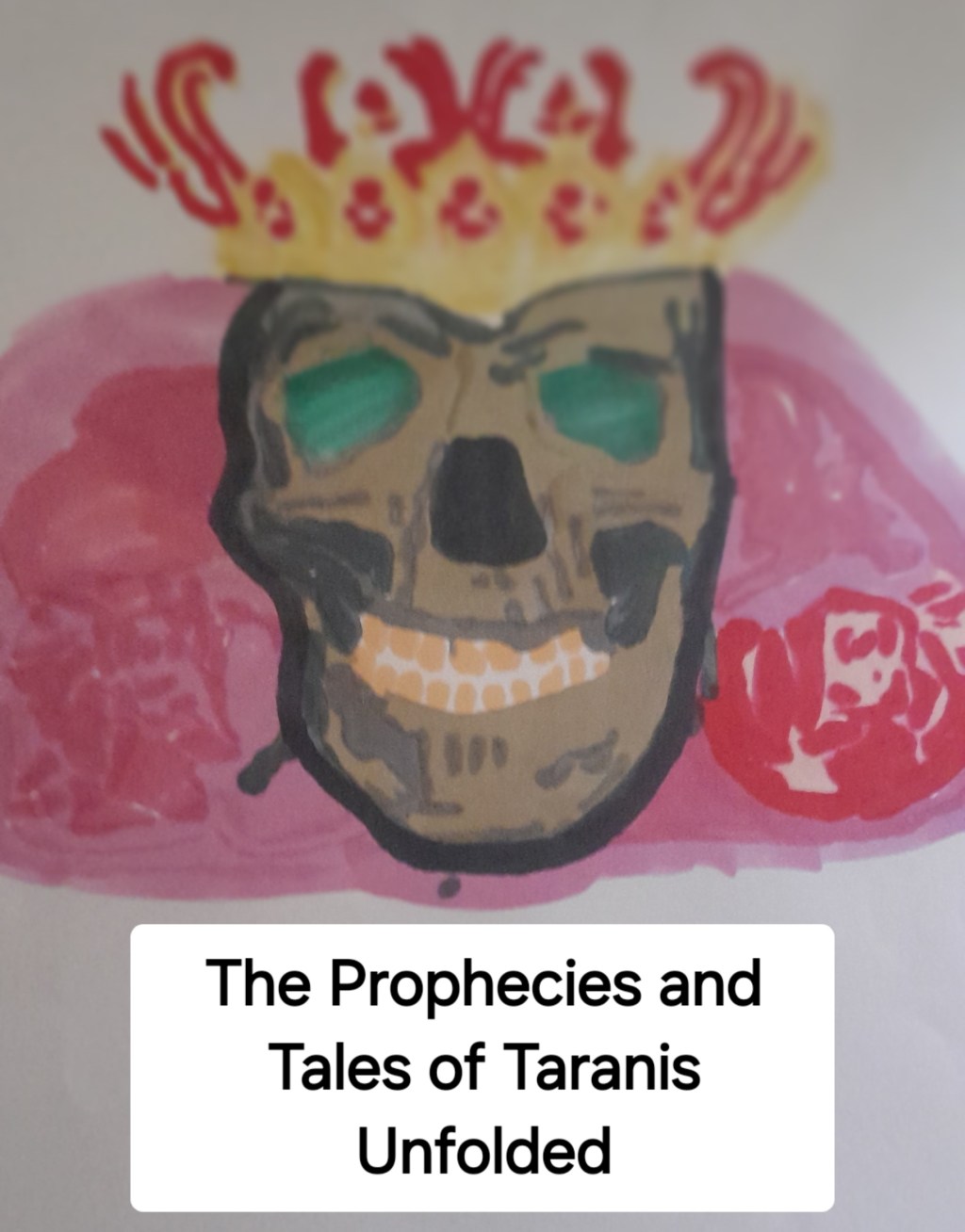
Tag: Dark fantasy

  • After the Burning

    After the Burning

    Chronicles of Taranis / Thunorric Stormwulf
    © 2025 E. L. Hewitt / Stormborne Arts

    The burning of the church was a sunrise to everyone who saw it. But to Thunorric, it was the opportunity he needed.
    In the confusion, he slipped the chains placed on him by the Sheriff of Tamworth. Then rode straight toward the shire of his birth. He was fully aware that he would now be hunted by the king’s riders. The Church, and any thief who wanted coin badly enough.

    His only hope for shelter was Rægenwine’s inn though even family can not be trusted. He never thought he would rely again on the man who betrayed him to the Romans. Then the man also betrayed him to the sheriff.

    He halted his horse on a green hilltop. Morning light poured through the trees, bathing the grass in gold.

    “War,” he murmured to the black stallion he’d stolen from a lord near Tettenhall Wood. “It’s going to be a wonderful day.”

    He urged the horse into Cannock Woods and vanished beneath the canopy.

    The Hunter in the Trees

    “Where there’s war, riot, and discord,” he muttered, “I’ll be front flank for all to see.”

    He found a small nook between the trees and dismounted, letting the stallion graze. The soft tread of his boots calmed him. A thin stream whispered nearby.

    He picked up a thick branch and began carving it into a weapon sharpening one end. Crossing another and moved quietly through the autumn leaves. When he spotted a deer drinking at the stream, a few swift blows brought the animal down. Soon a fire crackled beneath a great oak, and he began preparing the meat.

    “Cooked venison for now,” he said to himself, “and dried meat for days.”

    As he ate, he watched the woods for soldiers.

    His mind drifted to his brothers Dægan, Leofric, Eadric, and Rægenwine and to the nobles of Mercia and Wessex. All of whom would now curse his name. Demon. Devil. Stormwulf. Escaped again.

    He pictured the sheriff: a man of fifty, muscular and loud, barking orders with more anger than sense. Thunorric chuckled at the thought.

    But when he thought of his thirteen sons, his smile faded.
    The oldest five were old enough to serve. He’d given them his blessing.
    But the younger ones… they would have questions. Questions his brothers might not answer.

    The ache in his chest was sharper than any blade.

    Yet he was a wanted man a demon to the Church, a criminal to the king. After years of taking from the rich to feed villages starved by unfair taxes. He had earned little but their fear.

    The Black Shields his hidden movement would continue without him. They always had.

    He breathed in the scent of sweet leaves, wet earth, fungi, and old wood. All of which was fresher than the damp stinking cell the monks had held him in.

    He slept for a few hours. When he woke, dusk pressed against the trees.

    The Crossroads

    He mounted the stallion, wrapped a cloth over his face, and rode toward the crossroads. Where he had robbed the king’s carriages many times before.

    He spotted one now four horses, armed guards, and a noble family inside.

    Perfect.

    Thunorric burst from the treeline like a wolf, blade ready.
    The drivers panicked. One tried to lift a horn, but Thunorric struck first.

    He stabbed the driver in the arm and seized the reins, forcing the horses to halt.

    “Out. Yow get,” he barked.

    A beautiful lady froze as he pressed his blade to her neck.

    “Everything you’ve got. Hurry, or she dies.”

    “You can’t do this!” the older man shouted. “Do you know who I am?!”

    “Aye,” Thunorric said calmly. “But I don’t care. Give me what I want and live or I take it off your corpse.”

    “It’s him,” whispered one of the sons. “The demon.”

    In minutes, Thunorric had their clothes, weapons, and coin. He tied one of their horses to his saddle.

    “I’ll be kind,” he said with a smirk. “I’m only taking one.”

    As he rode away, the noble roared:

    “The king and the sheriff will hear of this!”

    Thunorric laughed.

    “Tell ’em the devil said vilis.”

    He galloped toward Moel-Bryn, changed into the stolen clothes, burned his old rags, cooked fresh meat. Then travelled through wind and rain toward Worcester.

    The Boy on the Road

    Just outside the city, a young man leapt from the shadows tall, muscular, dark-skinned, no more than sixteen winters old.

    “No one else here,” Thunorric said. “Just the Wolf of Rome. Alaric. Good to see your face. Any news?”

    “Plenty.” The boy’s Yorkshire accent was thick. “Your reward’s huge now. You’re declared outlaw.”

    “So?” Thunorric shifted his stance. “You going to take me down?”

    “Oh hell no.” Alaric snorted. “You’re the demon now. Staffordshire demon, some say Mercia demon. Others say death won’t let you rest. And besides I owe you my life. Figured if I warned you, debt’s paid?”

    Thunorric nodded once. “Debt paid. Thank you.”

    “May the gods be on your side,” Alaric called as Thunorric rode on.

    He reached his old home, washed, rested briefly, then rode west toward the Welsh border. Enough coin in his pocket to reach Spain if needed.

    Meanwhile at court, the half-naked noble boy from the robbed carriage arrived with his family. Guards tried not to chuckle.

    “Well then,” the king said, approaching, “dare I ask what happened?”

    “The demon,” the lord spat. “He stole everything and killed our driver.”

    Tamworth’s great hall echoed with uproar long before sunrise. Smoke curled along the rafters. The sheriff knelt before King Coenwulf, mud on his boots, throat bandaged.

    “The creature escaped your custody,” the king growled. “You let him burn an abbey and now he humiliates one of my lords.”

    “My lord… the storm”

    “The storm does not shatter bell towers,” Coenwulf snapped. “Men do.”

    “What do they call him now?”

    “Stormwulf, sire. Some say the Staffordshire demon. The Mercia demon.”

    Whispers spread. Hard men crossed themselves.

    Coenwulf did not.

    “Then let him be hunted,” he said. “Anyone who shelters him dies beside him. Anyone who brings me his head receives land, silver, and title.”

    He nodded to the scribe.

    “Write.”

    The vellum unfurled.

    “Let it be known throughout Mercia and the borderlands that Thunorric, called Stormwulf. outlaw and murderer, stands beyond the law of crown and Church.
    Taken dead or alive.
    Reward: one purse of gold for his body, two for his head.”

    A scarred hunter stepped forward.

    “I’ll bring your demon in chains.”

    Coenwulf nodded once.

    The hunt began.

    The Inn at the Border

    Thunorric crossed the last ridge before the Welsh border as dusk bled into the trees. The air tasted of rain and smoke.

    He approached the inn wedged between two standing stones. His brother Rægenwine’s inn the same man who had betrayed him twice.


    But Thunorric couldn’t blame him. The man had believed he was protecting the children.

    He tied the horse beneath the oak and stepped inside.

    Every sound died instantly.
    Tankards stopped in mid-air. Dice froze. The bard’s string snapped.

    “I’m not here for trouble,” Thunorric said, walking to the bar.

    Rægenwine looked up colour draining from his face.

    Thunorric lifted his hood just enough for the firelight to catch his eyes.

    “Rægenwine,” he said softly. “You’re forgiven.”

    “I… I didn’t expect that,” Rægenwine whispered.

    “Aye, well.” Thunorric stepped closer. “Don’t mistake forgiveness for trust.”

    “You have every right to hate me,” Rægenwine murmured.

    “I don’t hate you,” Thunorric said. “You did what you thought was right. Rome tricked you. They tricked many. But betrayal has a weight and you’ve paid more of it than you know.”

    Rægenwine swallowed. “You came back. That must mean something.”

    “It means the roads are crawling with hunters,” Thunorric said. “King’s men. Church men. Thieves hungry for silver. And I needed shelter only for an hour.”

    “You’ll have it,” Rægenwine promised. “I’ll turn away anyone who asks.”

    Thunorric’s smile was thin and dangerous.

    “If I wanted you dead, brother… you wouldn’t hear the door open.”

    Rægenwine bowed his head. “I’m sorry. I was only trying to keep the children safe.”

    Thunorric exhaled. “Good. Now pour me a drink. The storm’s on my heels.”

    Rægenwine hurried, hands trembling.

    Thunorric turned to the Black Shields behind him.

    “Look after this inn,” he murmured. “And his family in my absence.”

    Just as the ale touched his hand, the door opened.

    Cold air.
    Wet leaves.
    Heavy, familiar footsteps.

    The Brothers Arrive

    Dægan and Leofric stepped inside.

    The inn froze again.

    Dægan tall, broad-shouldered, cloak the colour of storm-clouds, bearing the king’s mark.
    Leofric leaner, ink-stained hands, eyes like old winter, a scribe and warlock whose words carried as much weight as steel.

    Rægenwine bowed. “My lords… I didn’t know you were coming.”

    “You didn’t need to,” Dægan said calmly. “Where is he?”

    Leofric’s gaze drifted toward the back tables.

    “No need,” he murmured. “He’s here.”

    Dægan spotted him with the Black Shields.

    Thunorric didn’t turn.
    Didn’t flinch.
    Didn’t pause.

    “…and if you reach the ford by nightfall,” he said to the Shields, “light no fire. The hunters have dogs.”

    One Shield swallowed. “Wolf… your brothers”

    “I know,” Thunorric said. “I heard them the moment they stepped in.”

    He finally turned, smirking beneath his hood.

    “Well then,” he drawled, “if it ain’t the golden sons of Mercia.”

    Dægan stepped forward. “Brother, we need to talk.”

    Thunorric’s eyes gleamed.

    “About which part? The abbey burning? The king’s writ? Or the price on my head?”

    Leofric’s jaw tightened. “All of it. You’ve started a storm bigger than you realise.”

    Thunorric smiled slow and wolfish.

    “I didn’t start the darkest of storms,” he said.
    “I am the darkest of storms. Devourer of souls. Destruction at the end. Death and resurrection.”

    And the inn went silent the silence that comes before something breaks.

    ©2025 E. L. Hewitt / Stormborne Arts. All Rights Reserved.This work, including all characters, settings, lore, concepts, and text, is the original creation of E. L. Hewitt. No portion of this material may be reproduced, shared, reposted, copied, adapted, or distributed in any form. without prior written permission from the author.Unauthorized use, including AI reproduction of this text, is strictly prohibited.

    To read more on Taranis /Thunoric please see The Prophecies and Tales of Taranis Unfolded
  • The Hollow Years: When the Eagles Fled

    The Hollow Years: When the Eagles Fled

    Interlude

    The banners of Rome had fallen long ago, but Drax still rode as if the legions would return. The road through Pennocrucium was broken now, weeds spilling through the cracks where once the eagles marched. His armour no longer shone, the crimson cloak dulled by weather and war. Yet he wore it still not for pride, but remembrance.

    He had buried too many men to abandon the law.

    To the north, word spread of ships black-prowed, heavy with warriors from across the sea. To the west, the Picts pressed down through mist and mountain. Between them, the land lay hollow, ruled by whoever still raise a blade.

    From the shadows of the trees, smoke curled not of hearths, but of hidden fires. The Black Shields were at work again.

    Drax halted his horse beside the stream. In the rippling reflection he saw a face harder than he remembered. The boy who had once followed Rome’s banners now hunted ghosts of his own blood.

    “Brother,” came a voice from the treeline.

    Taranis stepped out, cloak blackened, a scar like thunder down his cheek. His men lingered behind him, masked in soot and ash. Outlaws. Rebels. To the poor, heroes.

    “The Picts strike from the north,” Drax said, hand on his sword. “You have joined me in holding the border.”

    “I hold what matters,” Taranis answered. “The people. The fields Rome left to burn. You guard ruins, Drax I guard the living.”

    For a heartbeat, silence two worlds staring across a stream. Then the sound of hooves echoed through the trees.

    Draven rode between them, shaking his head. “Enough. We’ve bled too long for banners that mean nothing.” He threw down a pouch of grain. “There’s famine in the villages. We fight each other while children starve.”

    From deeper in the wood, Lore watched through drifting smoke. In the caves beneath Cannock Chase he had tended the cairns of their ancestors. Lore kept the fire burning through the endless grey. He whispered to the flame: keep them, all of them, even when they forget the old names.

    And Rayne, ever the exile, carved symbols into the stones near the water’s edge runes of storm and warning. Ships will come. The sea brings change.

    That night, as the brothers parted beneath a blood-red sky, the wind carried the faintest sound not thunder, but the creak of oars. Far beyond the estuary, lights moved upon the water.

    The first of the Saxons had come.

    And in the hollow of Britain’s heart, the Stormborne name still burned

    Copyright Note

    © 2025 E. L. Hewitt / Stormborne Arts. All rights reserved.
    Unauthorized copying or reproduction of this artwork and text is prohibited.

    Thank you for reading.© 2025 Emma Hewitt / StormborneLore. All rights reserved.Unauthorized copying or reproduction of this content is prohibited.

    Read more from the Stormborne Brothers:
    [Lore – The Flame Beneath the Chase]
    [Draven – The Quiet Road]
    [Rayne – The Carver of Ghosts]
    [Taranis – The Black Shield’s Oath]

    If you enjoyed this story, like, share, or leave a comment. Your support keeps the storm alive and the chronicles continuing.

    Futher Reading

    The Prophecies and Tales of Taranis Unfolded

    The Chronicles of Drax

    Ancient Magic and Myth of the Stormborne

    Chronicles of Draven

    Join the Adventure in Tales of Rayne’s Universe

  • From Chains to Legends: The Rise of the Black Shields

    From Chains to Legends: The Rise of the Black Shields

    The Storm Returns

    The tide was retreating when they found the broken chains. The sight of melted iron through as if struck by lightning.

    “Gods preserve us,” whispered one of the guards, stepping back. “No blade have done that.”

    Tiberius knelt beside the scorched links. “He didn’t break free,” he muttered. “He shed them.”

    The centurion barked orders.,Sending riders to the northern watch and ships to sweep the channel. But even as they moved, the sky began to darken. The wind shifted, dragging the scent of iron and rain across the water.

    “He’s gone home,” Tiberius said at last. “Back to the place Rome never tamed.”

    “To Britannia?” asked the young guard again, voice shaking.

    “Aye,” said the older legionary. “And if the stories are true, every storm between here and there will answer his call.”

    From the cliffs, they can see the faint shimmer of the sea calm for now, but seething beneath.


    The Emperor’s standard flapped once, hard enough to snap its pole.

    “Should we tell the mainland?” the centurion asked.

    Tiberius stood slowly, eyes on the horizon. “Tell them nothing. Let them think he drowned. If the gods favour us, maybe they’ll believe it.”

    But none of them truly did.
    Even as the orders went out, the men felt the pressure in the air, that strange stillness before thunder. Somewhere far to the north, in the heart of Britannia, the wind began to rise.

    “What if he’s caught out there commander?”

    Tiberius didn’t answer at first. His eyes stayed on the sea, the horizon split between light and shadow.

    “If he’s caught,” he said finally, “then the sea itself will break first.”

    The young guard frowned. “You speak as if he’s a god.”

    Tiberius turned to him, his face hard. “You weren’t here when they brought him in chains. You didn’t see the storm that followed. The ships burned before they reached the harbour. No oil, no fire arrows, just lightning, and him standing in the rain, laughing.”

    The guard swallowed, his knuckles white around his spear.

    Another soldier older, scarred, voice low spat into the dirt. “Men like that ain’t gods. They’re reminders. Rome builds, Rome burns, and the earth keeps its own count.”

    Thunder rolled far out to sea, deep and slow.

    “Get word to the docks,” Tiberius ordered. “Seal the forges. Lock down the armoury. And if the Emperor asks…”
    He paused, eyes narrowing.
    “…tell him the storm never left the island.”

    The men scattered to obey, but above them, the gulls were already fleeing inland.


    The wind picked up again not from the west, but the north.
    And on the water, beneath a bruised sky, something vast and dark moved with purpose.

    Taranis stood at the prow of the small boat, the sea hissing beneath its hull as if warning him back.
    He only smiled.

    The wind carried the scent of earth his earth and beyond the mist. The cliffs of Britannia rose like the bones of old gods. Behind him, the island of exile vanished into shadow. Before him lay vengeance, memory, and the ghosts of his kin.

    “Home,” he murmured. “Or what’s left of it.”

    His brothers would be the first. Drax, bound by Rome’s gold and law; Rayne, lost between loyalty and freedom. Then the old comrades, the broken men who once bore the wolf upon their shields.
    The Black Shields would rise again not as soldiers. But as something Rome can not name and never kill.

    He shifted his weight, watching the distant shoreline of Letocetum take shape through the fog.

    Beyond that lay the salt pits of Salinae. The forests near Vertis, the villages that still whispered his name like a curse and a prayer.

    “Word travels faster than ships,” he said to the empty wind. “By the time I step ashore, they’ll already know.”

    Lightning rippled across the far horizon, faint but deliberate, as though the heavens themselves answered.

    He gripped the tiller and laughed quietly to himself not with joy. But with the fierce certainty of a man who had waited too long to be mortal anymore.

    When the first gulls circled overhead and the shore drew near, Taranis whispered the words that had haunted his exile.


    “Rome fears the storm. Now it will remember why.”

    The tide carried him in. Somewhere in the fort at Rutupiae Drax Stormborne turned toward the sea. With a feeling of dread, without knowing, that the storm had come home.

    Thank you for reading.

    © 2025 Emma Hewitt / StormborneLore. All rights reserved.
    Unauthorized copying or reproduction of this content is prohibited.

    If you enjoyed this story, like, share, or leave a comment. Your support keeps the storm alive and the chronicles continuing.

  • The Island of Ash and Iron: A Tale of Resilience

    The Island of Ash and Iron: A Tale of Resilience

    The Island of Ash and Iron

    Written by
    emma.stormbornelore

    The island steamed beneath a blood-orange dawn. Black sand hissed as the tide pulled back, revealing fragments of broken shields and driftwood charred by lightning.

    Taranis Stormborne stood among the wreckage, cloak torn, hair slick with salt. Around him, the Black Shields gathered the fallen in silence.

    No victory songs were sung only the slow rhythm of men. Who understood the cost of silence and the weight of patience.

    “Bury them high,” Taranis said at last. “Let the wind speak their names.”

    He turned his gaze inland, where the volcanic ridges rose like the spines of sleeping beasts. Smoke drifted from fissures in the rock, thick with the scent of iron and ash.

    Beneath those ridges lay the forge a secret his men had built in defiance of empire.

    As the storm’s light faded behind the clouds, a scout approached, breath ragged.

    “Lupus… Rome has sent word north. They know a fleet was lost, but not how. They think it was a storm.”

    Taranis’s mouth curved into a faint, weary smile.

    “Then let the lie live. Storms are easier to fear than men.”

    He knelt beside a shattered shield half-buried in sand. Its surface was scorched black, the emblem of the wolf barely visible beneath the soot. With slow care, he traced the mark with his thumb, leaving a streak of silver ash.

    “This island is no longer exile,” he murmured. “It’s the forge of the next age. And when Rome’s thunder fades, ours will remain.”

    Above him, a distant rumble rolled through the clouds not thunder, but the awakening of something older.

    The storm had learned to wait.

    Thank you for reading.

    © 2025 Emma Hewitt / StormborneLore. All rights reserved.
    Unauthorized copying or reproduction of this content is prohibited.

    If you enjoyed this story, like, share, or leave a comment . Your support keeps the storm alive and the chronicles continuing.

  • The Long Game

    The Long Game

    “Mother, Father,” Caelum said quietly, his small hands trembling as he stepped into the firelight. “I saw him. My uncle chained in every way. I gave him the bowl of food.”

    The words fell like stones into still water. Even the fire’s crackle softened, as if the hearth itself held its breath.

    Lady Maerin rose from her chair, skirts whispering against the flagstones. “You saw him?” she whispered. “How, Caelum? How did they let a child so near?”

    Caelum swallowed hard. “The guards… they didn’t care. Uncle Marcos said it would ‘toughen me.’ He said I should learn what happens to men who defy Rome.” His gaze darted to Drax. “But Uncle Taranis he wasn’t broken, Father. Not like they said.”

    Drax’s jaw tightened. His hands curled into fists against the edge of the table. “Go on,” he said, voice low.

    Caelum’s eyes glistened in the glow of the fire. “He was hurt… bleeding. But he looked at me and smiled. He told me not to cry. He said” the boy’s voice faltered, “he said you’d come for him. That you’d want to. But he warned me… he said if you launch a rescue, they’ll make everyone suffer. If he escapes, they’ll make us all suffer. He said” Caelum’s voice broke. “He said to play the long game.”

    A silence followed that seemed to swallow the world.

    Lady Maerin’s breath hitched. “He’s thinking of us, even now,” she whispered. “Even in chains.”

    Drax rose slowly, the fire casting bronze and gold across his face. He moved to the window, where the mist pressed thick against the glass. Outside, thunder murmured faintly across the hills. He stared toward the south toward the Roman fort where his brother sat in chains.

    “The long game,” Drax repeated, the words rasping like steel drawn from a scabbard. “He means patience. Observation. Wait… and strike when the empire’s eyes are elsewhere.”

    Caelum nodded, wiping his nose on his sleeve. “He said storms don’t break, Father. They change the sky.”

    A small, aching smile ghosted across Drax’s lips. “Aye,” he murmured. “That sounds like him.”

    Behind him, Maerin’s voice was brittle as frost. “And what will you do, my lord? Wait… while they bleed him dry?”

    Drax turned, shadows shifting across his face. “I’ll do what he asks. For now.” His eyes hardened. “But when the storm comes when it truly comes not even Rome will stand in its path.”

    Lightning flashed through the mist. Illuminating the valley below and for a heartbeat, the clouds took the shape of wings unfurling above Emberhelm.

    Caelum hesitated before speaking again. “Father… are they poisoning Uncle Taranis?”

    Drax turned sharply. “What?”

    Caelum’s voice dropped to a whisper. “He’s not eating what they give him. He said the food tastes wrong.”

    The fire crackled louder then, as if stirred by an unseen wind. Drax’s gaze darkened.


    “Then Rome has already begun its slow killing,” he said softly. “But storms, Caelum…”


    He looked toward the thunder rolling in the distance.


    “…storms have a way of purging poison from the earth.”


  • The Chains of Blood and Brotherhood

    The Chains of Blood and Brotherhood

    The storm had not yet left his veins. Even in exhaustion, Taranis’s breath came sharp as lightning through rain. The iron on his wrists bit deeper with each movement, the weight of Rome’s victory heavy, but not finished.

    He heard them before he saw them the measured tread of Caelum and Marcos. The murmur of soldiers giving way as they entered the cell yard. The torches flared against the damp walls, shadows stretching long like reaching fingers.

    “Uncle Marcos,” Caelum’s voice was quiet but edged with fear. “Can those chains come off him?”

    Marcos paused beside the centurion who held the keys. His gaze lingered on Taranis, bloodstained and silent, the faint curl of defiance still etched into his mouth. “They can,” Marcos said slowly. “But they won’t. Not yet.”

    Caelum’s jaw tightened. “He’s bleeding. If he dies”

    “He won’t,” Marcos interrupted, eyes never leaving Taranis. “He’s too stubborn to die.”

    Taranis lifted his head then, a slow, deliberate motion. “You sound almost proud, Marcos.” His voice was hoarse, roughened by sand and roar, but steady. “Tell me how does it feel, watching Rome chain another son of the storm?”

    Marcos stepped closer, the metal of his own armour glinting in the firelight. “It feels like survival,” he said quietly. “A lesson you still refuse to learn.”

    “Survival,” Taranis repeated, the word tasting like ash. “You call it that. I call it submission.”

    The centurion moved between them, keys jangling. “Enough talk.” But Marcos lifted a hand not to command, but to stay him.

    “Let him speak,” Marcos said. “Words weigh less than chains.”

    Caelum’s eyes flicked between them, confusion and pain warring in his young face. “He fought lions, Uncle. Bears. He lived through what no man should. Why must you treat him like this?”

    “Because,” Marcos

    “You know they say deaths the final lesson?” Taranis grinned…Marcos’s eyes hardened, but not with anger with something closer to grief.

    “Death teaches nothing,” he said. “It only silences the unteachable.”

    Taranis laughed then a low, ragged sound that echoed off the stone like distant thunder. “Then maybe silence is what Rome fears most. A man who dies still defiant who doesn’t give them their spectacle.”

    The centurion stepped ahead impatiently. “Enough of this.” He seized Taranis by the shoulder, but the bound warrior’s gaze did not waver.

    “Do you see it, Caelum?” Taranis rasped. “Chains don’t make a man loyal. They only show who fears him most.”

    Caelum swallowed hard, torn between the authority of his uncle and the raw conviction before him. “Uncle… he’s right. Rome fears him.”

    Marcos turned sharply. “Rome fears no man.” Yet even as he said it, his voice faltered, as if the walls themselves disagreed.

    A moment of silence fell the kind that breathes between lightning and thunder.

    Then Taranis whispered, “You once said the blood of the storm can’t be trained. You were right. It can only be bound… for a while.”

    The torches flickered, shadows dancing like spirits around the three men the Roman, the youth, and the storm-bound prisoner.

    Marcos finally turned away. “Clean his wounds,” he said curtly to the centurion. “He fights again at dawn.”

    As they left, Caelum lingered by the gate, his eyes locked on Taranis’s. “I’ll come back,” he said softly.

    Taranis’s faint grin returned. “Then bring thunder, boy. Rome hasn’t heard enough of it yet.”

    The cell door slammed shut, iron against stone but somewhere, deep beneath the fortress, thunder rolled.

    © 2025 Emma Hewitt / StormborneLore. All rights reserved.Unauthorized copying or reproduction of this content is prohibited.

    If you enjoyed this story, like, share, or leave a comment. Your support keeps the storm alive and the chronicles continuing.

    Futher Reading

    The Prophecies and Tales of Taranis Unfolded

  • The Chains that Speak

    The Chains that Speak

    The clang of steel echoed across the Roman training yard. The sun was still low, its pale light glinting off helmets and polished shields. Taranis moved like shadow and storm, his chains rattling as he fought against three centurions in succession.

    Every strike he gave was measured, precise but every parry cost him pain. The iron bindings cut into his wrists, leaving a thin red line that deepened with each movement. He refused to yield.

    Caelum stood at the edge of the sand pit. His tunic far too fine for this place a youth of maybe sixteen, bright-eyed and restless. His gaze never left Taranis.


    “uncle Marcos,” he said quietly, turning to the older man beside him. “Can those chains come off him?”

    Marcos didn’t answer at once. His face was lined from years in service, his eyes as sharp as the swords he trained with. “Chains are the only reason he’s still alive, Caelum,” he said finally. “Without them, some fool would call it fear instead of discipline.”

    “But he’s fighting for us now.” Caelum’s voice carried, defiant.
    “For Rome, at least.”

    Marcos’s jaw tightened. “For survival. That’s different.”

    In the pit, Taranis struck low, sweeping a soldier’s legs out from under him. Before turning the momentum into a twist that sent the next centurion stumbling backward.

    The last one hesitated, shield raised, watching the way. Taranis breathed steady, like a man waiting for the storm to break.

    The chain coiled once, twice then snapped out, wrapping the shield edge and dragging it down. The sound of the soldier hitting the ground was followed by silence.

    Caelum took a step ahead. “He’s more Roman than half your men.”

    Marcos shot him a warning look. “Careful, boy. You sound like your mother.”

    The youth smirked faintly. “She says the same.”

    When the training was done, the soldiers dispersed, muttering under their breath half respect, half fear. Taranis knelt in the dust, hands bound before him. Marcos approached, tossing him a canteen.

    “You could have killed them,” Marcos said.

    Taranis drank, the water streaking through the dust on his face. “You didn’t tell me to.”

    Marcos grunted, half a laugh, half frustration. “One day, that mouth of yours will get you killed.”

    “Maybe,” Taranis replied. “But not today.”

    Caelum stepped closer, watching the bruised wrists, the marks the chains left behind. “You’re not like the others. You don’t fight for their gods.”

    Taranis looked at him not unkindly. “No. Mine are older. And they don’t care who wears the crown.”

    The boy tilted his head. “If I asked you to fight for me instead of Rome?”

    Marcos snapped, “Enough!” But Taranis only smiled slow, deliberate, dangerous.

    “Then, little wolf,” he said softly, “you’d better be ready to pay the price.”

    Above them, thunder rolled faintly in the distance, though the sky was still clear.

    © 2025 Emma Hewitt / StormborneLore. All rights reserved.Unauthorized copying or reproduction of this content is prohibited.If you enjoyed this story, like, share, or leave a comment. Your support keeps the storm alive and the chronicles continuing.

    Further Reading

    The Prophecies and Tales of Taranis Unfolded

  • The Price of Survival

    The Price of Survival

    Night in the fort brought no peace only whispers.


    Chains clinked like faint echoes of the arena’s roars, and the scent of iron still clung to the air. Taranis Storm lay awake in the half-darkness, eyes open to the stone ceiling, counting the rhythm of the guards’ boots. Rome slept, but the storm within him did not.

    He had won his life for another day, but victory came at a cost. He had shown them what he was. Not a beaten barbarian, but something far more dangerous a man who learned.

    At dawn, Marcos appeared at his cell door, shadowed by two guards.
    “You’ve made them talk,” Marcos said quietly. “The governor himself wants to see you.”

    Taranis said nothing. The chains around his wrists jingled as he stood.

    They led him through the inner halls of the fortress, where Roman banners hung stiff and silent. Soldiers stared as he passed some curious, others wary. A man who defied lions and bears without breaking was not easily forgotten.

    In the governor’s chamber, incense burned thick. Maps of Britannia sprawled across a marble table, marked with red ink and small figurines of silver legions.

    The governor, Decimus Varro, was not a cruel man by Roman standards merely pragmatic. “You are a spectacle,” he said, voice calm. “A man who fights like the gods themselves favour him. Tell me, Briton what drives you?”

    Taranis met his gaze. “The same thing that drives Rome. Freedom.”

    Varro smiled faintly. “Freedom is an illusion. Order is what endures.”
    He leaned forward. “Serve Rome, and you’ll live well. Defy us again, and your death will be remembered only as noise in the sand.”

    Silence stretched between them, thick as the smoke that coiled from the brazier. Then Taranis spoke, slow and deliberate.


    “I have no wish to be remembered. Only to finish what began in the storm.”

    Varro frowned not in anger, but thought. “Then we understand each other.” He gestured to Marcos. “Train him. Watch him. If he can be tamed, he’ll fight for Rome. If not…”

    Taranis was taken to the training grounds. Men waited there gladiators, soldiers, slaves who had survived too long to be careless. The air rang with the sound of iron on iron. Marcos tossed him a blade, better balanced than the last.

    “Your real trial starts now,” Marcos said. “In the arena, you fought to live. Out here, you’ll fight to learn what Rome fears most a man they can not own.”

    For the first time since his capture, Taranis smiled.
    The storm had found a new horizon.

    © 2025 Emma Hewitt / StormborneLore. All rights reserved.Unauthorized copying or reproduction of this content is prohibited.If you enjoyed this story, like, share, or leave a comment. Your support keeps the storm alive and the chronicles continuing.

    Futher Reading

    The Prophecies and Tales of Taranis Unfolded
  • The Chronicles of the gold ring chapter 10

    The Chronicles of the gold ring chapter 10

    The Hill of Ashes

    They marched him up the salt-hill at Dodderhill, where the Roman timber bites into the skyline like bad teeth. Below, Salinae steams. The brine pits cough a white breath across the roofs, and every back in the town goes still; men with salt-burned hands, women with brined wrists, children with their mouths parted. All of them looking up. All of them waiting to see a lesson.

    Storm’s wrists are raw from the iron. His shirt is torn where they hauled it over his head, the air is cold on old scars and new. There is a cut across his ribs from the morning’s struggle and the dried salt in it stings like sand.

    A centurion with a wine-scarred mouth calls the charge in a language that thinks it is the only one that matters.

    “Rebel. Murderer. Enemy of Rome.” The words land like stones. Men with square shields drag the condemned in a line. Three farmers. A boy who threw a stone. Storm.

    “Use the cross for the big one,” the centurion says. “Make them see.”

    They set the upright in the earth, ramming it with a post-driver until the ground answers. The carpenter’s nails gleam in a little wooden tray, thick as a man’s thumb. The hammer is clean. The executioner’s eyes flick to Storm and away again as if he’s looked at the sun too long.

    Storm keeps his chin up because he will not bend. He smells oak smoke from the town, the sour of men in mail, the resin of fresh-split palings. He tastes brine on his teeth. A gull wheels and screams once, the cry torn thin by the wind.

    A voice from the crowd below: not words, just a keening. Another voice, hoarse, calls his name the way a prayer is called: “Shield!”

    He does not look down. He looks at the sky. Cloud, thin and grey and harmless. For now.

    “Hold him,” the centurion says.

    Four soldiers pin his arms. The fifth takes Storm’s right hand and forces it open against the cross-beam. The leather strap bites his palm. The executioner lifts the first nail. It is cold when it kisses the crease of Storm’s wrist.

    Storm hears the old world in the edges of the day. The ring he once wore feels like a phantom weight on his finger. He sees Nessa’s hair in the corner of his sight when the wind shifts. He hears Boldolph and Morrigan somewhere he can’t walk to anymore. Rayne’s voice is the whisper in the hinge of the jaw: brother, hold still and we will live. Brother, lie down.

    The hammer rises.

    Thunder is far off. Not here, not yet. A single pulse on the horizon like a heart behind a ribcage. The executioner breathes. The hammer falls.

    It meets iron and the iron skids, glancing off the nail head. The blow dents the wood and slams into Storm’s bones. He grunts despite himself. Blood beads. The executioner squints, checks the nail, lifts again.

    The second stroke strikes home. Iron bites meat. The sky pulls tight.

    A woman cries out below. “Enough! He fought for us!”

    “Silence,” the centurion barks, not looking down.

    Storm tastes copper. His vision narrows, then widens until he can see each hair on the executioner’s wrist, each pore, each fleck of sawdust stuck to the hammer’s face. It is the old sight, the red edge. He could go there—into the roar where nothing hurts until after—but he does not. He holds on. He wants to watch.

    “Left,” the centurion says.

    They take his other hand. Fingers spread. The nail’s cold mouth finds the vein. The hammer rises

    and the wind turns.

    Not a gust. A pivot. The kind of turning that changes seasons. Smoke from the brine pans below folds back on itself. Sparrows flatten to the earth. The hairs along Storm’s arms lift.

    The first crack of thunder lands atop the fort like an axe into a block. Every man jolts. A standard topples with a clatter of bronze. The executioner flinches, the nail slips, and instead of flesh he drives it through the softened knot of the beam.

    The shock carries up his arm. He swears. The soldier holding Storm’s elbow looks at the sky. The sky looks back.

    Cloud blooms fast from the western line, rolling in on a bruise-coloured belly. A wolf-long shape seems to run along its edge and is gone. Another crack. Closer.

    “Finish it,” the centurion snaps. But there’s a catch in it now, and he makes a sign with his two fingers as if to pinch off something unseen.

    The hammer lifts for the third time.

    Lightning hits the palisade post a spear’s throw away. Wood screams. Splinters go like hail. Men duck behind shields by training, but training breaks when the sky speaks in a voice older than their gods. A mule rears and snaps its lead. The nail tray overturns; iron skitters like teeth on stone.

    Storm moves then.

    He lets the red edge take him for a heartbeat just enough. He wrenches, twisting his pinned right wrist so the cut tears long and clean instead of deep. The leather strap splits where sweat has rotted it.

    He brings his head forward under the beam, drives his shoulder into the soldier’s throat, hears the wet cough, feels the grip loosen. He kicks back, heel to knee, and the man behind him falls with a scream.

    There is always a moment in a fight when the world decides. This is it.

    He drives the crown of his head into the executioner’s face; the man drops the hammer, hands going to his nose. Storm grabs the hammer with his left hand, blood slicking the haft, and swings the weight into the chain on his left wrist. Once. Twice. The chain holds. The third blow finds the link that was barely peened shut, and it parts with a sweet, bright sound.

    “Hold him!” the centurion bellows, but half his men are looking at the burning post and the other half are looking at the sky.

    Shapes break from the heather below the berm three, five, a dozen men with black-painted shields and hunters’ faces. Brianna’s braid is bound with leather; Cadan’s scar shows white through ash. They come without horns or shouts, all knife and certainty.

    Brianna hits the left flank like a thrown stone, her knife opening a belly before the man knows his shield is gone. Cadan slides under a spear and cuts the hamstring clean, then is up again and laughing because sometimes that is the only way to keep breath inside you.

    “Storm!” Brianna barks.

    He throws the hammer. She catches it by the neck and brings it down on a helmet rim, bending iron into eyebrow and eye. She tosses it back and he takes the chain a second time and frees his right.

    The centurion finds his voice at last and orders the archers, but the bowstrings are wet now, the fletchings torn sideways by the sideways rain that has arrived without crossing the ground between. Arrows go high and crooked. One finds a farmer’s boy in the line of the condemned. The boy sits down as if to rest and does not get up again.

    Storm would carry that if he let himself. Later, he thinks, later, and steps toward the centurion.

    “Stand,” the centurion says, not to him but to what moves in his bones.

    “I do,” Storm says.

    They meet as men meet: iron-toothed and close. The centurion is trained. Storm is made. The first cut is Storm’s forearm across the centurion’s sword-hand, breaking the rhythm, and the second is Storm’s head against the man’s nose—again, because men are made of the same mistakes and the third is Storm’s thumb to the centurion’s eye. The man goes down with a sound nothing like command.

    “Back!” a junior officer yelps. “Back to the fort!”

    They drag their wounded. They leave their dead. They do not look at the cross. The storm does what storms do it eats the edges of everything.

    From the town below, the people cannot see the cut and the grapple, only the outline of men against rain and the lightning that makes ghosts of them. Then those ghosts are gone into the gorse and the broom, and the hill is left with a burning post and an empty beam and a rumour that begins to run faster than hooves.

    They bind Storm’s wrist tight with a strip of his own shirt and the last clean linen any of them have. The bleeding slows. His hands shake after it stops. He sits with his back against a birch, watching steam lift off his skin.

    “Could have died,” Cadan says, not accusing, not gentle.

    “Didn’t,” Storm answers.

    Brianna crouches and studies the wound. “You’ll have two scars for one story,” she says. “The tale-singers will thank you.”

    Storm looks at the knot of linen. He thinks of a nail driven through the heel of a stranger in a land he will never see, of crosses on a hill where a different empire stakes its truth. He thinks of Nessa’s mouth and Rayne’s eyes and of wolves that do not answer. He feels the tremor in himself and wonders if it will ever stop.

    “Was it you?” Cadan asks. “The sky?”

    Storm chews that like gristle and spits it out. “No,” he says. “It was the sky.”

    Brianna huffs once, almost a laugh. “Then the sky is with us.”

    They move as the light fails, cutting north and a little west, keeping to hedges and the backs of fields, avoiding every lane the Romans know.

    The storm rolls away toward the Severn; behind it, the wood drips and the undergrowth smells green and clean as if nothing dies.

    By the time they reach the low, wet ground where the oaks thicken half a day’s walk from the salt town, close enough to smell wood-smoke when the wind is right night has set.

    They choose a place where yew anchors a little rise and an old fallen oak makes a table the size of a man. Cadan lights a small fire that no one will see unless they are meant to. Brianna lays out bread and dried meat and a handful of early wild garlic leaves, because ritual has to start with something you can eat.

    Storm stands, because oaths are made on feet.

    “We were a ring,” he says. “We were a house. We were a promise to people who do not want us anymore. Today I was meant to die to teach them to fear, and I did not. I don’t know if that is luck or the gods or a debt that will come due later.”

    He looks at each of them. There are eleven counting him. Some are men who fought with him when the wolves still ran the ridge. Some are women who learned a knife because no one else would come. One is a boy who was a boy yesterday and is not anymore.

    “I’m done waiting for any man’s mercy,” Storm says. “If you stay with me now, you stay knowing there will be no pardon. No ring to call us home. We will be hunted by chiefs and by Rome and by the stories men tell when they are afraid. We will strike and vanish.

    We will take food from those who hoard it and give it to those who starve. We will cut chains where we find them. We will keep the lanes dangerous for those who would make them safe for empire. We will be the shadow that says not yet.”

    He sets his palm on the fallen oak. Blood from the bandage seeps fresh and red and bright against the old grey wood.

    “I name us,” he says, and the words come easy because they are true before he speaks them. “The Black Shields. Not for hiding” he taps the painted face of Brianna’s board, dull black with ash and pitch “but for what we carry in front of us so the ones behind can live.”

    Brianna puts her hand over his. “Black Shields,” she says.

    Cadan’s hand stacks next. “Black Shields.”

    One by one, the others follow, rough palms and finer, scarred knuckles and bitten nails, hands that have stolen and fed and fought and held.

    When they step back, the tree holds their blood in a dark print that already looks like a sigil.

    A wind runs through the oak leaves though nothing else stirs. Somewhere far off a fox barks and another answers. In the dip of silence after, Storm thinks he hears just for a breath the long, low note of a wolf.

    He looks up into the black roof of the wood and does not ask for a sign. He has had enough signs for one day.

    “Sleep,” he tells them. “We move before light. The salt road will wake angry.”

    Brianna nods, already spreading a cloak for the boy who is not a boy. Cadan checks the edges of the camp, his knife out, his shoulders easy for the first time since the hill.

    Storm sits again with his back to the birch. His wrist throbs in time with his heart. When he closes his eyes, the hammer falls, and falls, and falls, and does not find him.

    Below, the town spreads the story because towns are made to spread stories. By morning it will have a name it did not have yesterday the Hill of Ashes. By night there will be new chalk marks cut into the backs of gateposts that mean leave bread, and others that mean soldiers, and others that mean the Black Shields have passed.

    He lets sleep take him only when the fire dies to a patient red and the rain begins again, soft and fine, washing the last blood from the bark.

    From this moment Taranis Stormborne became known as Storm among his men.

    © StormborneLore Emma Hewitt, 2025. All rights reserved.

    The Library of Caernath

    The Chronicles of the Gold Ring… Chapter One

    The Chronicles of the Gold Ring Chapter Two

    The Chronicles of the Gold Ring Chapter Three.

    The Chronicles of the Gold Ring Chapter Four.

    The Chronicles of the Gold Ring Chapter Five

    The Chronicles of the Gold Ring Interlude.

    The Chronicles of the Gold Ring. Chapter Six

    The Chronicles of the Gold Ring Chapter Seven

    The Chronicles of the Gold Ring Chapter Eight

    The Chronicles of the Gold Ring Chapter Nine.

  • A Warrior’s Vow

    A Warrior’s Vow

    By Elhewitt

    I was chained but not broken,
    beaten but not bowed.
    The fire marked my silence,
    the storm made it loud.

    I do not kneel for tyrants,
    nor gods who curse the flame.
    My name was born in thunder
    and I rise to wear that name.

    Let them come with shackles,
    with blades and masks of war.
    I have walked through death already
    and I do not fear it anymore.

    © 2025 StormborneLore by EL Hewitt. All rights reserved

    further Reading

    A Journey Through My Poetic Collection