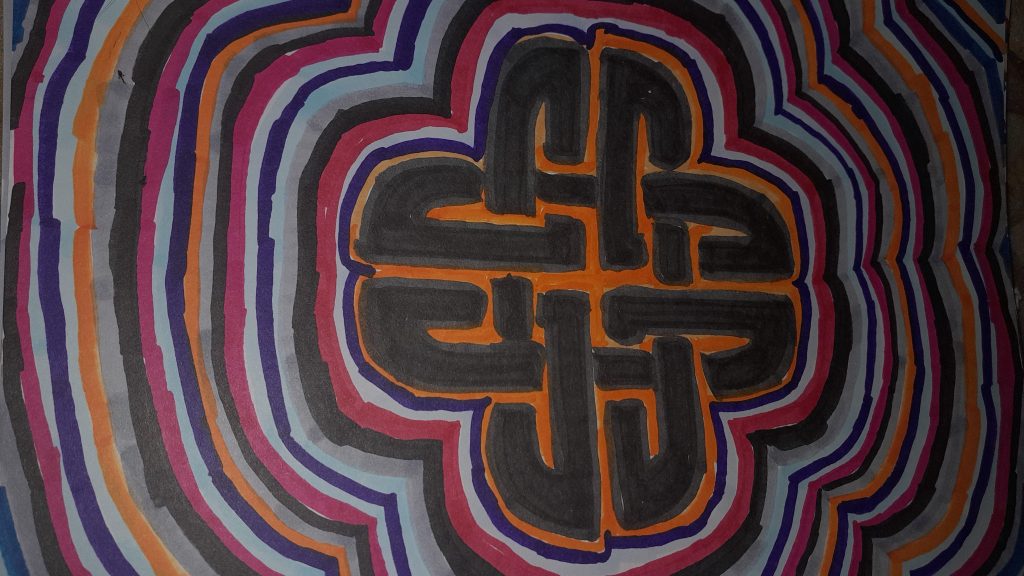
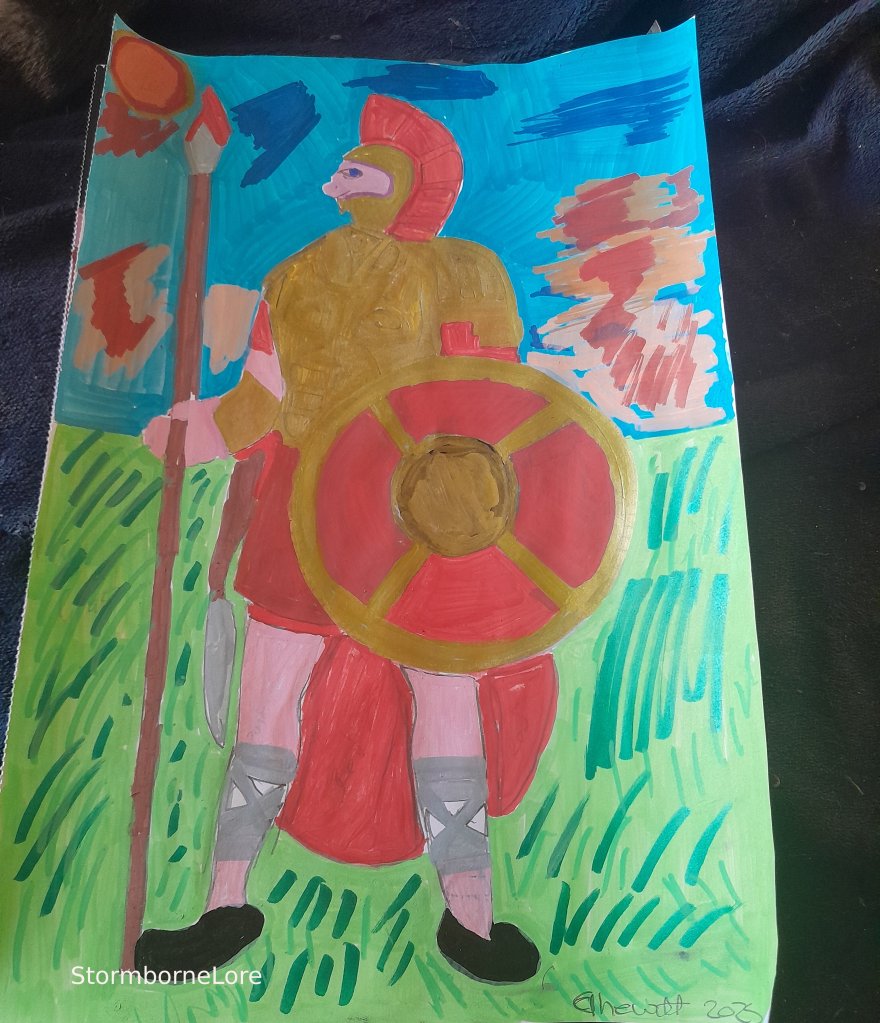
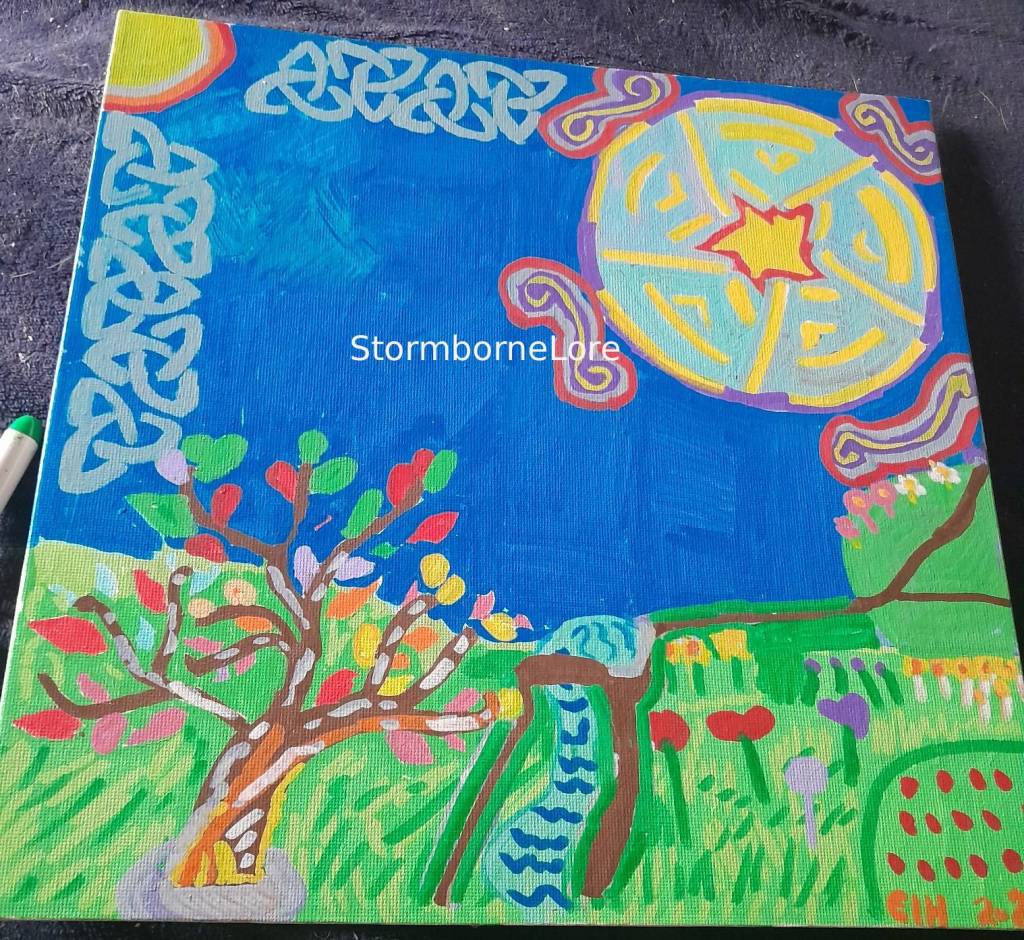
A vibrant artistic depiction of a stylized object, blending intricate designs with bright colors, invoking themes of lore and magic.
The Quiet Flame
The wind that swept over Emberhelm carried no warmth, only the ghost of fire long spent. I stood where the circle had once been whole, where twelve stones still defied the weight of empire, and one lay split a wound upon the land.
The others had gone. Drax to fury, Draven to silence, Rayne to his choices, and Taranis to chains. I remained, bound not by steel but by memory. It was not courage that kept me here; it was knowing that something sacred had been broken and that it was not yet done with us.
The Romans called this valley conquered. They built their roads and forts as if they could hammer meaning from earth and stone. But meaning does not bow to empire. It whispers, it lingers, it waits. And I have learned to listen.
I knelt beside the thirteenth stone, tracing the crack with my fingers. The split hummed faintly, as though it still remembered the storm that birthed it. I could almost hear Taranis’s voice beneath the wind, a murmur of thunder too distant to strike.
“Brother,” I whispered, “if the storm is caged, does the sky mourn its silence?”
A shadow passed across the ridge perhaps a hawk, perhaps a sign. In the old days, I would have asked the druids for meaning, but now I was the only one left to ask.
Rayne’s betrayal still cut deep, though part of me understood it. He had always been the one to see the long game, the patient serpent coiled beneath the waves. I did not forgive him, but neither could I condemn him fully. Perhaps this is how the gods feel when they look upon men weary, knowing, endlessly disappointed.
Night crept over the hills. I lit no fire; the Romans watched for smoke. Instead, I watched the stars, the same constellations our ancestors had trusted when the world was still young. Somewhere beyond those lights, I felt the pulse of something waking old magic, stirring beneath stone and soil, called forth by blood and betrayal alike.
The Circle was broken, yes. But its power had not vanished; it had merely changed shape. The storm that once lived in Taranis’s heart now whispered through the bones of the earth. I could feel it gathering, quiet but sure, as if the land itself prepared to rise.
In that silence, I spoke the old words not prayer, not spell, but remembrance. A promise carved into breath:
“When the storm returns, it will not ask who was loyal. It will ask who remains.”
The roads ahead were quiet, the wind carrying the scent of burnt heather and distant sea. Each hoofbeat of my mount reminded me that the choice I had made was mine alone, and yet its echo stretched far beyond my chest.
Whispers followed me like shadows. Some were real the wary eyes of villagers, the wary glances of traveling merchants. Others were imagined, the scornful voices of my brothers, of Taranis, of the Ring itself. I did not flinch. Survival was colder than fear, sharper than guilt.
The circle was gone, fractured beneath my hand, yet its memory clung to the land. I felt it in every hollow, every mound, every stone left untouched, as if the earth itself remembered the covenant we had sworn. I had broken it not for power, not for spite, but for a chance to bend fate toward life.
Rome was patient. I knew that. And I knew too that the storm I had once sought to command in Taranis’s fury could now rise in me, subtle, quiet, lethal if misjudged. The choice of the traitor is never simple. It is measured in survival, in timing, in knowing the cost before the world dares to demand it.
Ahead, a ridge cut the horizon, the pale sun glinting over the salt flats. I pulled my cloak tighter, letting the chill remind me that I was still breathing, still moving, still in control of this shattered path.
The Ring was broken. But perhaps, in that fracture, a new pattern could emerge. One I alone might trace.
I rode past the remnants of burned villages and overturned carts, careful to keep to the high ground. From this distance, nothing looked alive; yet every shadow could be a scout, every rustle a whisper of accusation. I had betrayed the circle, but I had not betrayed survival. That distinction, razor-thin, I carried like a blade at my side.
Even so, the memory of Taranis lingered. I imagined him, bound in chains, his eyes storm-grey beneath a sky that mirrored his wrath. Some part of me hoped he hated me. Another part the part I refused to acknowledge wished he would understand.
I reached the edge of a woodland and dismounted. The quiet crackle of dead leaves underfoot reminded me of my childhood in Compton, of paths once walked under open skies, where choice had been play, not consequence. Here, choice was survival. Choice was betrayal.
A messenger approached, a thin man with a letter sealed in the eagle of Rome. I took it with careful fingers, breaking the seal only when I was certain no eyes watched. The words were simple, direct, and chilling:
“Keep the Ring moving. Keep the pieces apart. Rome watches, and the storm will be rewarded or crushed at our discretion.”
I folded the letter slowly, feeling its weight far heavier than the paper it was written on. Rome had not forgotten, and neither had the Circle though I was its only witness now.
I paused at a stream, letting my mount drink, listening to the water whisper over stones. I thought of my brothers, of Drax, of Lore, of Draven. Each had reacted differently to Taranis’s capture, to my choice. Some with anger, some with fear, some with silent, unspoken questions. And some… had already begun to take paths I could not predict.
Even here, on the open road, I felt the pull of power, subtle and insidious. The Ring had been broken, yes, but its legacy endured. That legacy could guide me—or consume me.
As night fell, I made camp beneath a lone oak, its twisted branches scratching the dark sky like fingers of fate. I allowed myself a single, quiet thought before sleep claimed me:
The storm does not always strike. Sometimes it waits, gathers, watches… and then it returns, quiet, inevitable, unstoppable.
The following morning, I rode again, the mist curling around the trees like living breath. Villagers had begun to recognize me, whispers trailing my passage. Traitor. Survivor. Coward. Protector. All names carried weight, none carried comfort. I ignored them. Survival required more than comfort; it required cold calculation.
By mid-morning, I encountered a small party of mercenaries scouts from a northern lord, curious about the broken Circle. They eyed me cautiously, their hands brushing the hilts of swords. I allowed a faint smile, enough to disarm suspicion. Words were sharper than steel when wielded carefully.
“I go where the path leads,” I said, voice steady. “I am alone. None should follow.”
They studied me, hesitated, then nodded, scattering into the woods. Even in my isolation, the choices of others shifted around me. Allies, enemies sometimes the line blurred, sometimes it vanished entirely.
Hours later, I made camp near a ruined chapel, overgrown with ivy and stones worn smooth by centuries. Flames licked at damp wood as I pondered the Circle, Taranis, and the pieces of the Ring now scattered across Britain. I could feel their influence, subtle, almost like a heartbeat beneath the earth. The storm of Emberhelm was not gone. It only waited.
A shadow moved near the edge of the firelight. I tensed, hand brushing the hilt of my dagger. The figure emerged: an old acquaintance, one of the scouts I had trained alongside in youth. His face betrayed both awe and fear.
“You broke the Circle,” he whispered, voice shaking. “And yet… you ride on.”
“I did what was necessary,” I said simply. “The Circle survives only in memory if we all fall. I intend to endure.”
He nodded, unease clinging to his gaze. “And Taranis?”
The name struck like a lance, but my expression remained calm. “He lives. That is enough for now. The storm is his. And perhaps it will return to me when I need it most.”
Night deepened. I lay beneath the ivy-draped stones, listening to the forest breathe. Each rustle, each call of distant creatures reminded me that life persisted, even when the world was fractured.
Survival, I reminded myself again, was not glory. It was endurance, patience, and the quiet shaping of what must come next.
And somewhere, far beyond the reach of my sight, the echoes of Emberhelm stirred, waiting for the right moment to rise again.
The circle of stones stood under a bruised sky. The thirteenth stone, already cracked from the battle at Emberhelm, seemed to strain against itself as though it knew what was coming. Thirteen seats. Only twelve filled.
Taranis Storm to his outlaws stood at the centre. His cloak was damp from rain, his wrist still bandaged from the Hill of Ashes. Around him, the brothers of the Ring shifted like wolves uneasy in their own skins.
Drax spoke first. “The Black Shields raid in your name. The people whisper of you, not of us. The balance is broken.”
“It was never balanced,” Taranis replied. His voice was low, bitter. “We bled for fields that gave us no bread. Rome takes salt from our earth while we quarrel. If I raid, it is to feed our people, not to wear a crown.”
Lore’s eyes flicked to the sky. “And yet the crown follows you, brother. The omens have turned. The storm no longer waits.”
Then Rayne stepped forward, the firelight showing the sly curve of his smile. “No storm lasts forever. Some of us have chosen survival.”
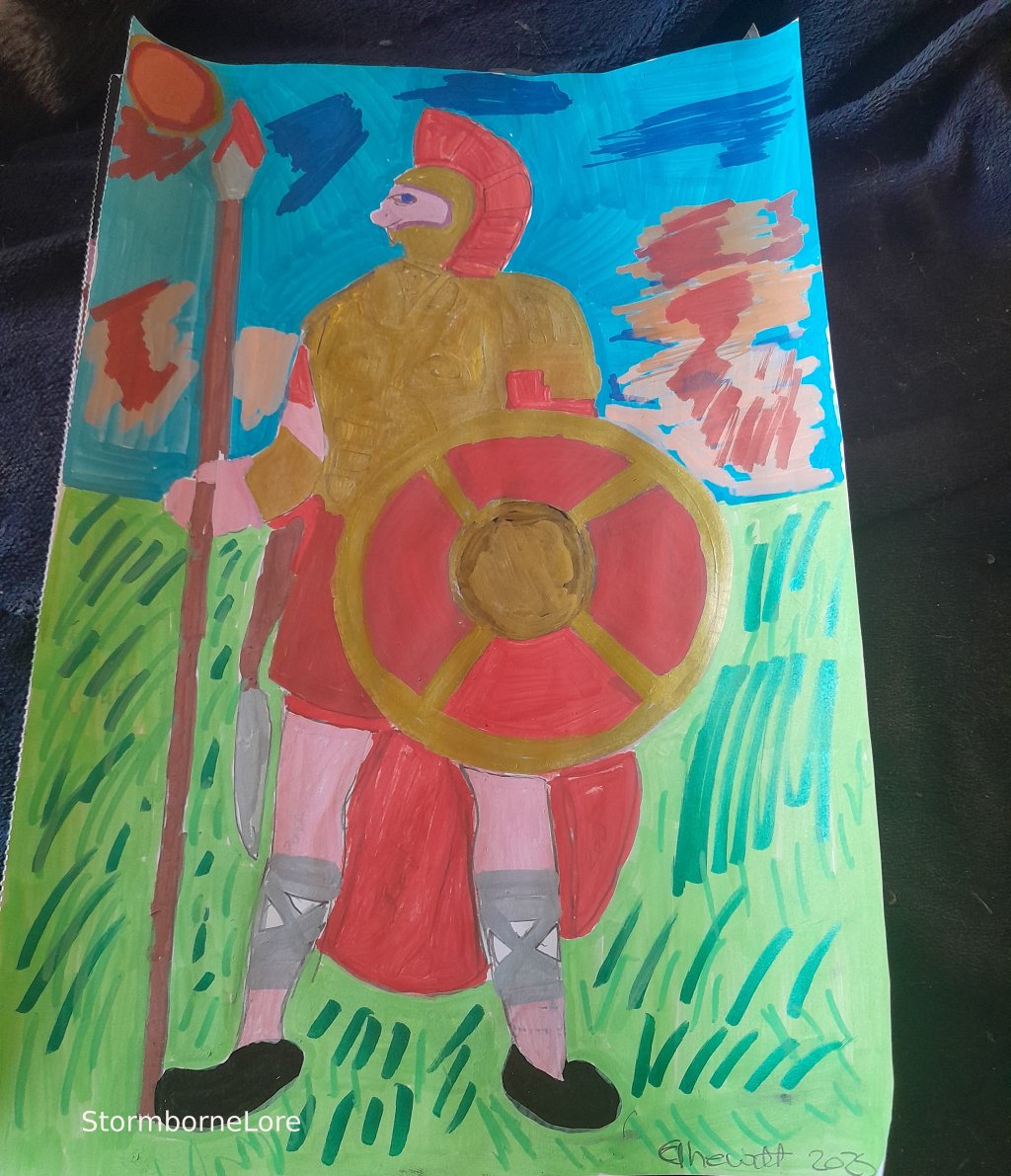
From the shadows came the tramp of iron boots. The air filled with the rhythm of Rome square shields, horsehair crests, iron blades that gleamed even in the grey. The circle of stones was surrounded.
Draven’s face went pale. His lips moved as if to speak, but no words came.
“You led them here,” Taranis said.
Rayne did not deny it. “Our people will live beneath Rome’s law. Better chains of iron than graves of ash.”
The thirteenth stone split with a sound like thunder. Dust trickled down its face. The Ring was broken.
Battle erupted. Drax drew steel, Lore called fire from the runes, Aisin shielded the cradle where Caelum slept. Nessa’s blade sang bright before she was dragged into the fray, her cry lost in the clash.
Taranis fought like the storm itself blade flashing, shield breaking, each stroke cutting down another soldier. But for every man he felled, three more closed in. Nets weighted with lead tangled his limbs. Chains of iron bit deep.
He roared once, a sound that shook the stones. Lightning split the sky as if the gods themselves mourned. Then the Romans dragged him down. His black shield shattered under their boots.
“Take him alive,” the centurion barked. “Rome has use for beasts like this.”
When the fighting ended, the circle lay in ruin. Smoke curled from broken fires. Brothers lay wounded or scattered. The thirteenth stone was nothing but rubble.
Taranis, Storm of Emberhelm, was shackled in chains and marched south along the salt road. Behind him, the old world fell silent. Ahead lay the lash, the arena, and the roar of foreign crowds.
He lifted his head once to the sky and whispered through bloodied lips:
“If I must fight, let it be as storm, not as slave.”
The night was raw and sharp with frost, the air thick with the scent of pine and woodsmoke drifting from distant hearths. Taranis rode ahead, the black shield strapped to his back catching what little moonlight broke through the bare branches.
Behind him, the Black Shields moved like a shadow given form. Seven riders their shields painted black and marked with the storm-sigil in dull grey ash. Among them, Brianna kept pace, her raven-dark hair bound in a warrior’s braid, eyes fixed on the road ahead.
Their target lay where the old trader’s road bent toward the river. a Roman supply convoy, fat with grain, salted pork, and amphorae of oil. The guards wore the same polished arrogance as all Rome’s men helmets gleaming, spears upright, their march a perfect, disciplined rhythm.
Taranis raised his fist. The forest seemed to hold its breath. Then his hand dropped, and the night erupted.
Arrows hissed from the treeline, felling the lead guard before the others could shout. Brianna’s blade flashed as she rode through the side of the column, cutting down a soldier who tried to raise his horn. Taranis slammed into the rearmost wagon, sending it lurching into the ditch.
The fight was short, brutal. When it ended, the snow was churned with blood and the mules stood trembling, steam curling from their nostrils.
“Take the lot,” Taranis said. “Every last sack.”
The Shields loaded what they could onto their own wagons, but instead of retreating into the forest as usual, Taranis turned his horse toward the lowland villages along the marsh. They moved in silence, the wagons creaking under the weight of Rome’s stolen bounty.
The first door they knocked on belonged to a bent-backed widow with two hungry children. Brianna handed her a sack of grain without a word.
At the next farmstead, a half-crippled shepherd received a barrel of salted pork. By the time they reached the edge of Emberhelm’s border, half the load was gone.
The rest, Taranis delivered at dawn to Lore’s men at the southern watch, and to Drax’s quartermaster in the hills.
When Brianna caught up to him by the river, she frowned.
“You give more than you keep. That’s not how outlaws survive.”
Taranis shrugged, eyes on the water.
“Then I’m not an outlaw. I’m a storm. Storms take, but they leave the earth ready to grow again.”
She studied him for a long moment before nodding once.
“Then let’s see how long the earth lets you live.”
The forests north of Emberhelm were not empty. They whispered in the cold leaves rustling without wind, branches creaking as if bearing witness.
Every step of Taranis’s horse cracked frost from the dead undergrowth, and in the darkness, unseen eyes marked his passage.
The Black Shields had grown in only a handful of days. Seven now a band stitched together from thieves, deserters, exiled warriors, and one woman with hair like raven feathers whose blade was sharper than her tongue. She called herself Brianna , and unlike the others, she did not flinch when Taranis looked at her.
They camped in the hollows where no light could reach. They moved before sunrise, leaving only cold ashes behind, and they spoke little, except for the soft murmur of plans and the low hum of old battle songs.
Their first strike had been for food. The second, for vengeance. The third would be for a message, not just for them but the starving.
Bryn Halwyn a hill fort the Romans had claimed but not yet reforged in their own style. Its high earthwork walls crouched like a sleeping beast above the winding road. That road was crawling now with supply wagons, the torchlight of the guards bobbing like fireflies in the mist.
Taranis’s voice was a low growl “Shields black. Faces darker.”
The Shields moved as one, melting into the tree line. Arrows hissed from the dark, the first taking a Roman through the throat before his shout could leave his mouth. The second dropped a driver from his cart, spilling barrels into the mud.
Then came the torches. They arced through the air, their fire licking greedily at wagon covers, rope, and dry straw. Flames climbed fast, reflected in the wide eyes of panicked mules.
Taranis was already moving. A shadow at the edge of the firelight, blade flashing, he cut through the first guard and didn’t stop. The air stank of blood and burning oak. The Romans shouted in their clipped tongue, but their formations shattered in the chaos.
By dawn, the road was empty but for the smell of wet ash and a single storm-sigil burned deep into the dirt where the wagons had stood.
When they were gone, the crows came, hopping between the blackened wheels and picking at the dead.
That night, beside a hidden fire, the Shields feasted on stolen bread and salt pork. Kerris leaned across the flames.
“What now?” she asked.
Taranis stared into the heart of the fire until his eyes stung. “We keep going until there’s nothing left to take. Or until they come for me.”
Kerris smirked. “And if they do?”
He smiled without warmth. “Then they’ll find the storm waiting.” he replied with a grin
The morning after the storm was silent, but for the river.
Its grey water curled slow beneath the bridge, licking at the stones as if to wash them clean of the night before. It could not.
Boldolph lay there still, fur wet, eyes closed in the peace of warriors who never feared death. Morrigan was beside him, her flank pressed against his as though she had refused to fall alone.
Taranis did not kneel. He stood apart, a horn of bitter mead in one hand, the other wrapped around the haft of his spear. His brothers spoke words over the dead the kind of words that should have meant something but the high warlord’s gaze was elsewhere. Past the pyres, past the valley, toward the ridges where the enemy had come.
The smell of charred wood and dragon’s breath lingered. Somewhere above the clouds, the great wings of Pendragon and Tairneanach were gone to ash or exile. He could feel the absence as a wound.
When the flames took the wolves, he drank deep. When the ashes scattered on the wind, he did not look back.
That night, in the hall of Ignis, Lore spoke of rebuilding. Draven spoke of the Ring’s oaths. Drax spoke of vengeance. Taranis said nothing until the room had emptied.
Then, to the empty benches, he muttered, “The Ring is cracked. And cracks spread.”
Outside, the moon rode high. In its light, a man in a blackened cloak rode from Emberhelm with no banner and no blessing only a storm sigil scratched into his shield with the point of a knife.
The Black Shields had begun.
2025 Emma Hewitt. All rights reserved. This story and all characters within the StormborneLore world are the original creation of Emma Hewitt. No part of this publication may be reproduced, distributed, or transmitted in any form or by any means without the prior written permission of the author, except in the case of brief quotations used in reviews or scholarly works.



 StormborneLore