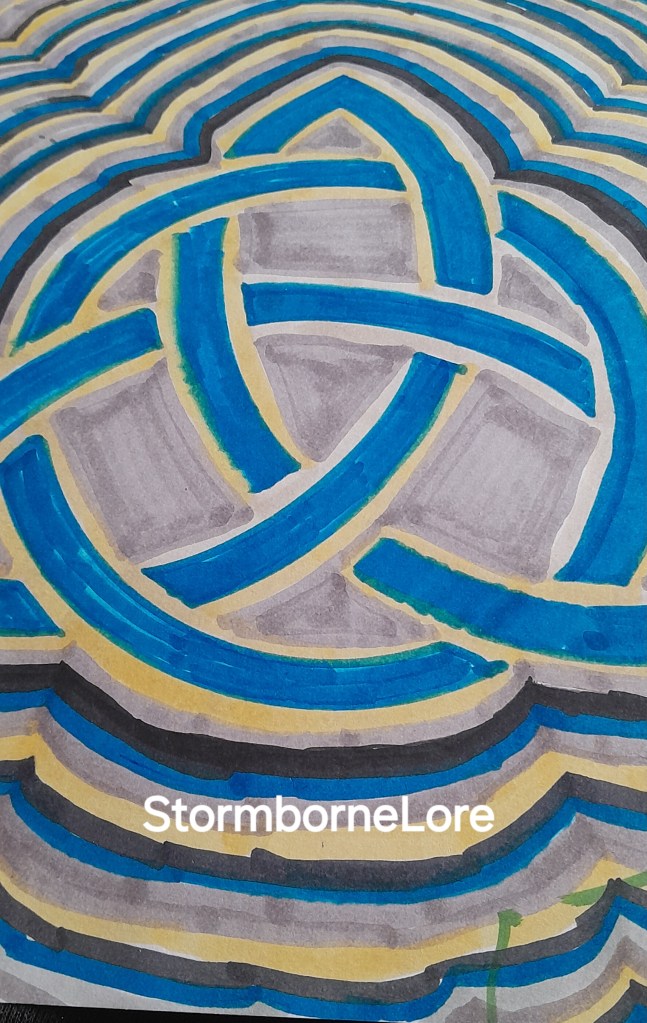
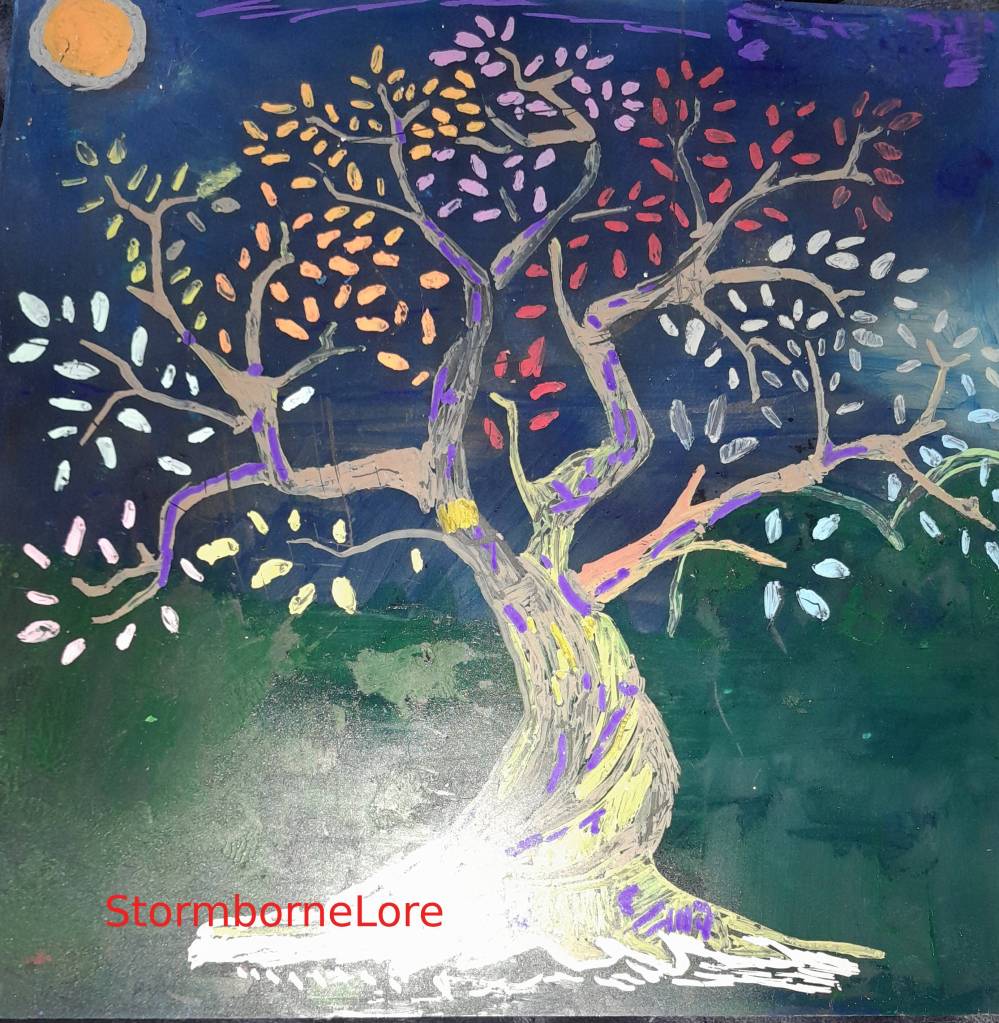
Artistic representation of Lore Stormborne, featuring intricate patterns and vivid colors, symbolizing his connection to ancient powers and storms.
Rain fell soft upon Emberhelm not in sheets, but in threads, weaving through the night like strands of memory. Each drop whispered against the walls, tracing paths down stone carved before empires rose. The air smelt of iron, damp moss, and prophecy.
Lore moved through the Hall of Echoes with deliberate silence. The torches burned low, their flames bending in strange rhythm, as though swayed by unseen breath. Beneath the central arch lay the dais of oath and upon it, the gold ring.
It shimmered faintly in the half-light, a pulse of life within metal. Not the glow of firelight, but of something older.
Lore hesitated before it. His reflection warped in its surface his eyes darker, sharper, his face marked by the faint runes of bloodline and burden. “The ring of storm and oath,” he murmured. “The bond of the five.”
He reached out. The moment his fingers brushed it, the hall sighed.
A low hum filled the air not from stone or wind, but from within.
Then came the voice.
“Brother…”
The word was barely sound more vibration, more memory. It coiled through him like smoke through glass.
“Taranis…” Lore whispered, his voice trembling. The name itself seemed to awaken something. The torches guttered. The shadows around the walls began to move not randomly, but with purpose, forming the faint outlines of chained figures, of men bowed beneath lightning.
The ring pulsed again, once, twice. Gold bled to storm-grey.
“Show me,” Lore said. “Show me where he walks.”
The pulse deepened and suddenly, the hall was gone.
He stood in mist. Iron gates loomed before him, slick with rain. Beyond them, sand bloodstained and torn an arena. He heard the roars of lions, the clash of blades, the chanting of a foreign crowd. And there, in the centre, Taranis bare-armed, chained, and unbroken. His eyes like stormlight.
“Still he stands,” Lore breathed.
The vision shattered like glass beneath a hammer. He was back in the hall, gasping, knees to the stone floor. The ring still glowed in his palm, its pulse slowing to match his heartbeat.
He knew then: his brother lived but the bond between them had stirred something greater. The old powers beneath the land the ones the druids had whispered of were waking again.
A new sound reached him. A voice, aged as winter bark.
“The ring calls the storm again,” said Maeve, the seer. She stepped from the shadowed archway, her staff crowned with raven feathers and iron charms. “You’ve felt it too the pulse of the deep earth, the cry of the stones.”
Lore rose slowly. “He lives. I saw him. Rome cannot hold him.”
Maeve’s gaze was sharp, knowing. “No but when the storm returns, it will not come gently. Bonds such as yours were not forged for peace. The land remembers its oaths, Lore Stormborne. The blood remembers. And blood always calls for blood.”
He turned toward the open window, where thunder rolled faintly beyond the hills. The storm clouds were gathering again not yet upon them, but coming.
“Then let it come,” he said softly. “We are Stormborne. We do not kneel to the Empire. We endure… and when the sky breaks, we rise.”
The gold ring flared once more, bright as lightning and somewhere far to the south, in a Roman cell slick with rain, Taranis felt it too.
The fires in Emberhelm burned low, their glow tracing the hall’s carved beams in dull amber. Outside, wind howled through the moors, carrying the echo of the horn that had once called the clans to war. Now it was only memory.
Lord Drax Stormborne sat alone in the council chamber, a single goblet of wine untouched beside him. The maps and missives lay strewn across the oak table. Roman reports, messages from border scouts, pleas for grain from villages too frightened to send men to market.
He had not slept. Sleep meant dreams, and dreams brought Taranis.
His brother’s face haunted him not in death, but in defiance. Bound, bloodied, yet unbroken. There was strength in that memory, but guilt too.
“You always were the fire,” Drax murmured, voice low. “And I the stone that smothered it.”
A faint shuffle broke the silence. Caelum lingered at the doorway, unsure if he was welcome. “Father,” he said softly. “Marcos sent word. The Romans will move east toward the river forts. He says it’s only a patrol.”
Drax’s lips curved into something that have been a smile. “Marcos says many things to make Rome sound smaller than it is.”
He rose, the movement slow, heavy with sleepless weight. “Tell the men to prepare rations, but not weapons. We will not meet them with steel not yet.”
Caelum hesitated. “Uncle Taranis wouldn’t wait.”
“No,” Drax said, turning toward the window, where mist swirled over the dark moorlands. “He would burn the world to free one man. I must keep the world standing long enough for him to have one to return to.”
The boy nodded but did not understand. Few ever would.
Drax rested his hands on the cold stone sill, the wind tugging at his hair. Somewhere beyond the horizon, his brother still fought, still endured. And Drax the eldest, the anchor bore the burden of every storm that raged beyond his reach.
“Forgive me, brother,” he whispered to the wind. “I keep the hearth burning, not because I’ve forgotten you… but because I know you’ll come back to it.”
The morning mist hung low across the valley, veiling the lands of Emberhelm in silver. From the high balcony of his hall, Lord Drax Stormborne watched the world stir awake.
Smoke from hearths curling above thatched roofs. The faint clang of the smithy below, and the distant echo of a horn calling men to the fields.
The realm had been quiet these past weeks, though quiet was not peace. Rome’s presence had spread like frost silent, glittering, and deadly to touch. Their banners were seen on the roads again, their soldiers marching east toward the fort that caged his brother.
Drax’s hands rested on the stone rail. Scarred knuckles gripping the cold edge as if the granite itself were his only anchor.
“Uncle Taranis forgives us all, father.”
The small voice broke the silence. His son stood behind him Caelum, barely thirteen summers. But already bearing the solemn eyes of a man twice his age. The boy held out a folded parchment, its wax seal cracked, its edges smudged with soot.
Drax took it carefully. The writing inside was firm but uneven, written in haste. Forgive nothing. Remember everything. Below, a single mark a lightning bolt drawn in charcoal.
Drax’s chest tightened. His brother’s hand. His brother’s defiance.
“Who gave you this?”
“One of the Roman guards, father,” Caelum replied. “He said… he said Uncle still lives. He fights every day.”
Before Drax answered, boots echoed behind them. Roberto stepped into the chamber, his armour dull and unpolished, the scent of road dust still clinging to him.
“My lord,” he began, voice low, “I spoke with one of the centurions. They see him as a danger now too much influence, even in chains. They’ve moved him deeper into the fort. Isolation. Only the soldiers see him.”
“Do they mistreat him?” Drax asked, though he already knew the answer.
Roberto hesitated. “They tried to crucify him last week. He survived. Yesterday, they threw him to the lions chained, unarmed. He walked out again.”
The hall fell silent. The fire popped in the hearth, throwing orange light across the stone floor. Drax turned back toward the window. his reflection caught in the misted glass grey at the temples, lines of command etched deep across his brow.
“They can’t kill him,” Roberto said quietly. “So they make him suffer.”
Drax exhaled slowly, the weight of his station pressing like iron against his ribs. “Then we’ll keep him alive in every way they can’t stop. Food, silver, messages whatever can reach him, it will.”
He turned to his son. “Caelum, you will remember this. A lord’s duty is not to speak loudest, but to act where no one sees.”
The boy nodded, solemn and still.
That afternoon, Drax rode out beyond the keep. The fields of Emberhelm stretched before him. The broad plains that once echoed with the clash of blades when the Stormborne banners flew proud.
The Farmers bowed as he passed, and he nodded in turn. To them, he was not just a lord. He was the last shield between their freedom and Roman law.
At the river’s edge, he dismounted, crouching where the waters ran dark and cold. He saw his reflection distorted in the ripples older, heavier, but not yet broken.
He remembered when Taranis had knelt in that same river,7 years ago. Swearing an oath to the gods of wind and storm. “We are not born to yield,” he had said, the water lapping at his wrists. “Even if Rome takes the land, they’ll never take the sky.”
Drax closed his eyes. The oath still lived within him, though it had been buried under the weight of command.
When he returned to the hall, he found Aislin. Stood waiting by the hearth his wife, wrapped in a shawl of woven wool. Her hair touched by the faintest trace of silver.
“You’ve heard the news,” she said softly.
He nodded.
“Will you go to him?”
Drax’s jaw tightened. “Not yet. The fort is surrounded. My every step is watched. To move too soon would doom us all.”
“And if you wait too long?”
He met her gaze, steady and unflinching. “Then he dies a legend. And legends, my love, outlast empires.”
She said nothing more. She simply placed her hand over his, and for a moment, the storm in his chest calmed.
That night, the wind rose.
From the balcony, Drax watched lightning fork across the distant hills. He thought of his brother, chained and bloodied, standing alone beneath the roar of lions and the jeers of men. And he swore, silently and fiercely, that this would not be the end.
The Romans thought they had captured a man. They had not realised they had locked away a tempest.
And storms… always find their way home.
The council chamber was dim, lit only by the flicker of oil lamps. Shadows stretched long across the stone floor, dancing like restless spirits.
“Are priests allowed to see Taranis?” Lore asked the centurion, his tone calm but deliberate.
The Roman officer hesitated, eyes flicking between Drax’s advisor and the lord himself. “Only those sanctioned by command, sir. The prisoner is considered… volatile. Dangerous to morale.”
“Dangerous,” Drax repeated quietly . His gaze fixed on the parchment that still bore his brother’s mark a black streak of charcoal shaped like lightning. “That is one word for faith unbroken.”
The centurion shifted, uneasy beneath the weight of the lord’s tone. He had served Rome for years. But there was something about the Stormborne that unnerved him men who spoke softly yet carried storms behind their eyes.
“Tell your commander,” Drax said at last, his voice cool as the mist outside. “that Emberhelm’s temple will pray for Rome’s victory. And for the salvation of the condemned. It would honour the gods to have a priest available for confession before transport.”
The officer nodded stiffly. “I will… relay the demand, my lord.”
When the door closed, Lore exhaled, rubbing his temples. “You plan to send one of ours.”
“Of course.” Drax turned toward the hearth, watching the flames burn low. “If Rome bars us with iron, we’ll walk through with words. Find one of the druids who wears a Roman mask one who can keep silent under pain.”
Lore bowed his head slightly. “A dangerous game.”
“All games are,” Drax murmured, eyes still on the fire, “when the stakes are blood.”
Two days later, beneath a grey dawn, a solitary figure rode from Emberhelm. He wore the plain robes of a Roman cleric, his face shadowed beneath a hood. No weapon hung at his side, no coin jingled in his pouch.
With only a small satchel of herbs, a ring wrapped in cloth, and a wax-sealed blessing marked his purpose.
His name was Maeron. Once a druid of the old faith now known to Rome as Marcus. A man who had survived the purges by trading his oak staff for a prayer scroll.
The road to Viroconium wound through dead forests. The mist-shrouded valleys, the silence broken only by the clatter of hooves and the distant calls of crows.
When he reached the Roman fort, guards searched him roughly, tearing through his satchel and stripping him of his cloak. Finding nothing amiss, they granted him ten minutes with the prisoner.
The cell smelled of iron, straw, and old blood. Chains hung from the walls like spiderwebs.
Taranis sat in the corner, wrists bound, his head bowed. A thin cut traced his cheek, half-healed, crusted with dust. He did not look up when the door opened.
“You come to pray?” His voice was low, worn smooth like riverstone.
“I come to remind you,” Maeron whispered.
Taranis lifted his head slowly, and for a moment the fire in his eyes banished the gloom. Maeron knelt before him and drew from his sleeve a small gold ring. its inner band engraved with the sigil of storm and flame.
Drax’s mark.
“Drax?”
“He watches,” Maeron said softly. “He waits. He sends this so you’ll know you are not forgotten. Food and coin move under Rome’s banners carried by men who owe him debts. You will have what you need to endure.”
Taranis reached for the ring. The chains clinked, faint as falling rain. “Tell him I am no longer enduring. I am learning.” His voice strengthened, each word edged with iron. “They think they cage me. But they are teaching me their weaknesses.”
He leaned closer, his gaze sharp, unyielding. “Tell Lore, Drax, and Draven I shall endure so they are safe. Tell them… the storm remembers.”
Maeron bowed deeply. “The gods still listen, even in Rome’s shadow.”
Taranis’s lips curled faintly. “Then let them listen to thunder.”
Outside, as Maeron was escorted back through the gates, lightning cracked across the horizon. The guards muttered that the storm came early that season.
Drax, miles away, looked up from his balcony at the same flash of light. whispered beneath his breath “Brother… I hear you.”
Thank you for reading if you have enjoyed please like, comment and subscribe.
The dawn was cold, a thin veil of mist curling over the ramparts of the Roman fort. Taranis awoke to the metallic tang of iron and the distant clang of the blacksmith’s hammer.
His chains clinked softly as he shifted. The cold biting into bruised wrists, but the fire in his chest remained unbroken. He had learned to sleep with storms in his mind; the thunder never ceased, even when the sky cleared.
The sentries passed with measured steps, their eyes avoiding his. Even in chains, Taranis carried the weight of warning: a storm was bound, not broken.
Marcos stirred beside him, shoulders tense with age and pain. “They move you today,” he muttered, voice low. “Legionaries say they march prisoners to the amphitheatre. Another show… or training for others. Rome’s curiosity is insatiable.”
Taranis flexed his wrists against the iron, listening to the rhythm of the camp. The clatter of swords, the measured steps of patrols. The faint murmur of Latin all part of the pulse of this cage. He did not fear. He calculated.
The centurion arrived just as the morning sun began to pierce the mist. A figure of red and bronze framed against the wooden palisade.
“Stormborne,” he said, voice sharp, “prepare to march. Rome watches, and your survival is… optional.”
Taranis rose slowly, chains rattling in protest.
“Optional,” he echoed, smirk tugging at his lips, “like the wind choosing which trees to break.”
The march was silent, the prisoners lined in pairs, shields clinking and armor scraping. Taranis felt the eyes of the Romans on him, not all hostile.
The Curiosity and caution blended in the same gaze. Word had spread of his defiance surviving crucifixion. But unyielding under whip and sword and whispers of the “Storm of Emberhelm” made even hardened legionaries pause.
They crossed the outer hills and entered the amphitheatre grounds. Dust rose from the packed earth, carrying the scent of sweat, straw, and fear. The arena awaited not yet for combat, but for demonstration, for Rome’s fascination with endurance.
Taranis’ chains were secured to a central post. Around him, other prisoners fidgeted and whispered. He noticed the boy from the march days ago. A little child of six years old hiding behind a stack of crates, pale fingers gripping a fragment of bread. Their eyes met, and Taranis gave a faint nod not reassurance, not command, just acknowledgment.
A guard stepped forward, coiling a whip in his hand. “Today, we measure the storm,” he said in Latin, the words sharp as steel. “Let us see if the barbarian bends to Rome.”
Taranis let the chains pull taut, shoulders braced. “Storms bend only to themselves,” he whispered, almost to the wind.
The first demonstration began. Spears and short swords were thrust toward him, each movement designed to test, to gauge. Taranis shifted with the grace of the hunted and the hunter intertwined. As he continues deflecting, twisting, and using the very pull of the chains to redirect momentum.
Every strike met resistance, every thrust was countered. The audience of soldiers murmured in disbelief.
Marcos watched from the side, leaning heavily on his staff. “Still untamed,” he muttered. “Still Emberhelm.”
The sun climbed, and with it, Taranis’ endurance was tested further. Roman instructors pressed harder, pushing his limits, yet he remained unmoved, his grey eyes sharp as lightning.
When at last the centurion called an end, sweat streaming and blood staining the mud, Taranis did not collapse.
He simply lowered his gaze, catching a brief glimpse of the distant hills beyond the fort. Freedom waited there, somewhere beyond chains and Roman order.
As the prisoners were herded back to their quarters, Taranis’ mind raced. Rome could cage him, whip him, measure his endurance, but it could not touch the storm in his heart. The pulse of Emberhelm beat in every step, every breath, every thought of revenge, strategy, and survival.
That night, as firelight danced across the walls of the fort and the whistle of wind through battlements echoed like distant thunder, Taranis sat, chained but unbroken, and whispered to himself:
“Let Rome watch. Let them wait. Storms do not obey. Storms endure. And storms return.”
Night in the Roman fort was never truly silent. Even beneath the canopy of stars, there was always the creak of timber. The shuffle of soldiers on watch, the hiss of oil lamps dying in the cold wind. Yet somewhere beyond that human rhythm, another sound pulsed faint, rhythmic, like the heartbeat of the land itself.
Taranis listened.
He had learned to hear through walls of stone and iron. The whispers of chains, the breath of the wind through narrow slits.All were messages if one knew how to listen.
Marcos stirred nearby, groaning as he rolled against the rough bedding. “You hear it again,” he murmured, voice barely a rasp. “The storm that waits?”
Taranis’ eyes were half-shut, the dim firelight carving hollows beneath his cheekbones. “The storm doesn’t wait,” he said softly. “It watches.”
He turned the small iron shackle at his wrist, feeling for the weak link not yet ready, but close. Every night he tested it. Every day, he marked the rhythm of the guards, the rotation of their watch. Patience, he reminded himself. Storms struck only when the wind was right.
Beyond the barracks, the faint roar of the sea carried inland. Somewhere past those black waters lay the route to Gaul and beyond that, Rome. The thought of being caged beneath marble arches made his blood run colder than the chains.
The door creaked open. A shadow slipped inside small, quick, hesitant. The boy from the arena. He carried a satchel and a half-broken torch.
“They’ll see you,” Marcos hissed.
The boy shook his head. “The north wall guard sleeps. He drinks too much. I brought you this.” From the satchel, he pulled a narrow blade no longer than a hand, its edge dulled but serviceable.
Taranis took it without a word, his fingers brushing the boy’s for a heartbeat. “Why?” he asked.
The boy’s voice trembled. “Because you didn’t kill me when they told you to. Because the others they say you were a king once.”
Taranis looked up then, eyes grey as frost. “A king?” He almost smiled. “No. A storm given form. And Rome can chain storms, but it can not make them serve.”
The boy swallowed, uncertain whether to fear or believe him. “Then what will you do?”
Taranis turned the blade in his hand, the firelight glinting off the iron. “Wait,” he said. “And remember.”
He hid the weapon within the straw bedding, marking its place with a small twist of rope. Then he looked toward the sliver of moonlight cutting across the dirt floor. A thought of home of the high ridges above Emberhelm, of his brothers’ faces fading in memory. Rayne’s eyes full of guilt. Drax’s silence. Draven’s quiet grief.
He did not hate them. Not yet. But the distance between them had become as sharp as any blade.
When dawn came, the fort stirred again the horns of the morning watch echoing across the fields. The centurion approached, flanked by two guards.
“Stormborne,” he said, voice cold. “The governor himself has taken interest. You are to be moved south to Londinium within a fortnight.”
Taranis met his gaze. “To be paraded, then? Or displayed?”
Taranis’ jaw tightened, but his eyes betrayed nothing. Inside, the storm turned once more.
He whispered beneath his breath, too low for the Romans to hear:
As the guards led him from the barracks. He caught a glimpse of the horizon low clouds gathering over the hills, rolling in from the west. It was almost poetic.
“Emberhelm still breathes.”
That night, the chains whispered again not with fear, but with promise. The weak link shuddered beneath his fingers. And when the next storm broke over Viroconium, it would not be made of rain.
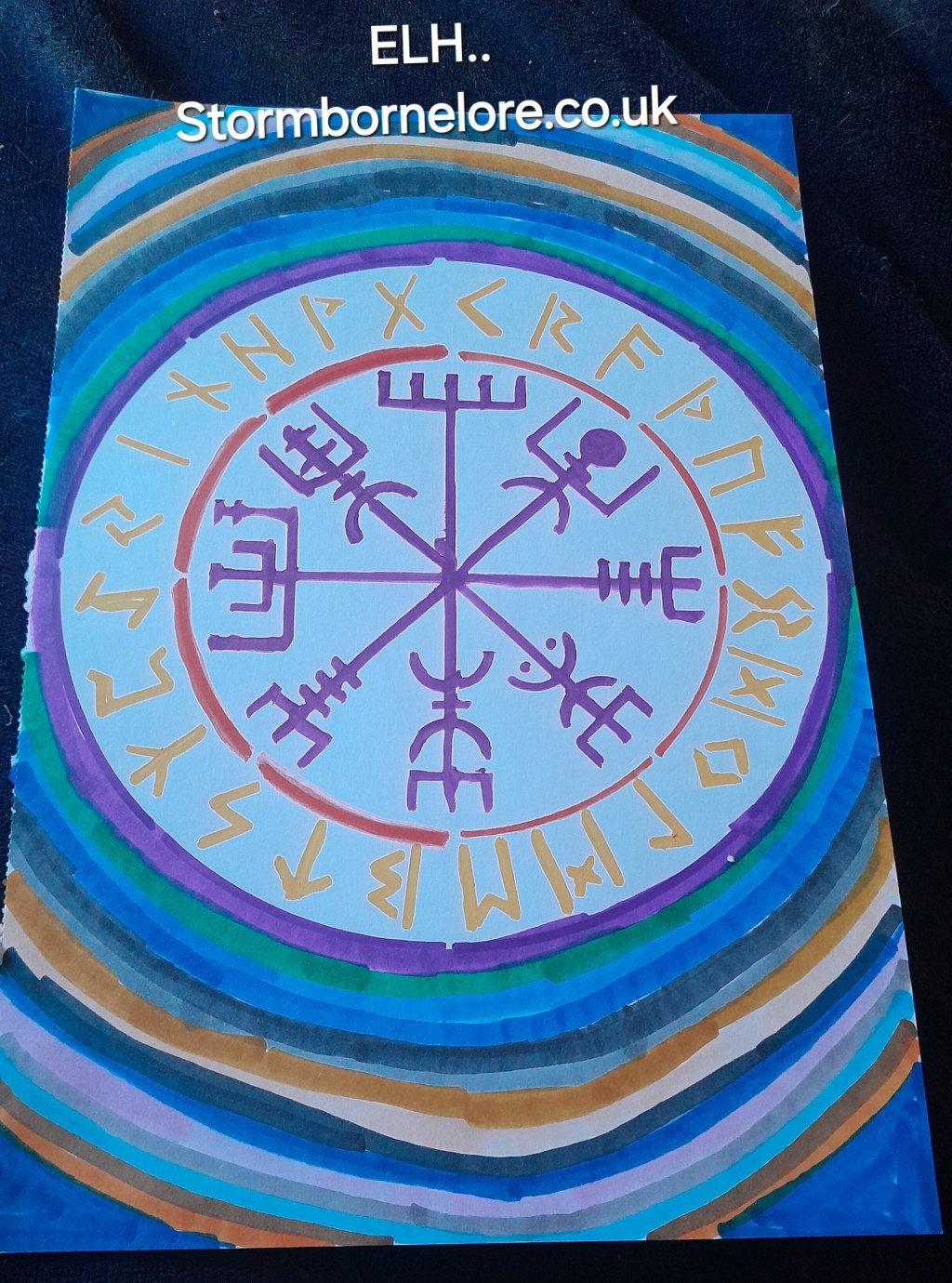
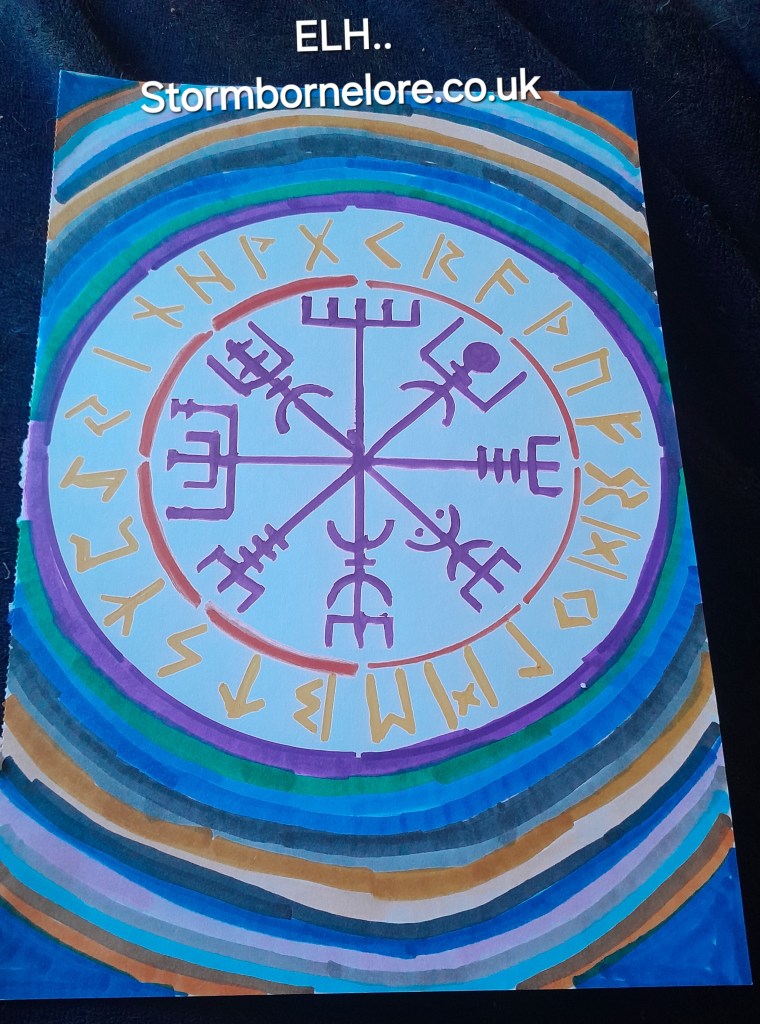
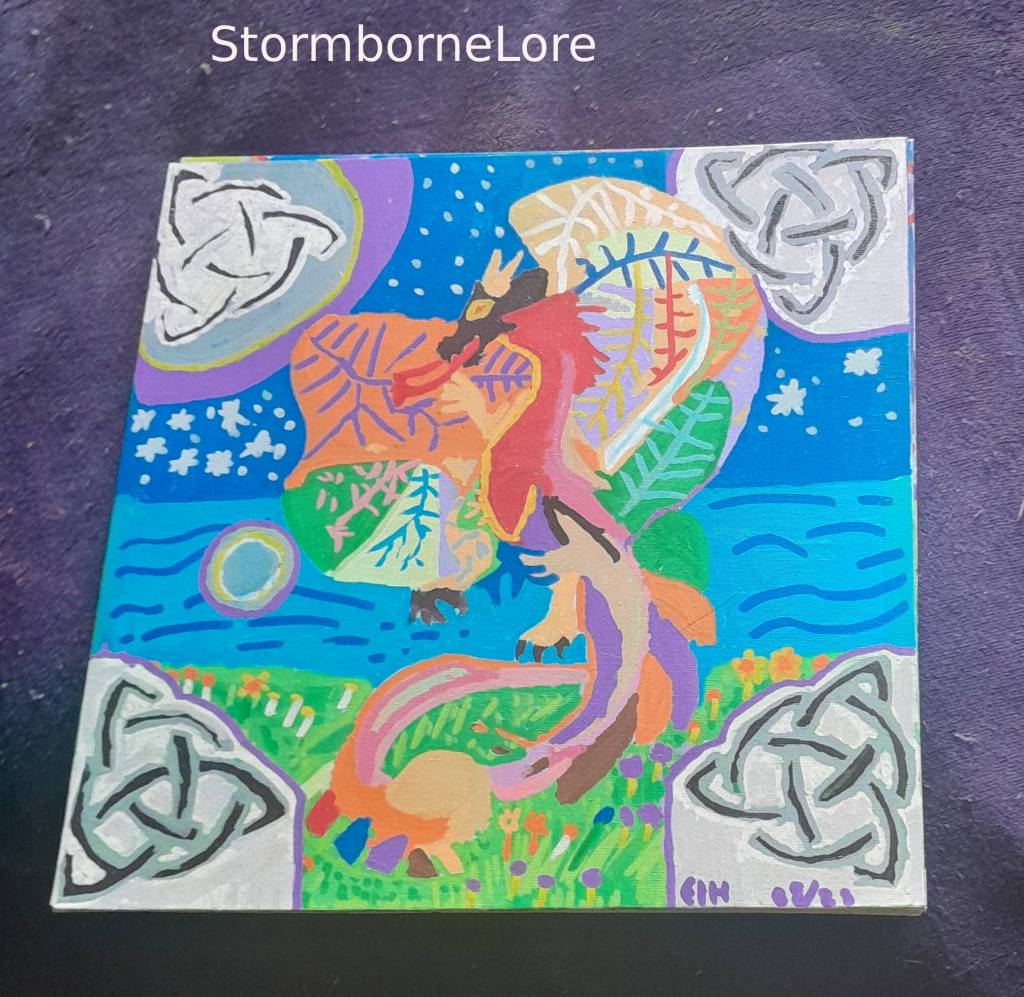
A vibrant painting featuring Norse-inspired runes and layered storm-colored rings, symbolizing the guidance of the Vegvísir.
This painting blends ancient Norse-inspired runes with layered storm-coloured rings, echoing the guidance of the Vegvísir the wayfinder. In the StormborneLore world, it speaks of journeys through shadow and exile, always guided by unseen forces
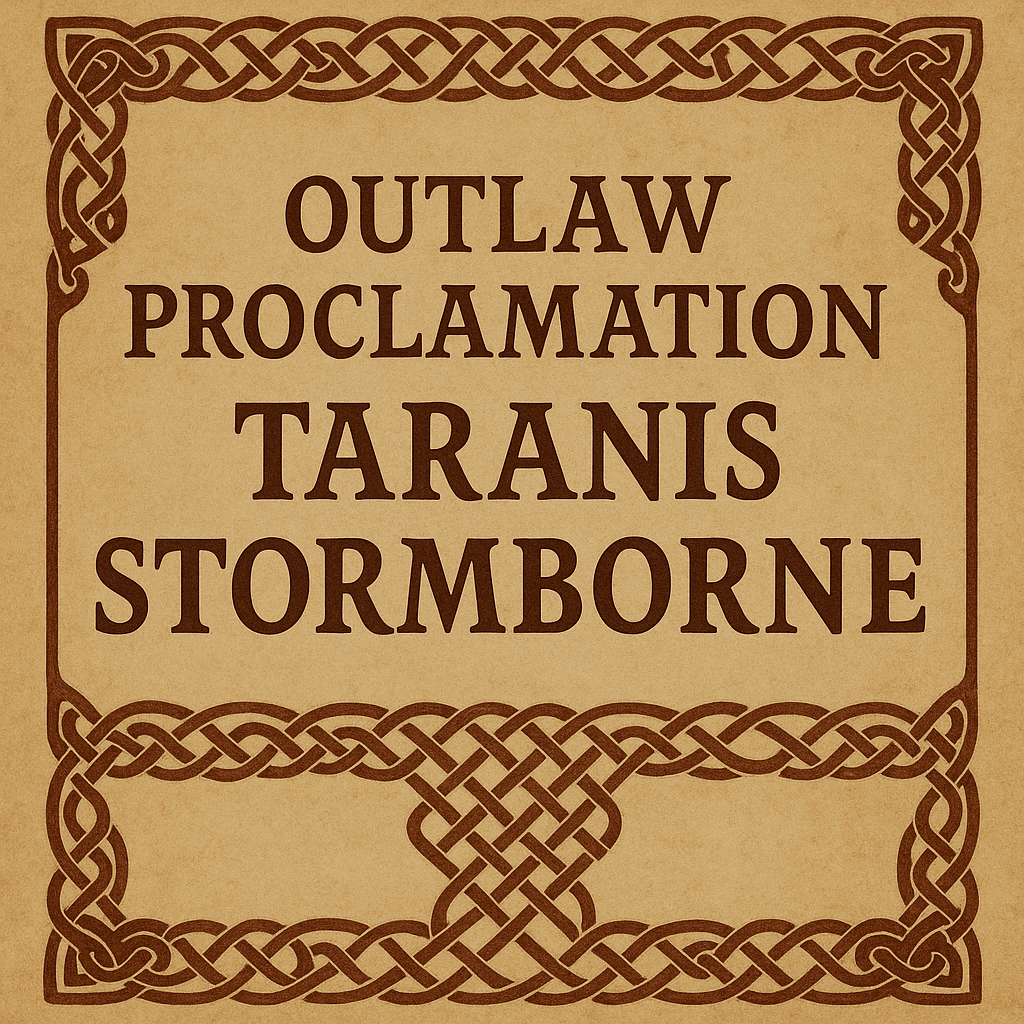
Hear me, hearth-folk and warriors, for I speak of the High Warlord who walks the storm. His name is Taranis Stormborne, breaker of oaths, rider of wolves whose eyes burn like embers.
He has raided the corn from the winter barns, struck down chiefs beneath the peace banner, and set fire to groves where the gods were honoured.
The druids name him outlaw; the kings demand his head on a spear. Yet the warbands whisper, his name in the night, and some would follow him, even into the jaws of death.
If his banner rises in your valley, bar your gates and guard your herds, for where the Stormborne passes, the thunder will follow and the land will not rest.
Taranis stood for hours, his injured back pressed against the tree. Two men watched his every move.
“Hey, stop right there, slave,” one growled, noticing a hand slipping free. He strode over and punched the teen in the stomach, making Taranis grunt in pain. Then he resecured the hand and looped a rope around the boy’s neck.
“Just move. Go on, make my day, exiled one,” said the stocky, dark-haired guard.
“I just wanted water. It’s right there. Please, Sorrel,” Taranis pleaded.
“You know the orders. Two days without,” said the other man, watching closely. “Your commander will come tomorrow. Commander Greal.”
“Should we secure his head too?” the man added. “No movement at all?”
“No. He’s got the collar, and the rope’s above it. It should be tight. His hands are secured again. We just follow orders. No food. No water,” Sorrel replied.
“Commander Greal? That’s who I’m under?” Taranis managed to spit out. The rope around his neck made it hard to breathe or swallow.
“Yes. He’s coming to train you. You’ll be tethered. Chains, binds ankles, wrists, neck until he says otherwise, cursed exile.”
Taranis swallowed, almost choking.
As the sun rose and the shifts changed, a smith appeared.
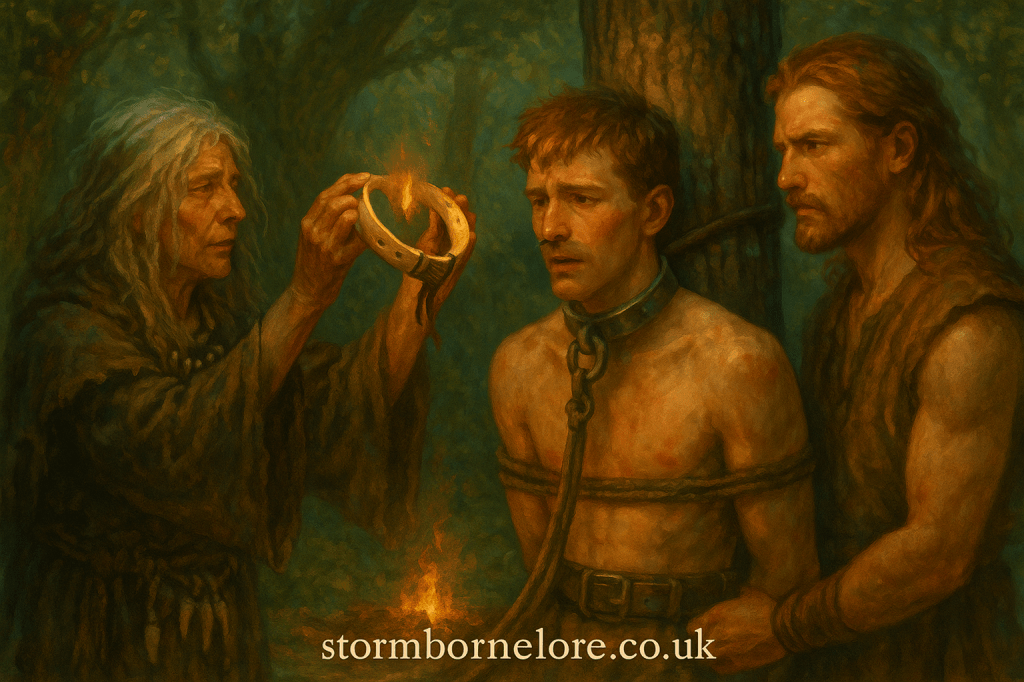
“Time to change the collar, but that rope makes it tricky,” he muttered. He carried tools stone and bone hammers, and a strange new collar made of carved deer bone and inlaid stones, blessed by the Seer.
“No please. I’m sorry,” Taranis whispered, trying to hide his fear.
“Hey, Tanar, look at me,” Solaris said gently, stepping forward. “You’re the kid who doesn’t fear anything, right? The one who slept with wolves and rides dragons?”
“Morrigan and Boldolph,” Taranis whispered. “They still howl.”
“Yes. They cry for you.” Solaris crouched. “I know you’re scared. I asked if you could play after this punishment. But you have to stay in the clan’s sight.”
“Really?” Taranis asked, making a face as the smith worked.
The old collar shattered. The Seer stepped forward, chanting softly. The new collar was fitted around his neck tight but precise.
“This is to contain and restrict what you are believed to be,” the Seer said. “It bears your name in the old tongue. Carved by flame. Blessed in shadow. It does not break unless your master wills it.”
“Will it grow with him?” Solaris asked.
“It will last a few years. Then we replace it. But it is a warrior’s collar.”
“Can we still attach the tether?” a guard asked.
“Here,” said the smith, tapping the metal hoop. “The restraints remain the same.”
Everyone in the village looked to the boy some with sorrow, some with fear.
“Master, I won’t run or hurt anyone. You saved me,” Taranis said softly. But the masters voice remain silent, the boy had been their property 7 years nothing would change it.
He was removed from the tree. His hands were bound low at the waist. The sinew cords bit deeper with every hour. A leather tether linked the collar to his wrists, forcing him to hunch forward.
“Walk,” the clan leader commanded.
Taranis took a few difficult steps.
“Father, how long is he in this for?” Calor asked.
“This is punishment. When I see a correction in his behaviour, I’ll allow an alteration.”
After a few steps, Taranis fell.
“Get up,” barked a guard.
The leader grabbed Solaris’s arm. “No. He must do it alone. No one helps him.”
“Fuck you,” Taranis hissed, losing his temper. He tried to turn his head, but the tether tightened around his throat. He struggled. Slowly, painfully, he managed to rise to his knees.
“I’ll kill you for this. One day.”
For that outburst, they dragged him through the camp by the tether. Word spread fast the exile had defied them again.
They brought him to the sacred stone circle.
Taranis staggered. Blood dried at the corners of his mouth. The clan watched not with pity, but quiet judgment.
At the center, the clan leader held a mask.
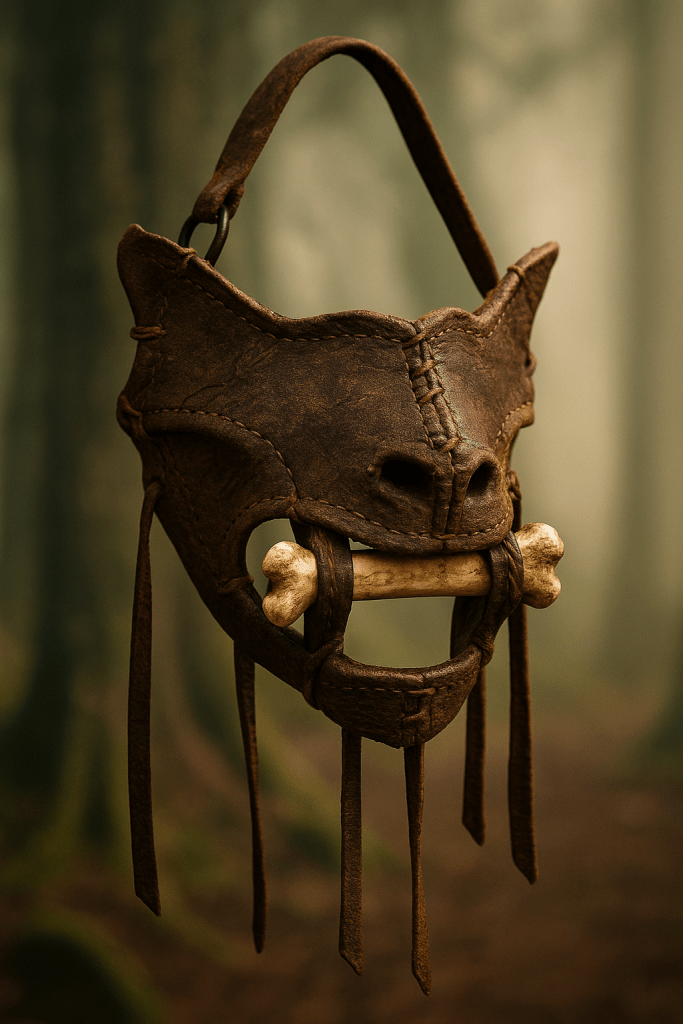
It was beast-shaped, stitched hide, with a carved bone bit meant to force the jaw open and silent. Leather straps dangled like tongues.
“This is what you become when you threaten your own,” he said. “Not man. Not wolf. Not worthy of freedom.”
He strapped the mask to Taranis’s face. The bone slipped between his teeth. The world became heat, shame, and pressure.
They paraded him around the circle. No words. No cheers. Only the crackle of fire and the quiet of judgment.
Then they brought him back to the tree.
He was secured again tether pulled tight, hands bound low, unable to straighten. A bucket of clean water sat just out of reach.
Solaris and a friend sat nearby.
“I get that he hates us,” the friend muttered. “But this? This isn’t helping.”
“How long’s your dad leaving him like that?”
“He’s planning a fight. Says the slave goes in bound. As punishment.”
Later, a group approached the tree. “He’s fighting the hunter who disrespected your father,” one said. “Only this time, he doesn’t get unbound.”
“That’s death,” Nudge said. “This is a unique slave.”
They dragged Taranis toward the circle again. Tether at his neck. Hands bound. Mask still biting. His feet scraped the dirt.
The hunter was waiting older, heavier, armed with a bone club.
“This one’s half-starved and shackled,” the man jeered. “A gift fight.”
The Seer raised her hand. “Begin.”
The club came down fast.
Taranis dodged. Took the blow on the shoulder. Pain exploded. He dropped. Rolled. Used the tether’s pull to spin and slammed his wrists into the man’s knee.
A stumble.
The crowd laughed and jeered .
He stood barefoot, bleeding, bound and faced his enemy.
This time, he waited. At the last second, he kicked low behind the knee. The hunter dropped.
Taranis slammed into him, shoulder first. They hit the ground hard.
Bound wrists wrapped around the man’s throat.
“Enough,” said the Seer.
He didn’t let go.
“Enough!” she repeated.
He finally released the man, who gasped for breath.
Taranis stood. Mask soaked in blood. Breath ragged.
“He’s not just a slave,” Solaris whispered. “He’s… something else.”
One of the leader’s sons stepped forward. “Kill him.”
Taranis hesitated.
Then the look in his eyes went blank.
He obeyed.
He killed with a single motion. Trained. Efficient.
The camp went still.
“I didn’t think he’d actually do it,” the son whispered.
“You made him do it,” Solaris said coldly. “He obeyed your order.”
The leader stepped forward.
“I gave no such command. But a command was followed.”
He turned away.
“Take him to the Ridge.”
They dragged him up the mountain path.
The wind screamed. No songs. No prayers. Just feet against earth.
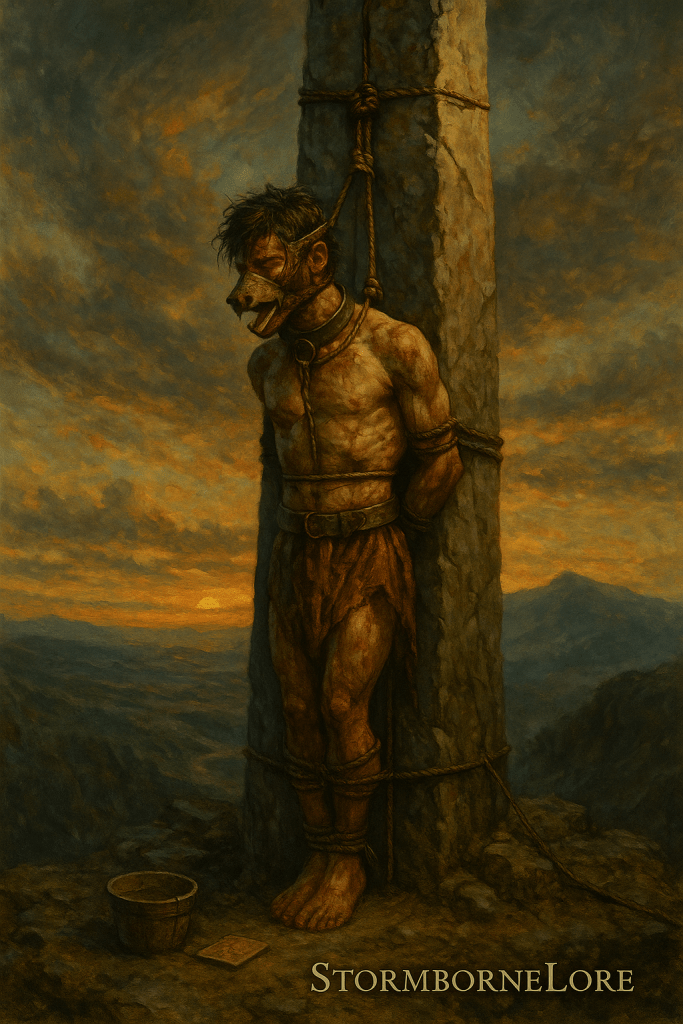
The Ridge loomed an old stone, cracked and worn by time.
They fastened him there. Arms above his head. Rope around his chest. Collar tethered tight. Ankles bound. Spine locked in an arch. The mask stayed on.
No fire. Only wind. And a wooden bucket of water, just out of reach.
Night came.
Time blurred.
He dreamed of wolves. Of fire in the sky. Of names long forgotten Rayne, Drax, Lore.
And then Solaris came.
“I asked my father for leniency,” he said softly. “He said pain teaches obedience.”
“This isn’t obedience,” his friend muttered. “It’s madness.”
Solaris crouched.
“I don’t want you to die,” he whispered. “But I can’t stop this. Not tonight.”
Before leaving, he placed a carved stone with a sun symbol beside the bucket.
A promise.
The night passed.
Morning came.
He had not died.
And that, somehow, was worse.
When they removed the mask, the clan leader gave him a small sip of water.
“Why did you kill him?” he asked.
“Your son told me to,” Taranis said, voice raw. “If I don’t obey, I’m punished. I did what I was told and still, I’m punished.”
“How long do I stay like this?”
“One day,” the man said. “You’ll be taken down tonight. Try not to fight the restraints.”
A boy ran up the path.
“The general is here. He demands to see the prisoner.”











 StormborneLore