The rain hadn’t stopped for three days. It came in thin veils that clung to the heather and the men’s cloaks. whispering through the birch like ghosts that had never left the Chase.
Taranis knelt by the dying fire, sharpening the edge of his blade with slow, deliberate strokes. Each scrape of the stone was a prayer, though no priest would have known the words.
“Water’s risin’, lord,” said Caedric, glancing toward the ford. “River’s near burstin’. We’ll not cross ‘fore dark.”
Taranis looked up, eyes catching the faint shimmer of dawn through the fog. “Then we hold. The storm waits for no man, but we’ll not feed it needlessly.”
A murmur ran through the men tired, hungry, but loyal. They’d followed him from the salt marshes to the high woods, and not one had broken yet.
Byrin crouched beside him, rubbing at the scar along his jaw. “Word from the south. Roman riders out o’ Pennocrucium. A full cohort, maybe more. Marchin’ for the hill road.”
Taranis’ mouth twitched at the name Pennocrucium,. The Roman word for Penkridge, though no Stormborne had spoken it without spitting since the fort was raised.
“Let ‘em come,” he said quietly. “They’ll find nowt but mud, ghosts, and trees that whisper their names to the wind.”
Caedric chuckled darkly. “Aye, an’ if the trees don’t get ‘em, we will.”
They waited through the day as the rain thickened. Ravens wheeled low over the clearing, black against the iron sky.
By nightfall, fires burned low and bellies growled. But Taranis was restless the unease that came before the breaking of something old.
He walked to the ridge alone, where the land dipped toward the flooded ford. The air stank of wet earth and smoke from distant hearths.
He spoke softly, almost to himself. “Once, this road ran to Rome. Now it runs to ruin.”
A flash of lightning tore the sky open white veins across black clouds. In its light, he saw them: Roman scouts, three of them, creeping along the far bank, cloaks slick with rain.
Taranis smiled grimly. “So, the eagle still claws at the storm.”
By the time the thunder rolled, the first spear had already struck.
The fight was over quick steel on steel, mud and breath, the hiss of rain on blood.
When it was done, two Romans lay dead. The third crawling back toward the ford with half a helm and a broken arm.
Taranis knelt beside him. “Tell your centurion,” he said, voice low, “Pennocrucium belongs to the storm now.”
Taranis turned toward the woods. Where torches burned faint between the trees his men gathering, more arriving from the north and the marshes.
“Aye,” he said, voice steady. “Let ‘em all come. Rome’ll find no peace ‘ere. Not while the storm still breathes.”
The thunder rolled again, closer now, echoing through the Chase like an oath renewed. Somewhere in the distance, the old road cracked underfoot stone splitting where the spiral mark had been carved.
This chapter draws from the old Roman site of Pennocrucium (modern Penkridge), a key post along Watling Street. Local dialect echoes through “yow,” “nowt,” “lord” the living voice of the Black Country and Staffordshire’s borderlands. These stories honour the land itself where history and myth still meet in the rain.
The campfire had burned low when Solaris approached the general.
Taranis knelt nearby, his wrists loosely bound, the bone collar still tight against his throat. The punishment mask lay beside him, waiting.
“Sir?” Solaris said cautiously. “Are we binding him again?”
Grael didn’t answer immediately. He watched the boy the blood-crusted bruises, the unspoken tension in his shoulders, the way his eyes never stopped scanning the shadows.
“He walks beside the horse now,” Grael said. “Not behind it. That’s earned.”
“But he’s still tethered?” solaris said
Grael nodded. “Until he earns trust with more than fire.”
Solaris stepped closer, lowering his voice. “And the food? He eats with us now?”
“He eats what he earns. No more. No less.” grael said
Taranis stirred then, lifting his head. His voice cracked as he spoke.
“Now I’ve got one foot in both worlds… the world of a chosen, and one of an outcast.” He looked at them both. “One move and I could be executed. The other move, and be honoured.”
Solaris winced as the mask was fitted back over the boy’s face.
“Why the mask again?” he asked.
“To remind him,” Grael said. “And to remind us.”
“Of what?”
“That chains and power aren’t opposites. They’re a balance.”
Taranis tried to move from grael and the other warriors tried to move his head so the mask wouldn’t go on as a dragon flew over head
“Put it on” grael ordered
“No I’m human just like you”
Taranis jerked back, blood still dried in the corners of his mouth. The dragon’s shadow passed again overhead, and something ancient stirred in his chest not rage, not fear, but refusal.
“I said no!” he growled, voice muffled but defiant.
Solaris stepped between him and the other warriors. “Wait. He’s not”
Too late.
One of the guards lunged forward, grabbing the mask. Taranis shoved back, throwing his shoulder into the man’s chest. The warrior stumbled, caught off guard by the boy’s strength.
Another grabbed his arm but Taranis twisted, slammed his elbow into the man’s face.
Blood sprayed.
Chaos erupted.
Three warriors tried to restrain him now. Grael did not move. He watched.
Taranis fought like a cornered wolf. Wild. Desperate. Silent.
The mask hit the ground and cracked in two.
When they finally wrestled him down, he was bleeding from the nose and lip, panting like an animal. His wrists were raw, eyes wild.
But he was smiling.
“You see me now?” he said through gritted teeth. “I’m not yours.”
Solaris stood frozen. The broken mask lay at his feet.
Grael finally stepped forward.
“Enough,” he barked.
The warriors pulled back.
Taranis didn’t rise. He waited.
“Let him up,” Grael ordered. “And don’t touch him again tonight.”
“But sir” a guard started.
“I said don’t.”
Grael looked down at the broken mask, then at the blood on Taranis’s knuckles.
“You broke it,” he said flatly.
“I’d break a hundred more,” Taranis spat.
Grael didn’t respond. Instead, he knelt.
“You want to be seen? Fine. Then let the clans see what you are.”
He picked up the shattered halves of the mask.
“You’ll wear no disguise. No shield. Not until you earn a new one.”
Taranis met his gaze. “Good.”
Grael stood.
“But remember this, boy there’s a cost to being seen. You can’t take it back.”
Taranis said nothing.
The dragon roared again in the sky.
Solaris knelt beside him later, whispering, “You’re going to get yourself killed.”
Taranis looked at the stars.
“Or freed.”
“What will it take for him to be freed?” Solaris asked
“Freedom for him? He crippled your brother, he killed a farmer, used by the gods themselves, stories say he killed a bird as a child and his village was killed before his exile freedom is a long way off. What do you say grael ?” A warrior asked
Grael remained silent for a long while. The fire crackled. Embers danced. “I say,” he murmured, “we’ve seen men freed for less… and killed for more.”
He tossed the shattered mask into the flames.
“If he was sent by the gods, then they’ll test him again. Until then, he walks. He bleeds. He earns.”
A warrior scoffed. “And when the next village sees that face?”
“Then let them decide,” Grael said. “Fear him. Pity him. Curse him. But they’ll see him without the mask. And so will we.”
Taranis didn’t flinch. He stared into the fire, as if daring it to speak.
Grael remained silent for a long while.
The fire crackled between them. Sparks drifted upward into the night, like fleeing ghosts. Taranis sat still, blood streaking his jaw, the collar tight around his throat. The broken mask lay shattered near the flames.
He stepped forward and tossed the mask into the fire. It hissed as it cracked deeper, flames licking the black bone.
A warrior scoffed. “And when the next village sees that face? He crippled a boy. His own kin say he’s cursed. What do we tell them?”
“Tell them the truth,” Grael replied. “He wears no mask because he broke it. He walks unchained because I said so. And if that offends them, they can challenge it by trial.”
Another man spat. “The Seer warned us he carries the fire without flame. You think a prophecy makes him safe?”
“I think,” Solaris said quietly, “he didn’t run when he could’ve. He fought. He stood. He bled beside us.”
Silence settled again.
Then Grael turned to his men, sweeping his eyes across the ring of warriors.
“Fine,” he said. “Let the clans decide. Those who want him gone, speak now.”
A few murmurs, but none stepped forward.
“Those who would test him, not as a slave, but as a warrior raise your blades.”
One sword lifted. Then another. And another.
Not all.
But enough.
Taranis watched them. His chest rose and fell slowly. The embers reflected in his eyes.
“So be it,” Grael said. “Tomorrow at first light, he joins the line. No chains. No mask. One trial. If he survives the boy becomes flame.”
A hush fell across the camp.
Solaris leaned down beside him. “You’ve got one shot.”
Taranis looked up, a flicker of defiance in his eyes.
“Then I’ll make it burn.”
The company reached the ancient ruins just after dusk.
Twisted trees clawed at the moonlight, their roots entwined with blackened stones. Smoke drifted from old hearth pits, and torches lined the perimeter of what once had been a stronghold now just skeletal walls and broken pillars.
They called it the Bones of Fire, where traitors, exiles, and monsters were judged in the old ways.
Taranis was unshackled but flanked by two guards. His collar still bit into his skin, and dried blood streaked his jaw. He walked unbound, but every step echoed like thunder. Warriors lined the central circle, murmuring. Some remembered his defiance. Others remembered the dragon.
At the heart of the ruins stood a black stone altar scorched by lightning, older than the clans themselves. Grael waited there, sword at his side, expression unreadable.
A Seer stood beside him the same woman from the fire, robed in bone and shadow.
“This place,” Solaris whispered, stepping beside Taranis, “is where they test souls.”
“I thought I already failed,” Taranis said, not looking at him.
“No. This is where they see if you can rise.”
The crowd hushed as Grael raised his hand.
“Taranis of no clan. Slave by judgment. Exile by blood. Chosen by storm or cursed by fire,” the general said. “You stand here not as a man, but as a question. The people demand an answer.”
The Seer stepped forward, her voice like wind through hollow bones.
“You are accused of rebellion, violence, and breaking the old order. But the gods remember your name. So the trial shall be by the elements by Fire, by Bone, and by Storm.”
Murmurs rippled through the crowd.
Grael gestured, and three warriors brought forth the tools: a flame bowl carved of obsidian, a bone blade wrapped in cords of sinew, and a weathered spearhead struck once by lightning.
“You will face each,” the Seer said. “If you fall, your death is justice. If you rise, you walk reborn.”
Solaris stepped forward. “He saved us. He held the line”
“And still the trial stands,” Grael said. “This is not for you, Flamekeeper. This is between him and the gods.”
Taranis stepped into the circle.
“I’m not afraid,” he said.
“You should be,” the Seer whispered.
They began with Fire.
Taranis knelt before the obsidian bowl. Flames danced without smoke. The Seer extended her hand.
“Reach into the fire. Take the coal. Speak no sound.”
He did.
Pain erupted, white and total, but he did not scream. The coal branded his palm. Smoke curled from his clenched fist but his jaw never broke. When he stood, the mark glowed faintly.
Next came Bone.
He was handed the blade and told to carve a single rune into his chest a mark of truth.
“Only the worthy know which symbol to choose,” the Seer said.
Taranis hesitated.
Then slowly, he pressed the blade to his chest and etched a spiral. Not of chaos, but of growth the same symbol the Seer had once placed in his hand. Blood streamed down his ribs. Still, he stood.
Then came Storm.
They placed him at the peak of the ruin, where the wind screamed like a thousand dead warriors. He had to face the sky and remain standing until the gods answered or until the storm broke him.
Lightning gathered. Thunder rolled.
The dragon came.
Not with flame, but with presence a black silhouette circling high above.
Exiled at Eight tells the story of Taranis Stormborne.
A flicker of life enters a world that is both brutal and beautiful. From the moment chieftain Connor held the little boy wrapped in wolf fur, he knew his son was different.
The baby’s bright grey eyes sparkled with curiosity and wonder, hinting at future heartache, nightmares, and beauty.Five Years Later
“He’s alone again, I see, Drax,” Knox said to his best friend and the chieftain’s son.
“World of his own, father says. He’s different from us,” Drax replied, glancing at his little brother before shielding a strike.
“Nice try,” Drax smirked.The chieftain and his wife watched Taranis, worry and stress etched on their faces. Neither knew how to handle their youngest son, who paled in comparison to his brothers.
Taranis was a tall child, standing almost five feet, muscular from birth a blessing many remarked on. His striking grey eyes were like a stormy night. In contrast, his brothers were broad-shouldered and hardened by years of hunting and battle, already warriors in training.
One cool morning, as the damp scent of earth and pine filled the air, Taranis wandered near the edge of the forest. “Everything you see is ours, my son the woods, the green fields,” he recalled his father’s voice in his mind.
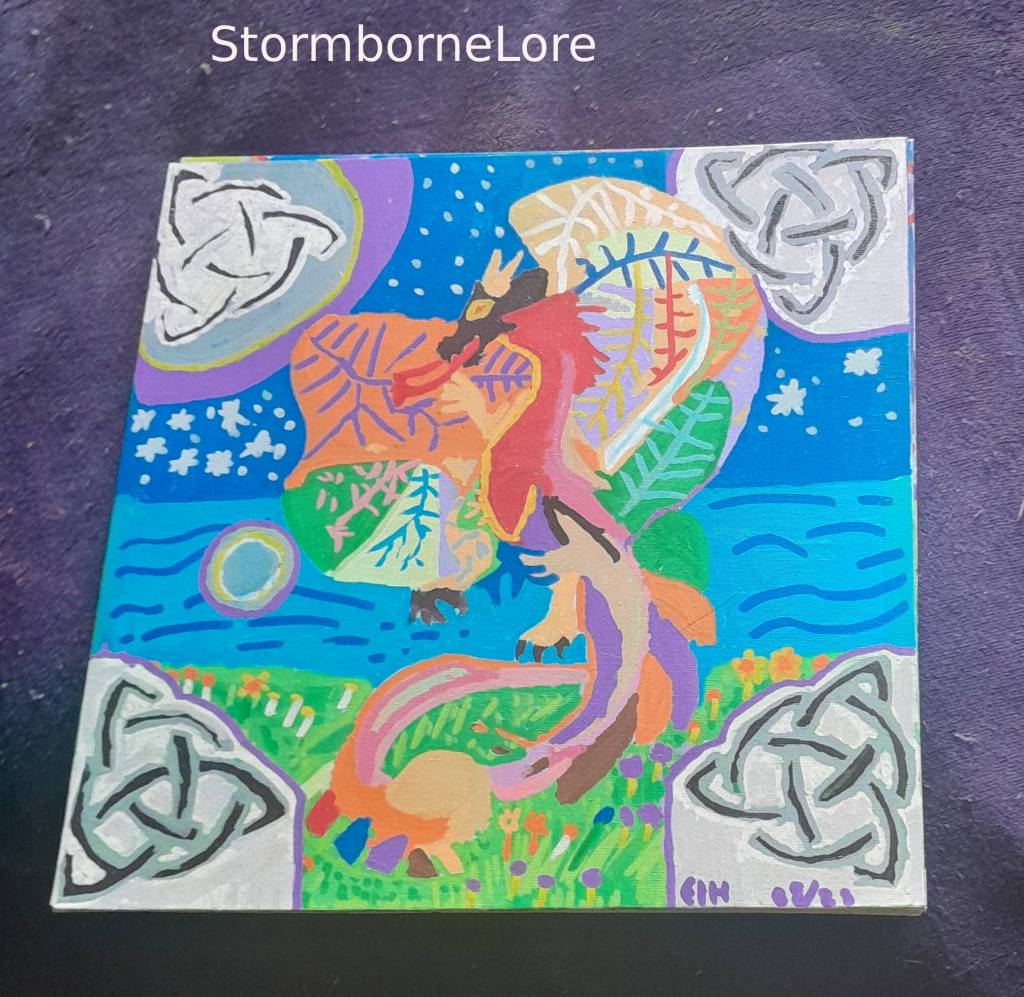
The more he walked, the louder the birds sang and the more he heard the roar of Pendragon, the king of dragons.
The howl of Boldolph whistled through the trees as he picked up a stone and threw it in the air. Suddenly, the stone flew from his hand and struck a small black bird.
It fell silent, wings broken, heart still. Taranis ran to the young bird, tears streaming down his face. Kneeling beside it, he pressed his hands gently on its broken wings, willing them to heal.
As time seemed to slow; the forest quieted. Miraculously, the bird shuddered and breathed, gradually returning to life. With a flutter, it soared free again.
The chieftain raised an eyebrow as he looked to his people, then back to his son.
“What is dead should stay dead,” one man stated.Soon, the entire community murmured in hushed tones.“ENOUGH,” the chieftain said, addressing the council of elders.
“Sir, we will call a meeting,” Janus stated. A woman with clouded eyes and a trembling voice approached quietly. She gazed deeply at the boy and spoke a chilling prophecy.
“The boy who mends what death has touched shall walk a path both blessed and cursed, a flame born of feather and storm.”Taranis looked at the old woman with a defiant smirk and his deep grey eyes, as if he wielded a storm at any moment.
He didn’t understand it, nor did he care.
“He’s old enough to train as a guide with the spirits,” another man said. “He’s five; he’s a man now.”
“No, he’s a man who can work, but he must follow his brothers and me as warriors and hunters,” Chieftain Connor stated.
The year passed quickly, and everyone focused on the warring neighbors while crops failed, turning life upside down. At six years old, the harshness of life hit hard.
When men and women charged the camp, and the clash of spears echoed.
Within minutes, the noise stopped abruptly on both sides. With uncanny fierceness, Taranis moved like a whirlwind of rage and grace. His strikes were swift and precise, as if guided by a primal force beyond his age.
“It’s like he’s a god,” Lore said, while his brothers watched in awe and fear, uncertain of what this meant for their youngest brother.
Beneath the warrior’s fire, though, was a boy barely understanding the cost of blood and death.
“I helped protect us, right, father? I’m good?” Taranis asked, but he stopped when Drax pulled him away, aware of how fear could lead people to do stupid things.
“I’m a warrior, not a seer!” Taranis cried as he was taken away.“Shh, little brother. You’ve seen too much for one day.”
“From today, my son Taranis will train with his brothers. Should another fight arise, he will be ready,” Chieftain Connor said. Another war came, but this time it was one they wouldn’t win.
As the years went by, he trained and grew into a skilled fighter. At eight years old, he stood on the hills as his friends developed coughs and fevers like never seen before, while the village was struck by a shadow darker than any blade.
A sickness crept through the children like a silent predator.Mothers wept, fathers raged, and the once vibrant laughter of youth faded into silence and sorrow. Soon, the people began to whisper, like cold wind slipping through cracks.
Was this the curse Janus spoke of? Was Taranis’s strange power a blight upon them?
“Exile Taranis!” one voice boomed. “Execute him!” another shouted. “Sacrifice him to appease the gods!”As time passed, more voices joined in as fear turned to blame, and blame hardened into calls for exile.
“We find, for the sake of the clan, we must exile Taranis,” Janus said.
Taranis stepped beyond the only home he had ever known. As he looked back at his brothers and father.
“I didn’t do it. Please, this isn’t because of me,” Taranis pleaded. But the forest that once whispered secrets now felt endless and cold.
Alone, he battled with the cruel balance between lost innocence and a destiny forced upon him.Yet beneath the storm of doubt, a fierce flame burned a hope to find meaning, reclaim his place, and someday heal what had been broken.

 StormborneLore