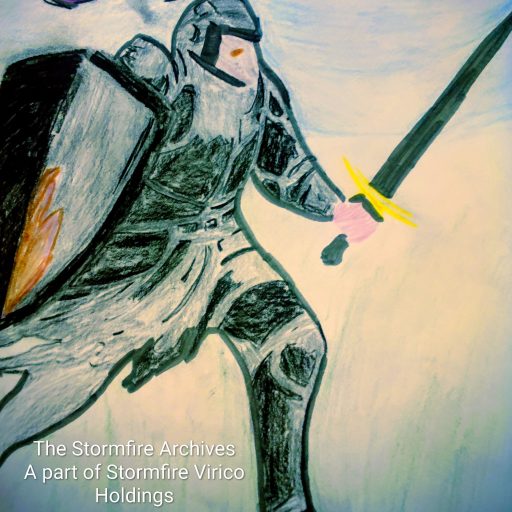
The smoke of Emberhelm still clung to the hills when I rode east, following the path we had carved in blood and ash. Behind me, the storm of Taranis’s fury faded, replaced by the steady march of Rome’s legions.
My heart did not leap at his capture only a calm, cold certainty. Survival, I had told myself. Survival for the people, for the line of the Ring.
They would call me traitor. They would whisper my name with venom. Let them. History is written by those who endure, not by those who fall screaming in the mud.
I thought of the thirteenth stone, split and silent, and of my brothers, scattered like crows in a gale.
Drax’s eyes had burned with anger. Lore’s had flashed with prophecy. Even Draven had known, in the briefest flicker of fear, that the world had shifted. And yet… no fire of regret touched me. Only the quiet pulse of inevitability.
Taranis would survive, I knew that. He always did. But survival alone was not enough. Rome would temper him, break him, and in that forging, perhaps he would learn that not all storms are born to rage. Some are meant to settle, to bring change unseen.
I rode on, keeping my gaze forward. The wind carried the salt from the sea, the same salt that Rome coveted. Every step away from the shattered circle was a step into the future I had chosen. And in that future, perhaps the people would live.
I was no hero. I was no villain. I was Rayne, and the Ring was broken.
The rain had followed them south. Turning the clay of Staffordshire into a sucking mire that clung to boots and hooves alike.
The Romans marched as though it were paved stone beneath them, shields squared, helmets gleaming dull beneath the Grey sky. Between their ranks, chained at wrists and neck, walked Taranis Storm.
Every step tore at his ankles where the iron bit into flesh. Every breath was smoke and ash and memory. Behind him lay the broken circle of stones, the Black Shields scattered or slain. Ahead, only Rome.
The villagers came out to see. From hedges and low doors they watched the prisoner dragged past their fields, whispers coming like crows. The Stormborne, Ring-bearer. Betrayed. Some spat into the mud, others lowered their eyes.
A few, bold enough to remember, lifted hands in the old sign of the ring. when the soldiers were not looking.
At the front of the column the standard rose a square of blue cloth. That had been painted with a face in iron helm, cheeks daubed red with victory.
The mask grinned as though in mockery. The Romans called it their mark of order. To Taranis it was something else: the face of the empire that had swallowed his people.
He fixed his gaze on it as they dragged him past the rise where the heath opened wide. He thought of Boldolph and Nessa, of the wolf in the trees. He remembered the cairn and the promise beneath the oak. The chain jerked and he stumbled, but he did not fall. Not yet.
The centurion rode beside him, face shadowed beneath his crest.
“You see the banner, barbarian? Rome wears a smile even when it breaks you.”
Taranis lifted his head, eyes dark as storm clouds. “Smiles fade. Storms do not.”
The soldiers laughed, but unease rippled through their ranks all the same. For the wind carried his words across the heath, and even bound in chains, Taranis Storm did not sound broken.
By dusk the column reached the ridge where the woods thinned and the land opened to heath. Smoke already rose ahead straight, disciplined pillars from square fires. The marching camp of Rome.
The soldiers moved with the same precision as their shields: digging trenches, raising palisades, planting stakes.
Every camp was a fortress, stamped into the soil like a brand. The ground of Cheslyn Hay, once quiet pasture, now bristled with iron.
Taranis was dragged through the gate cut into the new rampart. The ditch still stank of wet clay, the sharpened stakes gleamed with fresh sap.
Inside, order reigned the tents in perfect rows, fires burning with measured rations, horses tethered and groomed. No laughter. No chaos. Just Rome.
The banner with the painted helm was planted at the camp’s centre. Beneath it the centurion dismounted, barking orders in clipped Latin. Slaves scurried to fetch water and oil for the men.
A scribe scratched notes into a wax tablet, not once looking up at the prisoner he recorded.
Taranis stood, wrists bound, staring at the banner. Its painted grin leered back at him, mockery frozen in blue and black.
Around him the soldiers muttered in their tongue some calling him beast, others trophy.
A soldier shoved him down beside the fire trench, close enough to feel its heat on his raw wrists.
“Sit, storm-man. Tomorrow the legate will decide whether you march to Wroxeter or Luguvalium. Either way, Rome will bleed you for sport.”
The word spread through the camp: arena.
Taranis lowered his head, though not in submission. He closed his eyes and listened. Beyond the walls of the camp, the wind still carried the smell of rain-soaked earth.
The whisper of fox and owl. And beneath that, deeper still, a memory: wolves circling, dragons wheeling, the voice of the tree.
Rest, child of storm. The road is not ended.
When he opened his eyes again, the firelight caught the glint of iron. Not on the chains, but in his gaze.
Even in Rome’s order, storm can find a crack. And cracks spread.
The fire burned low, and the camp settled into its rhythm. As guards pacing in pairs, dice rattling in the barracks-tents, the low cough of horses in their lines. The rain had eased, leaving the air damp, heavy with smoke.
Taranis sat in silence until he felt movement beside him. A figure shuffled forward, ankles hobbled, wrists bound with rope rather than iron. The man lowered himself onto the earth with a grunt.
“Storm of Emberhelm,” he rasped in Brythonic, his accent from the northern hills. “I thought the tales were lies. Yet here you sit, same chains as me.”
Taranis turned his head. The prisoner was older, his beard streaked white, his face cut with old scars. One eye clouded, blind. The other burned sharp as flint.
“And who are you,” Taranis asked, “that Rome keeps alive?”
The man chuckled, though it ended in a wheeze. “They call me Marcos now. Once, I was Maccus of the Ordovices. I led men against the Eagles before your birth.
Rome does not waste good meat. They break us, bind us, and sell us to the sands. I’ve fought in two arenas. Survived them both.”
Taranis studied him. The weight of years hung from his shoulders, yet there was steel still. “Then you know what waits.”
“Aye.” Marcos lifted his bound hands, showing knotted scars across his forearms. “The crowd roars for blood. Some fight once and die. Some fight a hundred times and die slower. But all die.”
The fire popped. Sparks leapt into the dark.
Taranis leaned closer, his voice low. “Not all. The storm endures.”
Marcos’s eye narrowed. “You think to outlast Rome?”
“No.” Taranis’s mouth twisted into something not quite a smile. “I think to break it.”
For the first time, the older man was silent. He searched Taranis’s face, weighing his words. Then he gave a slow nod.
“If you mean what you say, Storm of Emberhelm, then I’ll stand at your side when the time comes. Better to die tearing the eagle’s wings than caged beneath them.”
Chains clinked as they shifted nearer the fire. Around them the camp slept, unaware that in its shadow two sparks had met. Sparks that yet become flame.
The guards had thrown scraps of barley bread to the captives, little more than crusts softened with rain. Most fell on them like dogs, clutching and hiding their share as if it were treasure.
But when the boy, thin as a willow switch, glanced to where Storm sat, his brow furrowed. The man beside him Marcos noticed at once.
“What’s wrong, lad?” the old warrior asked, shifting his chains.
The boy’s voice was a whisper. “Why haven’t they fed him?” His gaze fixed on Taranis, who had taken nothing. His hands still resting on his knees, his eyes far away. as if listening to some thunder only he hear.
Marcos gave a grunt. “Rome plays its games. They starve the strong first. Weak men die quick, but a beast like him…” He lowered his voice. “They want to see how long he lasts. How much fury stays in him when his belly is empty.”
The boy clutched his crust but then held it out with trembling fingers. “He should eat.”
Taranis turned his head at last. His eyes, Grey as storm clouds, fell on the offering. He did not take it. Instead, he placed his bound hand gently over the boy’s.
“Keep it,” he said. His voice was rough, hollow from thirst, yet steady. “Storms do not starve. But you” he pressed the bread back into the boy’s palm, “you must grow.”
For a moment, silence hung around them. The boy swallowed hard, then nodded, biting into the bread with tears in his eyes.
Marcos watched, the ghost of a smile tugging at his scarred face. “A storm, indeed,” he muttered.
Above the camp, thunder rumbled faintly though the sky was clear.
“I’m fine ” Taranis smirked seeing a whip in someone’s hand and wood
“What’s going on?” The boy asked
The guard with the whip dragged a stake of green wood across the mud, planting it near the fire trench. Two soldiers followed, uncoiling rope and hammering pegs into the ground.
The boy’s eyes widened. “What’s going on?” he whispered, clutching what remained of his bread.
Marcos’s face hardened. “Discipline.” His single eye slid to Taranis. “Or rather a spectacle.”
One of the soldiers smirked. “The barbarian thinks himself storm. Tonight, he learns Rome is thunder.”
They hauled Storm to his feet. Chains clattered, mud spattered across his bare shins. The whip cracked once in the air, sharp as lightning.
The boy tried to rise, but Marcos gripped his arm and pulled him back down. “Don’t,” he hissed. “They’ll flay you too. Watch, and remember.”
Taranis did not resist when they bound him to the post. His wrists were raw, but he set his shoulders square. lifting his chin to meet the eyes of the gathered legionaries. The smirk never left his mouth.
The centurion stepped ahead, whip coiled in his hand, iron studs gleaming wet in the firelight. He spoke in Latin, slow and deliberate, for the advantage of his men:
“This is Rome’s law. Defiance is answered with the lash.”
The first strike fell. Leather snapped against flesh. The soldiers cheered.
Storm did not cry out. His lips moved, barely more than breath: words in the old tongue, prayer or curse, the guards could not tell.
The boy’s knuckles went white around his crust of bread. Marcos leaned close, his voice low. “Look at him, lad. That is what Rome fears most. A man who will not break.”
The whip cracked again. Blood ran down his back.
And yet, when the centurion paused, Taranis raised his head and laughed. a rough, hoarse sound, but laughter all the same.
“You call this thunder?” he spat. “I’ve stood in storms that would drown your gods.”
The camp fell uneasy. The centurion snarled and drew back the whip again. But already some of the soldiers shifted, unsettled by the chained man’s defiance.
The guard sneered as he coiled the whip in his hand, the wood of the handle slick with rain. He pointed it at Taranis.
“On your feet, barbarian. Let’s see if your tongue is sharper than your back.”
Taranis smirked, rising slowly, the chains clinking as he straightened to his full height. The firelight threw shadows across his scarred face, making him seem larger than life.
“Screw you,” he said, the words spat like iron nails.
The boy gasped, his hands clutching the crust of bread. “What’s going on?” he whispered to Marcos.
The old warrior’s one good eye didn’t leave Taranis. “Rome’s testing him,” Marcos said quietly. “They want to see if he breaks before the whip… or after.”
The guard cracked the lash across the ground, sparks leaping from the wet earth. Soldiers nearby turned to watch, eager for the show.
But Taranis only tilted his head, the faintest grin tugging his lips. “Go on,” he said. “Try.”
And in the silence that followed, the storm seemed to shift, waiting.
Taranis straightened, chains rattling as he rolled his shoulders. His eyes met the guard’s without a flicker of fear.
“Screw you, ass,” he growled, voice steady. “I’ve dealt with worse.”
The words landed like a stone in still water. A few soldiers chuckled uneasily, but others muttered, shifting in place. The boy’s eyes went wide, his crust of bread forgotten in his hands.
Marcos gave a dry, wheezing laugh. “Storm’s got teeth. Rome should be careful putting its hand too close.”
The guard snarled and snapped the whip through the air once, twice before bringing it down toward Taranis’s back.
But Taranis didn’t flinch. He stood, broad shoulders braced, chains biting his wrists, and took the first strike in silence.
An acrylic painting depicting a prefab home in Tettenhall Wood, complete with a vibrant red door, green lawns, and a flowered path.
Prefab in Tettenhall Wood
This acrylic piece captures a slice of post-war life a prefab home in Tettenhall Wood, Wolverhampton surrounded by green lawns and a flowered path leading to a vivid red door.
Prefabs were once a symbol of resilience and renewal, homes built quickly after the war to give families shelter and hope.
Painted here under a wide sky, the scene is both nostalgic and grounding: a reminder that history lives not only in battles and legends, but also in the everyday places people called home.
A vibrant depiction of a lone Roman soldier standing ready against a stormy backdrop, symbolizing the strength and fragility of empires.
Medium: Acrylic on paper
Size: A4
Description: A lone Roman soldier stands vigilant against a stormy sky, spear and shield at the ready. The piece captures both the strength and fragility of empire one figure set against the vast shifting forces of history.
A colorful thank you note encouraging readers to like and subscribe, featuring a sunny sky and green landscape.
A hand-painted 30×30 cm canvas alive with colour, myth, and Celtic design.
The dragon rises against a backdrop of starlight and water, framed with knotwork corners that anchor the scene in ancient tradition. Its wings shimmer with leaf-veins, binding earth and sky, while the stars remind us of the stories written above.
Every brushstroke carries the spirit of folklore the dragon as guardian, dreamer, and storm-bringer, the knots as eternal bonds.
Hand-painted disc showcasing vibrant abstract designs inspired by Celtic knotwork and mythology.
This acrylic-painted disc carries the spirit of Celtic knotwork and storm-born colour.
Each piece I create is a one-of-a-kind original, shaped by myth, lore, and imagination. No two stones, coasters, or canvases are ever alike each holds its own voice, a spark of history reborn in paint.
Stormborne Arts is my way of weaving ancient legend into modern craft. From runes to trees of life, wolves to woven knots, every piece carries the mark of storm and soul.